
Our 12 day Morocco tour from Casablanca covers the whole country: Rabat, Chefchaouen, Fes, the Sahara, the gorges, Marrakech and Essaouira.
First, day one travels from Casablanca to Rabat. Then, days two and three are spent in Chefchaouen, with a full day to properly explore the blue medina. Next, day four continues to Fes by way of the Roman ruins of Volubilis, with day five dedicated entirely to a guided tour of the Fes medina.
After that, day six crosses the Middle Atlas to the Sahara Desert for the first of two nights in Merzouga, and day seven is spent exploring the Sahara region by private 4×4. Meanwhile, day eight continues to the Dades Valley, and day nine crosses the High Atlas Mountains via Ait Ben Haddou into Marrakech, where days nine and ten are spent exploring the Red City in full. Finally, day eleven heads to the Atlantic coast for a night in Essaouira, before day twelve closes the loop with departure from Marrakech or a transfer back to Casablanca.
Overall, this is the slowest-paced tour in our Casablanca lineup, with two full nights each in Chefchaouen, Fes, the Sahara Desert, and Marrakech, rather than the single overnight stops used on our shorter routes. It is built for travelers who have the time to let each place settle in properly, rather than moving on the morning after arrival.
This 12 day Morocco tour is fully private throughout, with a dedicated driver-guide and air-conditioned vehicle for the road days, specialist local guides in Fes and Marrakech, and a private 4×4 with an experienced desert driver for the dedicated Sahara exploration day.
The capital, Rabat, is a UNESCO World Heritage Site that blends a historic old city with a modern capital. Chefchaouen, founded in 1471 in the Rif Mountains, is famous for its blue-washed medina. At Merzouga, the Erg Chebbi dunes rise to around 150 meters, among the tallest in Morocco.
The best months for a full Morocco circuit are March to May and September to November, when both the cities and the desert are comfortable. Summer is hot inland and in the Sahara, and winter brings cold desert nights and snow in the mountains.
This private 12 day Morocco tour from Casablanca starts from $1,390 per person, based on two travelers sharing, and the price per person drops for larger groups. Every itinerary can be adjusted to your dates, pace and hotel preferences. Send us your dates on WhatsApp or through the enquiry form below for a free quote.
Welcome to Morocco. Your Navigate Morocco driver-guide will meet you in Casablanca, either at Mohammed V Airport or your hotel, and the tour begins with a visit to the Hassan II Mosque.
Completed in 1993 and built partly over the Atlantic Ocean, the mosque is one of the largest religious buildings in the world, with a 210-meter minaret that remains the tallest in existence. Inside, hand-carved cedar wood, Italian marble, and intricate zellige tilework cover nearly every surface, and a retractable roof opens the vast prayer hall to the sky.
From the mosque, take a short drive along the Corniche at Ain Diab, Casablanca’s breezy Atlantic seafront, before continuing north to Rabat, Morocco’s elegant capital and one of its four imperial cities. The drive takes around an hour along the coastal highway, with glimpses of the Atlantic on your left for much of the way.
In Rabat, visit the Oudaya Kasbah, a fortified 17th-century citadel with blue and white streets and Andalusian gardens overlooking the Bou Regreg River, followed by the Hassan Tower and the Mausoleum of Mohammed V, two of the country’s most significant royal monuments, guarded around the clock by the Royal Guard.
Finally, check into your riad in Rabat and enjoy an evening exploring the city’s relaxed medina and central Ville Nouvelle at your own pace.
Overnight stay: Riad in Rabat
After breakfast, depart Rabat and head north toward the Rif Mountains. The first stretch of the drive follows the coast before turning inland, and the scenery shifts gradually from flat coastal plains to rolling farmland and then forested hills as the road climbs higher.
Then, the landscape becomes noticeably greener and cooler than the rest of Morocco, a welcome contrast for travelers coming from the desert-adjacent regions further south. Small towns along the route offer a glimpse of rural Rif life, with roadside stalls selling local honey, goat cheese, and fresh produce.
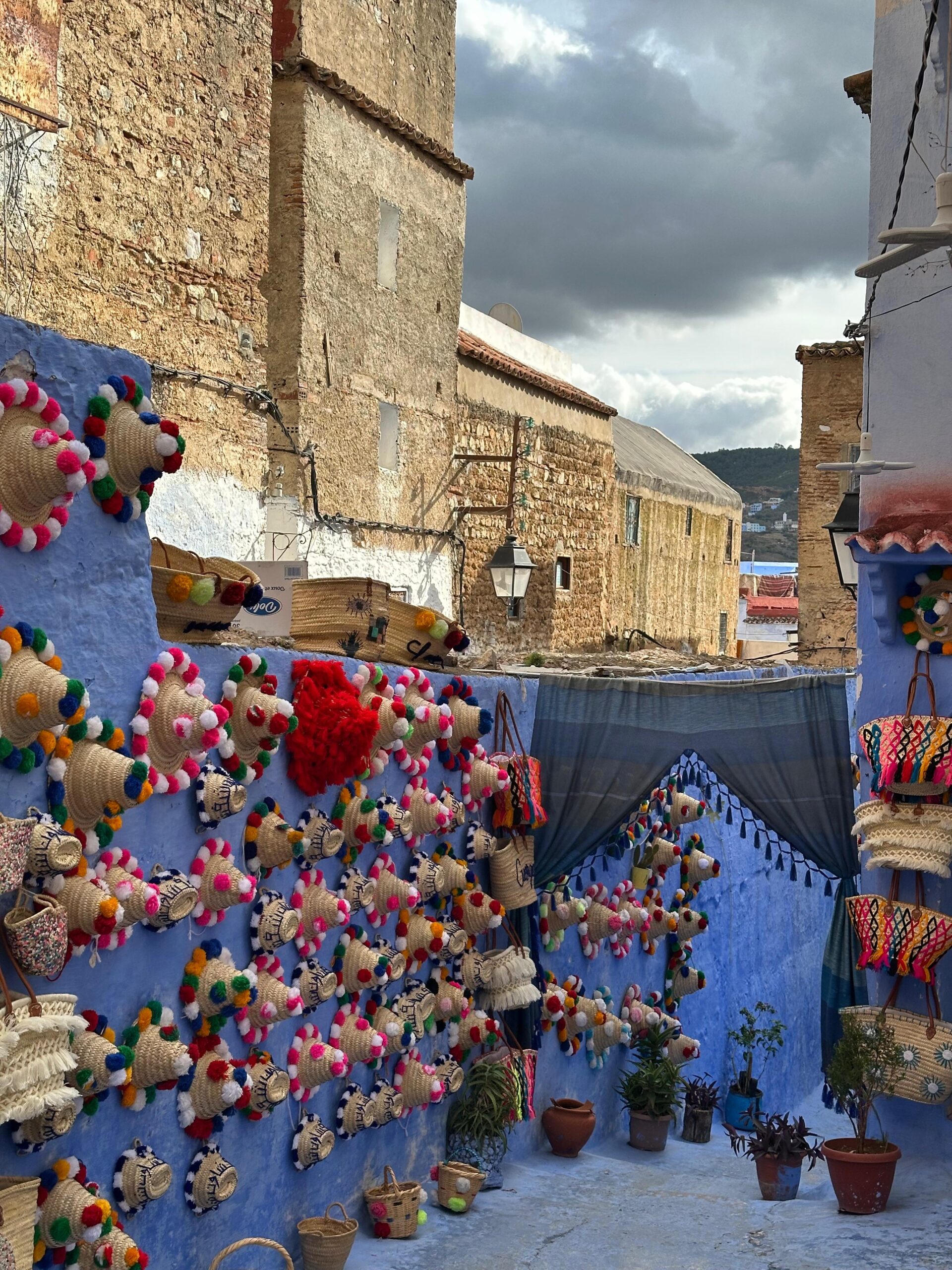
Finally, arrive in Chefchaouen by early to mid-afternoon and spend the rest of the day settling into the blue city at your own pace. Wander the famous blue-washed medina, where nearly every wall, staircase, and doorway is painted in a different shade of blue, and browse the small shops selling wool blankets, leather goods, and local crafts. Check into your riad for the first of two nights in Chefchaouen.
Overnight stay: Riad in Chefchaouen
With a full day and no onward drive, today is for exploring Chefchaouen properly. First, walk up to the Spanish Mosque, a hillside viewpoint reached by an easy uphill walk of around 30 to 45 minutes, for sweeping views over the blue medina and surrounding mountains, especially beautiful at sunset.
Many travelers time this walk for the late afternoon so the descent back into town happens as the light turns golden over the rooftops.
Then, back in the medina, visit the Kasbah Museum and its small garden in the main square, a former 17th-century fortress that now houses a modest ethnographic collection. Continue to the Ras El Maa waterfall on the edge of the medina, where local women still wash wool by hand using techniques unchanged for generations, and where the town’s freshwater spring emerges from the mountainside.
Finally, spend the rest of the day wandering the quieter residential lanes away from the main tourist streets, where the blue paint is arguably even more striking and the pace of life slows further still. This is one of the most photogenic and relaxed stops on the entire route, and the extra night here is what allows it to be enjoyed properly rather than rushed through in a single afternoon.
Overnight stay: Riad in Chefchaouen
After breakfast, depart Chefchaouen and head south back toward the plains, leaving the Rif Mountains behind. The drive gradually flattens out into the agricultural heartland around Meknes and Fes, one of Morocco’s most fertile regions.
Along the way, stop at Volubilis, a UNESCO World Heritage Site and one of the best-preserved Roman archaeological sites in North Africa. Although once one of the most important Roman outposts on the continent, Volubilis is preserved well enough that visitors can walk through triumphal arches, along ancient streets, and over mosaic floors depicting mythological scenes that have survived nearly two thousand years beneath the Moroccan sun. Storks now nest on top of many of the standing columns, adding a quietly beautiful touch to the ruins.
Then, continue to Fes, arriving in the late afternoon. Check into your traditional riad in the heart of the old medina, where thick walls and interior courtyards create a cool, quiet retreat from the busy streets outside.
Finally, enjoy a relaxed evening, perhaps on a rooftop terrace overlooking the medina, preparing for two full days of guided exploration ahead.
Overnight stay: Traditional Riad in Fes
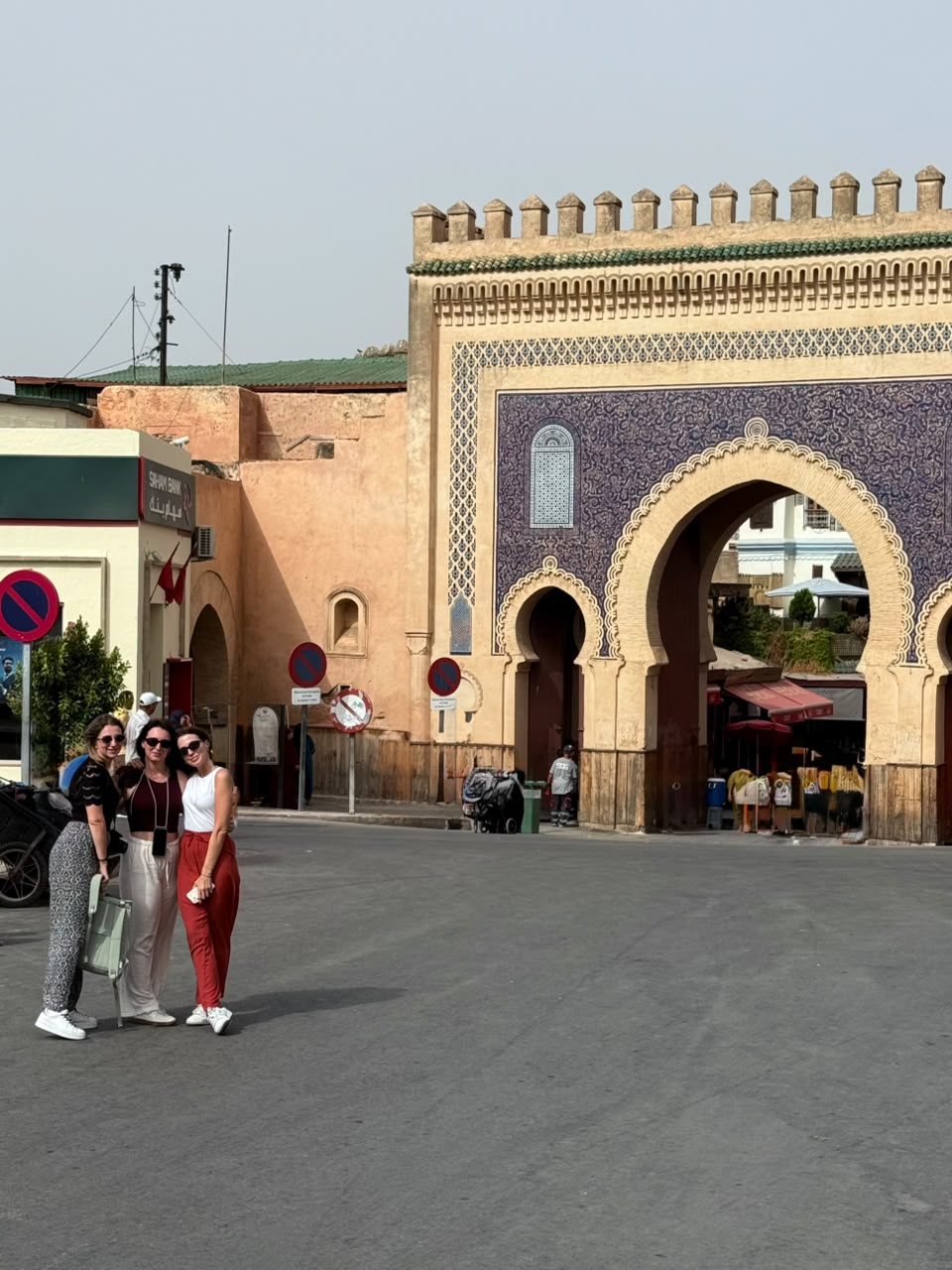
Today is entirely dedicated to Fes el-Bali, the ancient walled medina of Fes and one of the most complete medieval cities anywhere in the world. With a knowledgeable local expert guide, spend the day walking through a labyrinth of over nine thousand alleyways where the sounds, scents, and textures of medieval Morocco are very much alive.
First, visit Al-Qarawiyyin University, founded in 859 AD and recognized by UNESCO as the world’s oldest continuously operating university, and the Bou Inania Madrasa, a stunning 14th-century theological school.
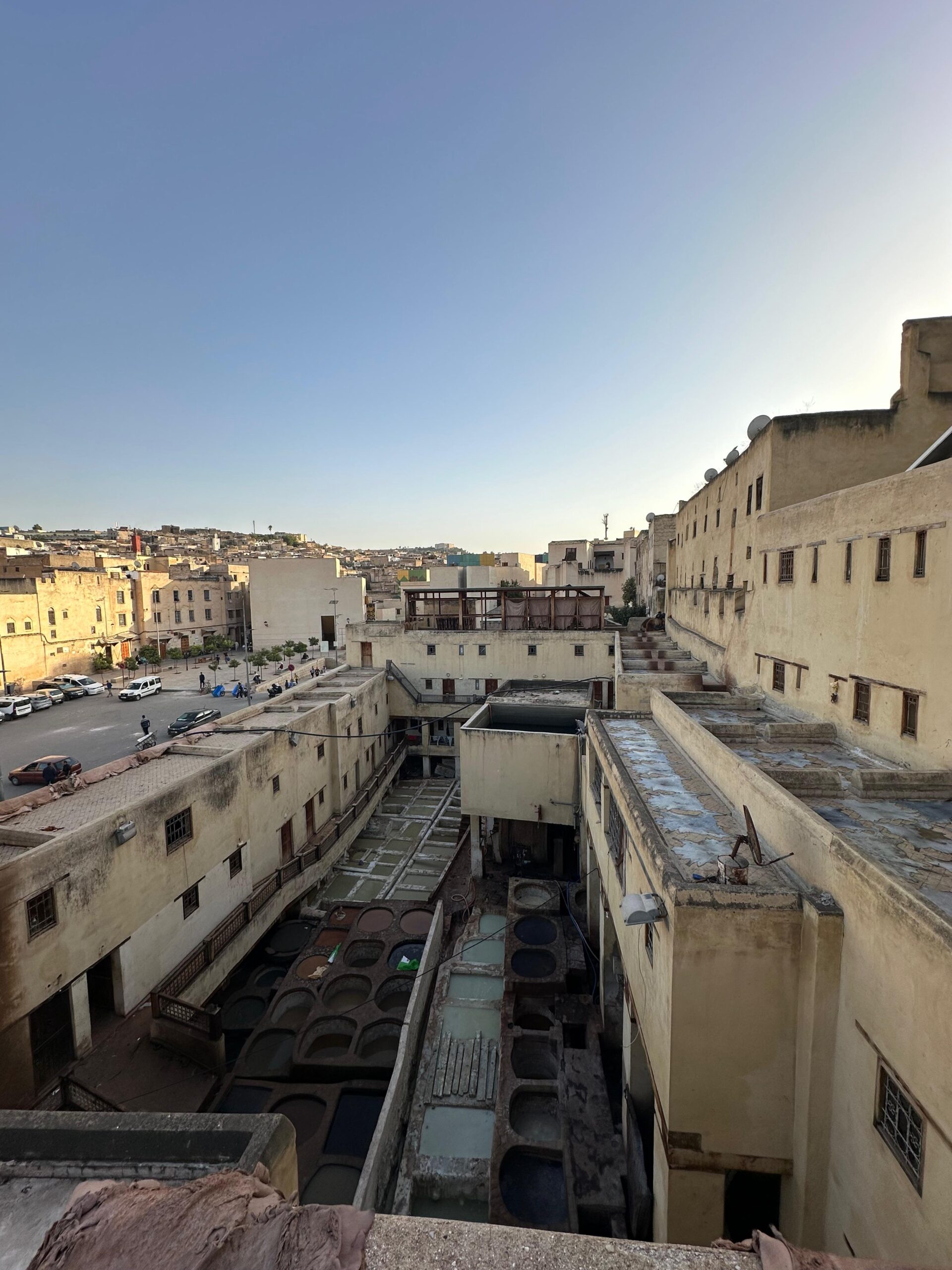
Then, head to the world-famous Chouara Tanneries, where leather has been dyed using natural pigments and traditional methods for over a thousand years, best viewed from the rooftop terraces of the surrounding leather shops.
Finally, spend the afternoon exploring the artisan quarters, where coppersmiths, weavers, and ceramicists still practice their crafts, with free time to browse the souk before returning to your riad for a second night in Fes.
Overnight stay: Traditional Riad in Fes
After breakfast, depart Fes and head south through the Middle Atlas Mountains. First, stop in Ifrane, a charming alpine town with stone chalets, manicured parks, and cool mountain air that has earned it the nickname the Switzerland of Morocco.
Then, continue to the cedar forests around Azrou, where Barbary macaque monkeys roam freely among the trees.
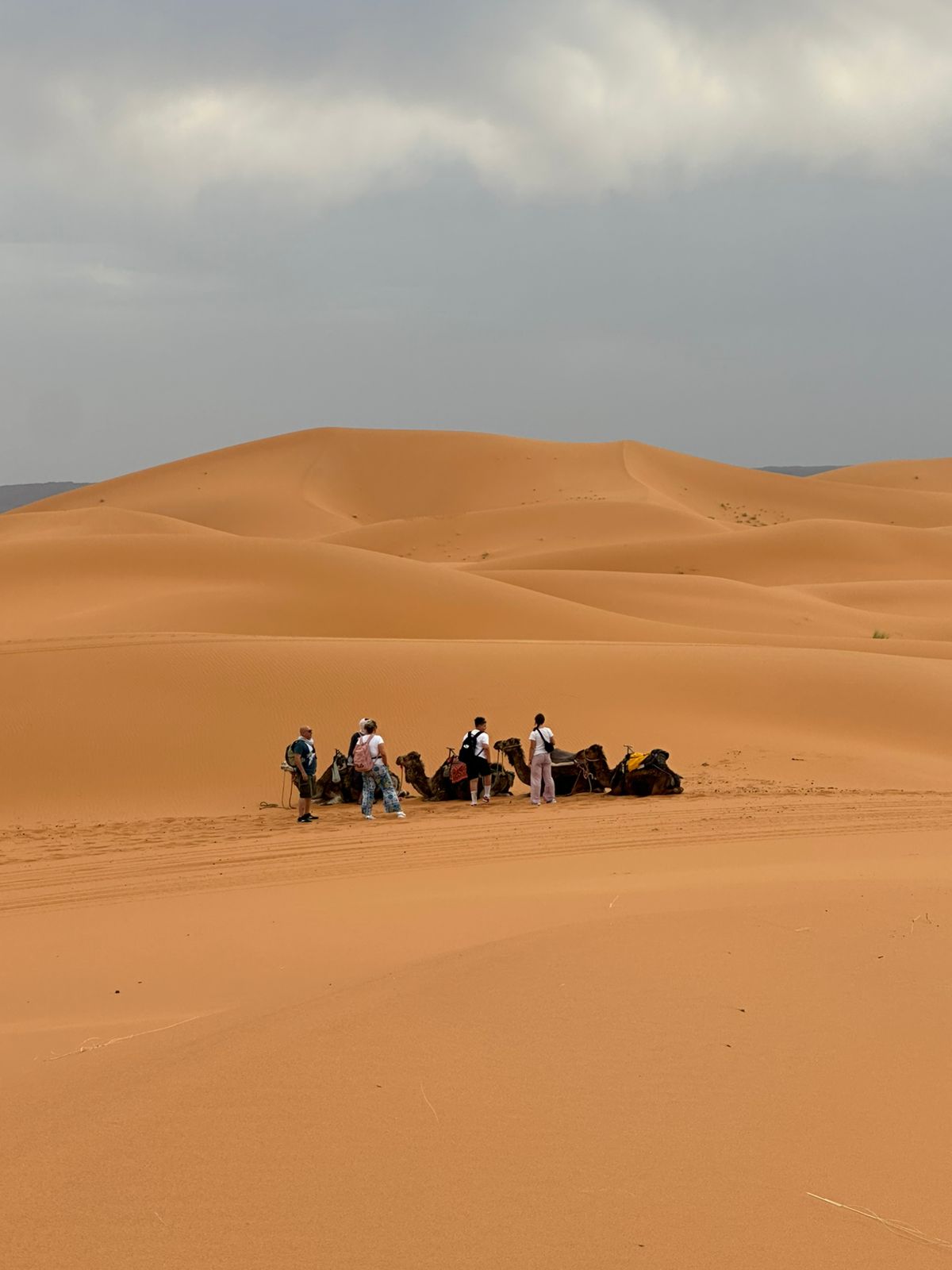
After a lunch stop in Midelt, the road descends into the Ziz Valley, a stunning pre-Saharan oasis where thousands of date palms line the banks of the Ziz River. Stop at the panoramic viewpoint high above the valley for photographs before continuing south. By late afternoon, the towering orange dunes of Erg Chebbi appear on the horizon.
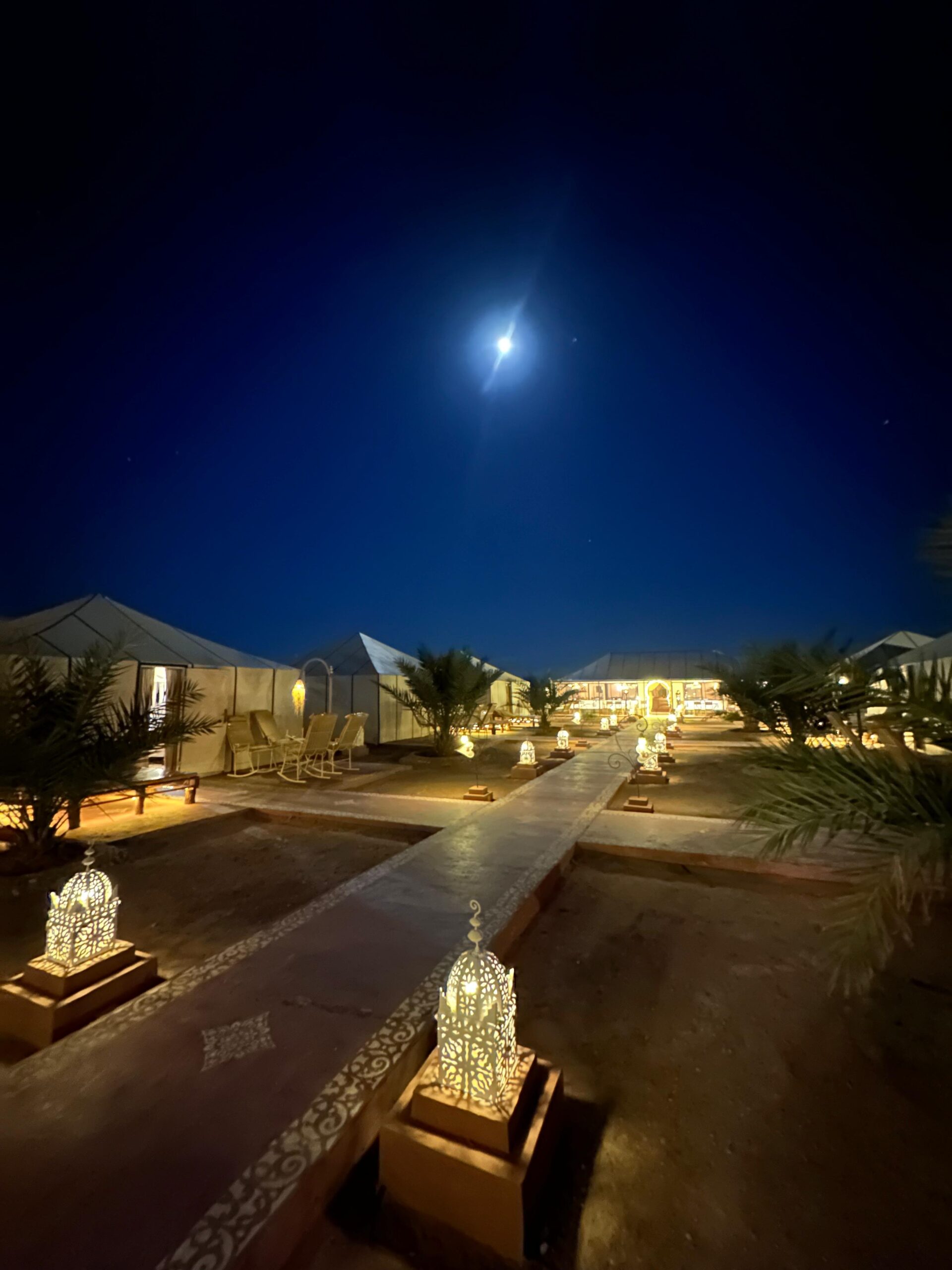
Finally, your camels will be waiting at the edge of the desert for a sunset trek across the golden sands. Arrive at your luxury desert camp to a warm welcome of mint tea and Berber bread, followed by a traditional dinner and live Berber music around the campfire under a sky full of stars.
Overnight stay: Luxury desert camp in Merzouga | Meals included: Dinner and Breakfast
First, rise before dawn to witness the Sahara sunrise, one of the most peaceful and unforgettable moments the desert offers. After breakfast at the camp, check out and transfer to your comfortable riad or hotel in Merzouga for the second night.
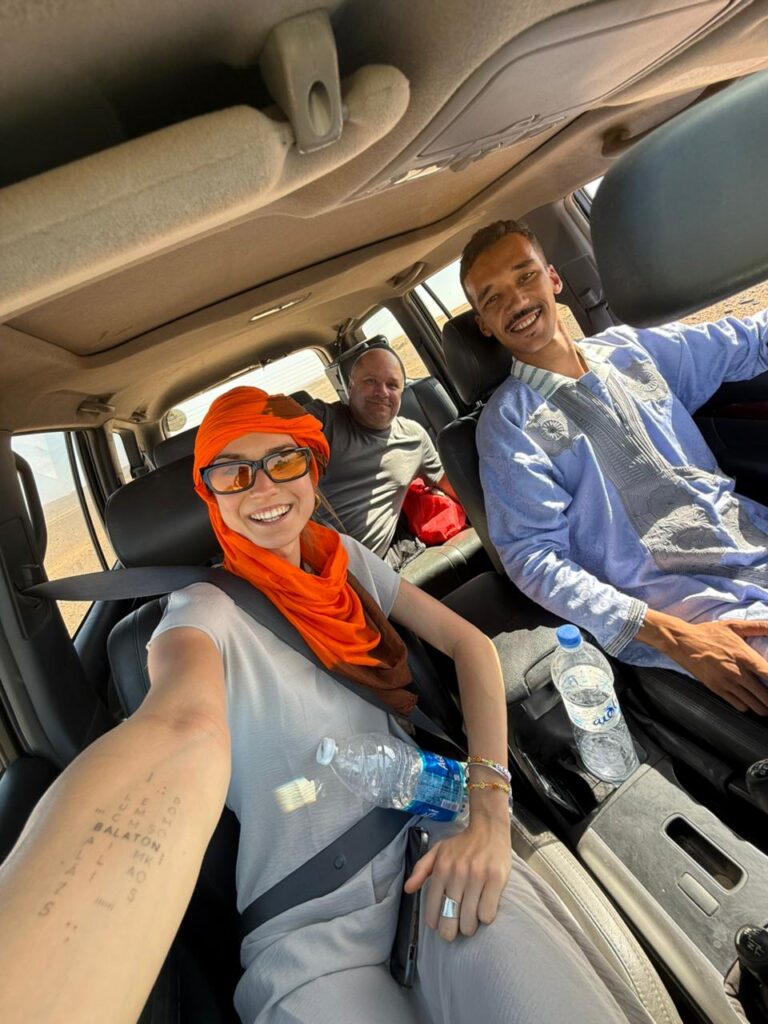
Because today’s stops lie off the paved road across open sand and rough desert tracks, the day is done in a private 4×4 vehicle with an experienced desert driver, rather than the standard touring car used on the rest of the trip.
Begin with a visit to a nomadic Berber family in their tent and gain a genuine insight into their quiet, self-sufficient way of life. Then, continue to the fossil mines near Merzouga, where millions of years of prehistoric marine life are embedded in the local rock, before heading to Khamlia village, home to the descendants of sub-Saharan Africans brought to Morocco in the 16th and 17th centuries, who have preserved the ancient tradition of Gnawa music.
After lunch at a local restaurant, the afternoon is free for optional activities, with the 4×4 already on hand to reach the best dune areas. ATV quad biking across the Erg Chebbi dunes is the most popular choice, and sandboarding is also available at an additional cost paid locally.
Finally, return to your riad or hotel in the early evening for dinner and a second night in Merzouga.
Overnight stay: Riad or hotel in Merzouga | Meals included: Dinner and Breakfast | Transport: Private 4×4 for the day’s desert excursions
After breakfast in Merzouga, say farewell to the desert and begin the journey west. First, stop in Rissani, the historic former capital of the Tafilalt region and the ancestral heartland of Morocco’s Alaouite royal dynasty. If your visit falls on a market day, Tuesday, Thursday, or Sunday, the Rissani souk comes alive with local traders selling fresh dates, spices, and handmade crafts.
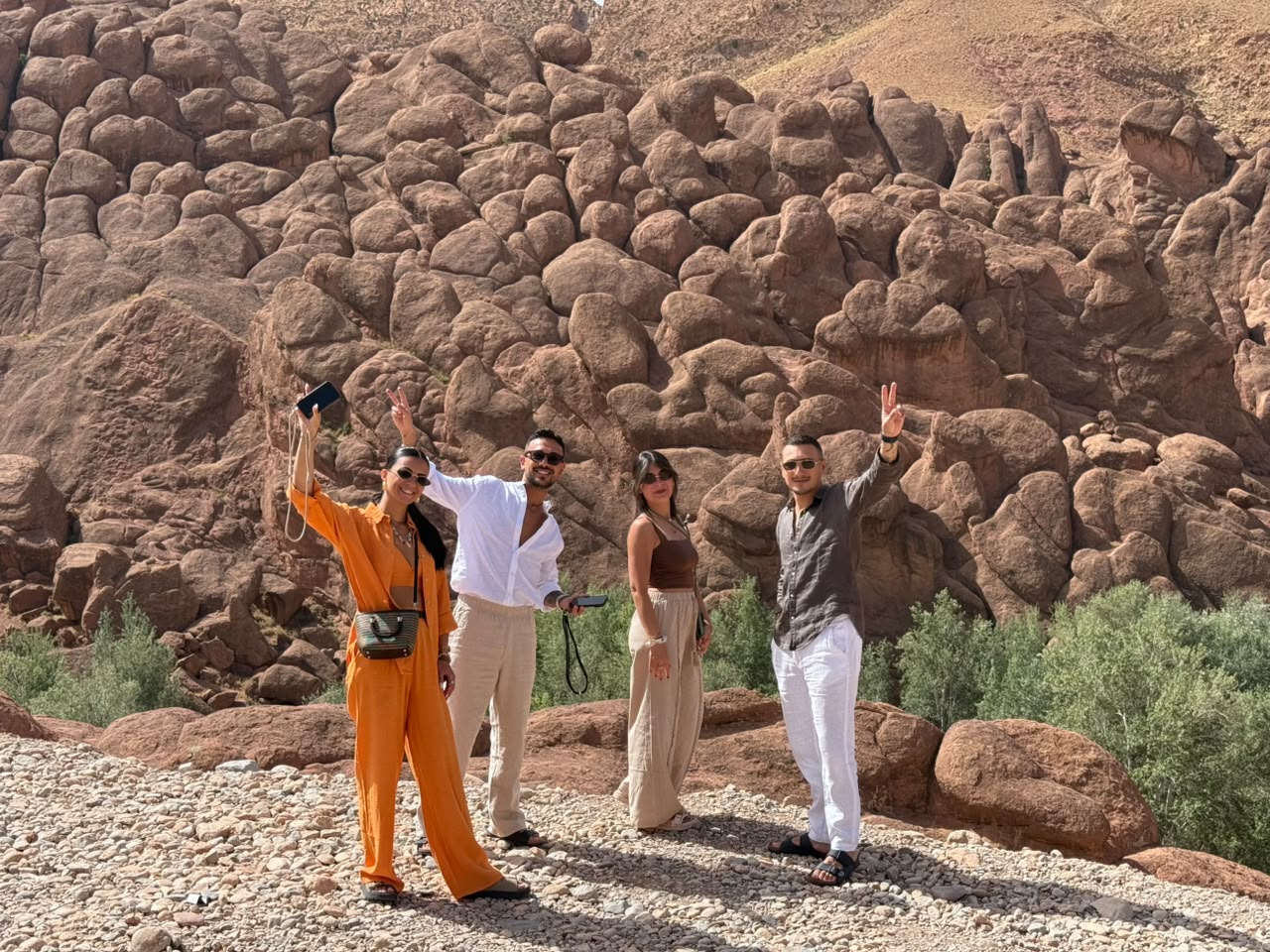
Then, continue toward the Todra Gorge, a spectacular natural canyon carved by the Todra River through limestone cliffs that rise over 300 meters on either side. At its narrowest point, the canyon walls close in to just a few meters wide, creating a dramatic corridor of sheer rock popular with rock climbers and photographers.
Take a refreshing walk along the riverbed, where the temperature drops noticeably in the shade of the cliffs.
Finally, continue into the Dades Valley in the late afternoon, known for its winding roads, red rock formations, ancient kasbahs, and the famous Monkey Fingers rock formations near Ait Oudinar, eroded pillars that resemble a row of fingers reaching toward the sky. Check into your riad overlooking the valley for a peaceful evening.
Overnight stay: Riad in the Dades Valley
After breakfast, depart the Dades Valley and continue west through the Valley of Roses, named for the fragrant Damask rose fields cultivated by local Berber farmers across the hillsides.
Then, continue to Ouarzazate, known as the Hollywood of Africa for the film productions shot in its dramatic desert scenery, including Lawrence of Arabia, Gladiator, and Game of Thrones.
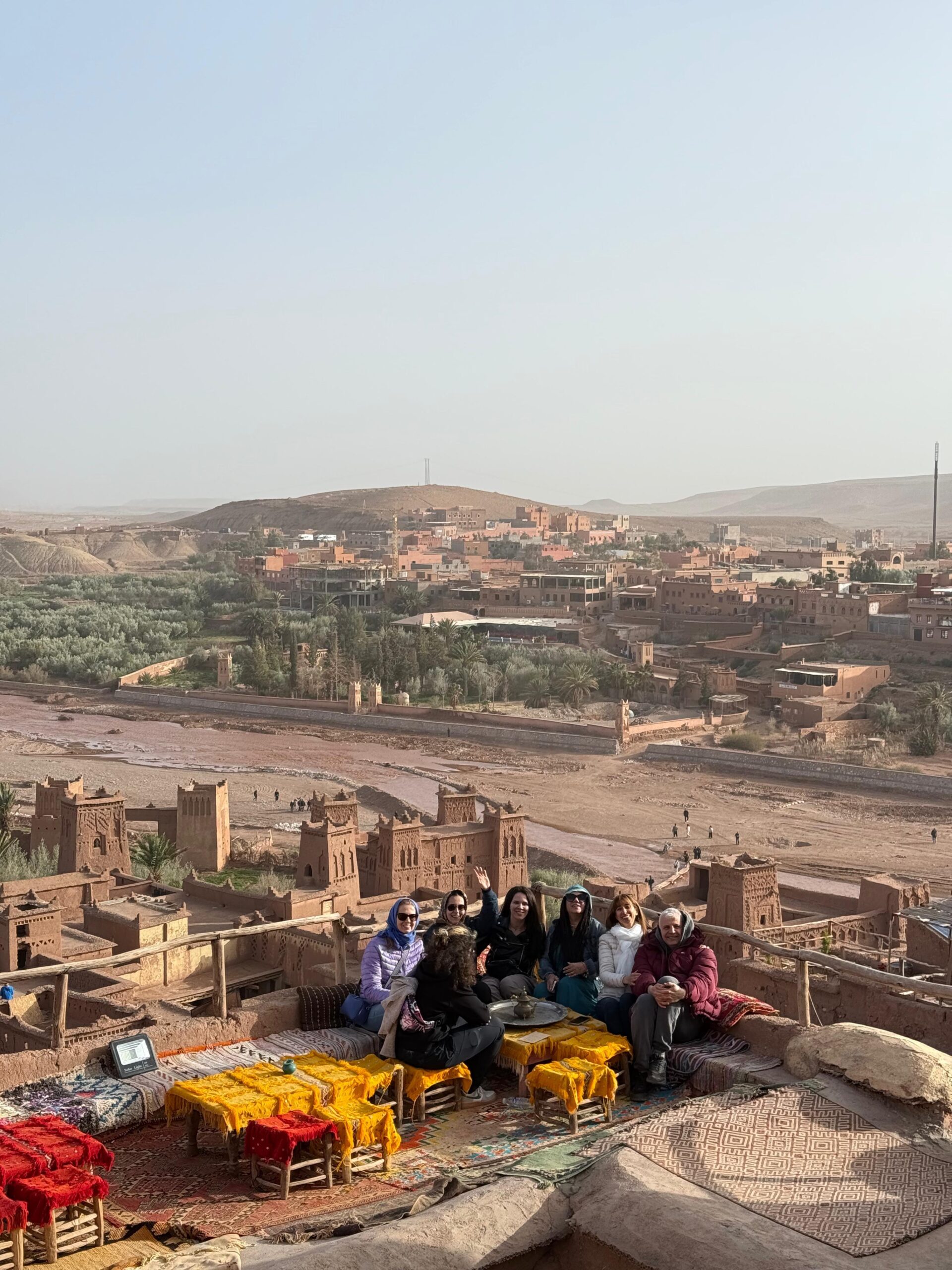
From Ouarzazate, visit Ait Ben Haddou, a UNESCO World Heritage Site and one of Morocco’s most iconic fortified villages. This ancient ksar, built entirely from earthen clay, rises dramatically from the riverbank in a series of towers, walls, and labyrinthine alleyways. Wander through the narrow streets and climb to the top for sweeping views of the surrounding desert and the modern village across the river.
After exploring the kasbah, cross the High Atlas Mountains via the Tizi n’Tichka Pass, the highest paved road in North Africa at approximately 2,260 meters above sea level, with sweeping views of mountain peaks, deep gorges, and Berber villages perched on the slopes.
Finally, descend into the red plains surrounding Marrakech and arrive in the city by early evening, checking into your riad near the medina for the first of two nights in the Red City.
Overnight stay: Riad in Marrakech
After breakfast, embark on a full guided tour of Marrakech with a knowledgeable local guide. First, begin at the Bahia Palace, a magnificent 19th-century royal residence whose name means brilliance in Arabic, walking through its grand courtyards, intricately painted ceilings, and fragrant orange tree gardens.
Then, continue to the Saadian Tombs, a royal necropolis discovered in 1917 after being sealed for centuries, decorated with elaborate marble carvings and gilded cedar wood.
Next, visit the iconic Koutoubia Mosque, the largest mosque in Marrakech, whose 70-meter minaret has guided travelers to the city for over eight centuries and remains the defining landmark of the Marrakech skyline, visible from nearly every corner of the city. Spend time exploring the souks, organized by craft and trade the same way they have been for centuries, from the dyers’ quarter with its rainbow of hanging wool to the metalworkers’ street ringing with the sound of hammers.
Finally, experience the energy of Jemaa el-Fna Square, especially lively as the afternoon turns to evening, when food stalls, musicians, and storytellers fill the square. With a full day rather than a rushed half-day, there is also time for an optional cooking class or a relaxed hammam visit if you prefer a slower pace, both of which can be arranged in advance with Navigate Morocco.
Overnight stay: Riad in Marrakech
After breakfast, depart Marrakech and head west to the Atlantic coast. The drive takes around two and a half hours through argan tree groves, where you may spot the famous tree-climbing goats along the roadside, a genuinely unique sight found almost nowhere else in the world.
Then, stop along the way at a women’s argan oil cooperative to see the traditional hand-pressing process that has sustained rural Berber communities in this region for generations.
Arrive in Essaouira, a UNESCO World Heritage Site and one of Morocco’s most relaxed coastal towns. Its fortified medina, with distinctive blue and white buildings and Portuguese-influenced ramparts, sits directly on the Atlantic, and the town’s laid-back atmosphere is a deliberate change of pace after the intensity of Marrakech.
Finally, spend the afternoon wandering the medina, browsing the thuya-wood workshops where artisans carve the fragrant local wood into boxes and furniture, and walking along the harbor where the day’s fishing catch is unloaded and blue wooden boats crowd the water. Check into your riad for a quiet final night before the journey concludes.
Overnight stay: Riad in Essaouira
After breakfast, your Navigate Morocco driver will transfer you to the airport for your departure.
This 12 day Morocco tour can end in either of two ways depending on your flight: a transfer back to Marrakech Menara Airport, or a longer transfer to Casablanca’s Mohammed V Airport if your international flight departs from there. Let us know your preference when booking and we will arrange the departure accordingly.
This brings your twelve-day journey across the whole of Morocco, from the Atlantic coast to the blue city, the medieval medinas, the Sahara Desert, and back to the coast again, to a close.
End of tour with Navigate Morocco. To customise this 12 day Morocco tour, contact Navigate Morocco.
Q1: Is this a private tour? Yes, this is a fully private tour operated exclusively for you and your travel companions by Navigate Morocco. You will have a dedicated vehicle and driver-guide throughout and will not share with any other group at any point during the journey.
Q2: Where does this 12 day Morocco tour start and end? The tour starts in Casablanca, with pickup at Mohammed V Airport or your hotel. However, it can end in either Marrakech or Casablanca depending on where your departure flight leaves from.
Q3: Why is a 4×4 used on day seven instead of the regular tour vehicle? Because the nomadic family, fossil mines, and Khamlia village are reached by unpaved desert tracks and open sand rather than surfaced roads, day seven is done in a private 4×4 with an experienced desert driver. Your standard touring vehicle and driver-guide resume the following morning.
Q4: Why does this tour spend two nights in Chefchaouen, Fes, and Marrakech? Each of these destinations rewards slower exploration, whether that is the Spanish Mosque viewpoint and quieter medina streets in Chefchaouen, both days of the Fes medina done properly with a local guide, or the option of a cooking class or hammam visit in Marrakech alongside the main sights.
Q5: Why is Essaouira included on this tour but not the shorter ones? Twelve days is the first length in our Casablanca lineup with enough time to add the Atlantic coast without cutting time from the imperial cities or the Sahara Desert. It offers a genuinely different pace and landscape as a closing chapter to the trip.
Q6: What type of accommodation is included? Accommodation is a mix of traditional riads in Rabat, Chefchaouen, Fes, the Dades Valley, Marrakech, and Essaouira, a luxury desert camp for the first Sahara night, and a riad or hotel in Merzouga for the second.
Q7: What meals are included? Daily breakfast is included throughout the tour, along with dinner on both nights in the Merzouga area. Other dinners and all lunches are not included, giving you the freedom to explore local restaurants at your own pace.
Q8: Are entrance fees included? Entrance fees to monuments, kasbahs, and museums, including Volubilis and Ait Ben Haddou, are not included in the tour price, allowing you to choose freely which sites you wish to enter.
Q9: Can the itinerary be customized? Absolutely, Navigate Morocco offers fully flexible itineraries. Stops, pacing, accommodation preferences, and optional activities can all be adjusted to match your group’s interests and schedule.
Q10: What is the best time of year for this tour? March to May and September to November are the best months, when temperatures are comfortable across all regions of the route. Meanwhile, summer can be very hot in the Sahara Desert and Marrakech, while winter is cooler but still manageable with appropriate clothing, particularly in the Rif and Atlas Mountains.
Q11: Do I need a visa to enter Morocco? Visa requirements depend on your nationality. Many nationalities can enter Morocco visa-free for stays of up to 90 days, but it is always best to check with your local consulate or embassy before travel.