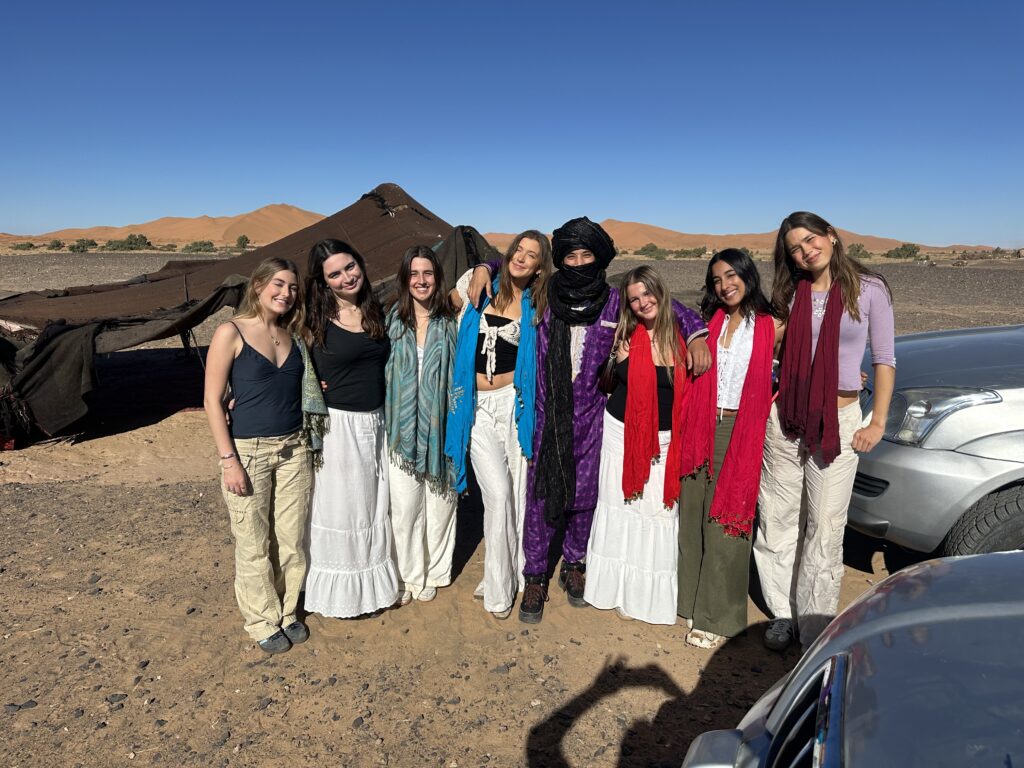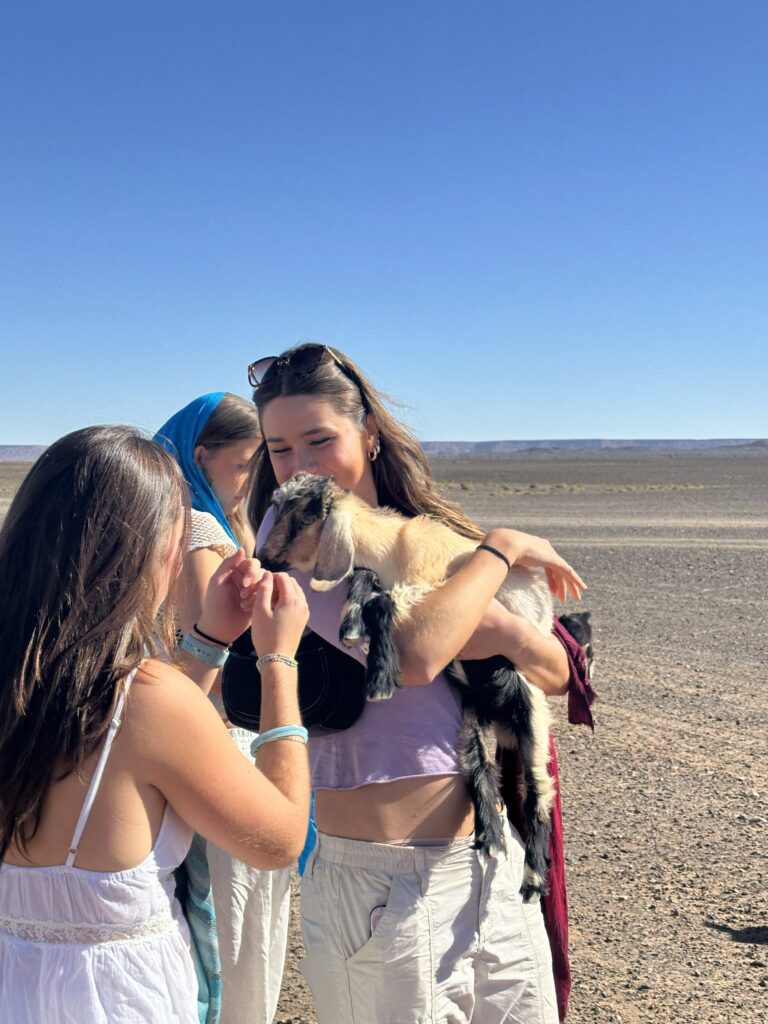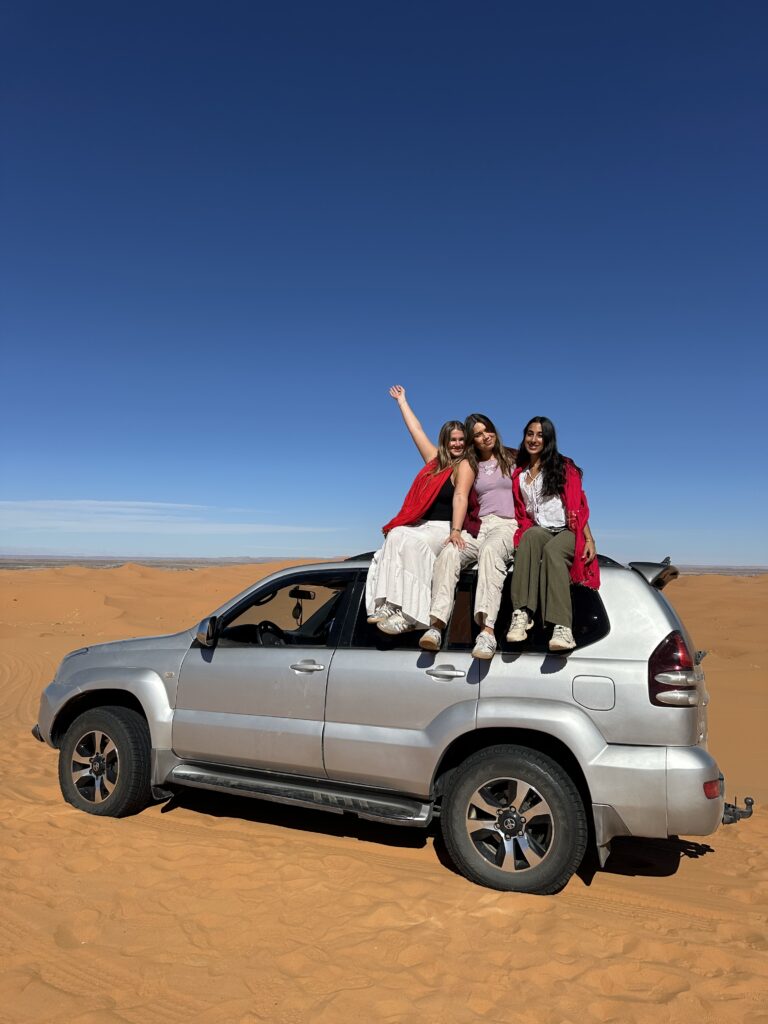
Every semester, thousands of university students travel to Morocco as study abroad groups, exchange cohorts, and floating campuses like Semester at Sea. Planning a trip for study abroad groups in Morocco takes more coordination than a standard vacation. Program calendars, group sizes, and safety expectations all shape the route. This guide covers the practical side of building a trip for a program coordinator, a student club, or a faculty-led cohort.
Why Morocco Works for Study Abroad Programs
Morocco sits close to Europe, runs on a reliable rail and road network, and packs an unusual range of landscapes into a small footprint. A group can see mountains, desert, coastline, and imperial cities without long flights between stops. The country also has a well-established tourism infrastructure, which matters when a coordinator needs a vetted, insured, English-speaking operator rather than an ad-hoc arrangement.
Choosing the Right Home Base City
Most study abroad groups in Morocco fly into Casablanca, Marrakech, or Tangier, and each city sets a different tone for the trip. Marrakech puts the Atlas Mountains and Sahara routes within easy reach. Tangier works well for programs docking by ship or arriving from Spain, since it sits close to the strait. Fes suits groups focused on history and craftsmanship, given its medieval medina and centuries-old artisan workshops, covered in more depth here. Casablanca offers the most direct international flight connections but the least charm as a base.
Building a Realistic Group Itinerary
A common mistake is packing too many cities into too few days. Coordinators should plan around drive times, not straight-line distances, since Morocco’s roads wind through mountains and valleys. A useful rule: budget one full day for travel between any two major regions. That applies to routes like the coast to the desert, or the north to Marrakech. Groups with three to five free days can usually manage one signature route, like Fes to the Sahara, or Marrakech to Chefchaouen and back. Trying to cover the whole country in under a week usually backfires and exhausts everyone.
Transport Logistics for Study Abroad Groups in Morocco
Private vehicles work best for groups under twenty, since a single driver-guide can handle the whole route without transfers. Larger cohorts sometimes split into two vehicles that travel together, which keeps the group intact while avoiding an oversized bus on narrow mountain roads. ONCF trains connect the major cities efficiently and let students explore certain routes independently. Seat availability during peak semester dates should get checked early, though For city-to-city transfers on either end of a group trip, airport pickup and transfer options are worth arranging in advance so nobody scrambles for taxis on arrival.
Budgeting and Group Pricing
Per-person costs drop significantly once a group reaches six to eight travelers, since transport and guide fees split across more people. Accommodation choice affects the budget more than almost anything else. A riad often costs less than a comparable hotel while offering a more authentic stay. Hotels do simplify logistics for larger groups that need many rooms in one building, though.. Desert camp nights typically include dinner and breakfast, while city stays often leave meals separate, so coordinators should confirm inclusions line by line before comparing quotes.
Safety, Logistics, and Working with a Local Operator
Program administrators usually need a few things beyond a nice itinerary: a licensed operator, clear cancellation terms, an English-speaking driver-guide, and a point of contact reachable during the trip. Checking current guidance from the U.S. State Department’shttps://www.nafsa.org/ Morocco travel advisory is a reasonable first step for any program office. Organizations like NAFSA: Association of International Educators also publish general safety and risk-management frameworks that apply well beyond Morocco. A local operator who works with universities regularly will already understand these expectations and can supply the documentation programs typically require.
Sample Itinerary Structure for Study Abroad Groups
A flexible four-day structure works for most study abroad groups in Morocco with a long weekend or a gap between field programs. The first day covers travel from the home base city toward the mountains or the coast. From there, day two pushes into the desert region, ending with a night at a Sahara camp. Sunrise over the dunes opens day three, followed by a scenic drive toward the next city. The final day wraps up with cultural sites and free time before the return journey. Coordinators can adjust the order depending on flight schedules, port dates, or program calendars, and a full breakdown of one version of this route shows how the pieces fit together for a Sahara-and-coast combination.
Plan Your Study Abroad Group Trip
Every program calendar looks different, and a good operator builds the route around your dates rather than forcing a fixed package. Share your group size, arrival city, and available days, and a realistic itinerary can get mapped out from there. Explore Navigate Morocco’s full tour lineup or reach out directly to start planning a trip your group will actually remember.