
Early morning departure from Marrakech, heading east across the High Atlas Mountains via the Tizi n’Tichka Pass, the highest paved road in North Africa at approximately 2,260 meters above sea level. The mountain road winds through spectacular switchbacks with sweeping views of rocky peaks, deep valleys, and Berber villages perched on the hillsides. Stop along the way for panoramic photographs before beginning the descent toward the pre-Saharan plains of the south.
The first major stop of the day is the legendary Ait Ben Haddou, a UNESCO World Heritage Site and one of the most iconic fortified villages in Morocco. This ancient ksar, built entirely from red earthen clay, has appeared in productions including Gladiator, Game of Thrones, Lawrence of Arabia, and The Mummy. Your guide will walk you through the narrow alleyways and take you up to the top granary for sweeping panoramic views of the surrounding desert landscape.
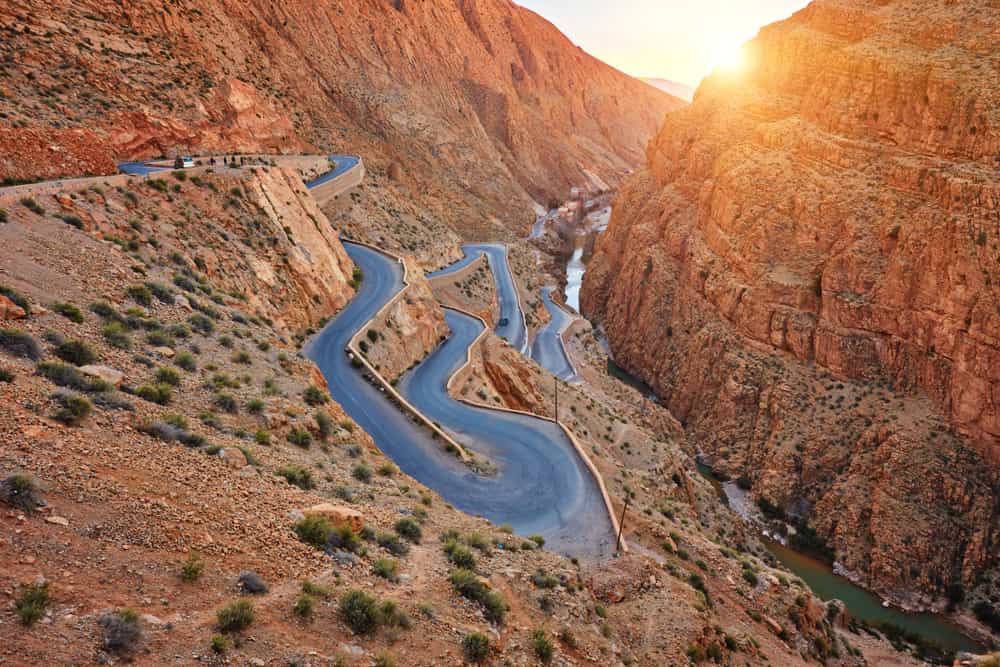
Continue through Ouarzazate for a lunch stop before heading east through the Valley of Roses, passing through Kelaat M’Gouna where Damask roses are cultivated and celebrated every May during the famous Rose Festival. Continue into the Dades Valley, arriving in the late afternoon. The winding roads, dramatic red rock formations, and ancient kasbahs clinging to the cliffsides make this one of the most beautiful overnight settings in southern Morocco. Check into your riad for dinner and an overnight stay.
Meals included: Dinner and Breakfast
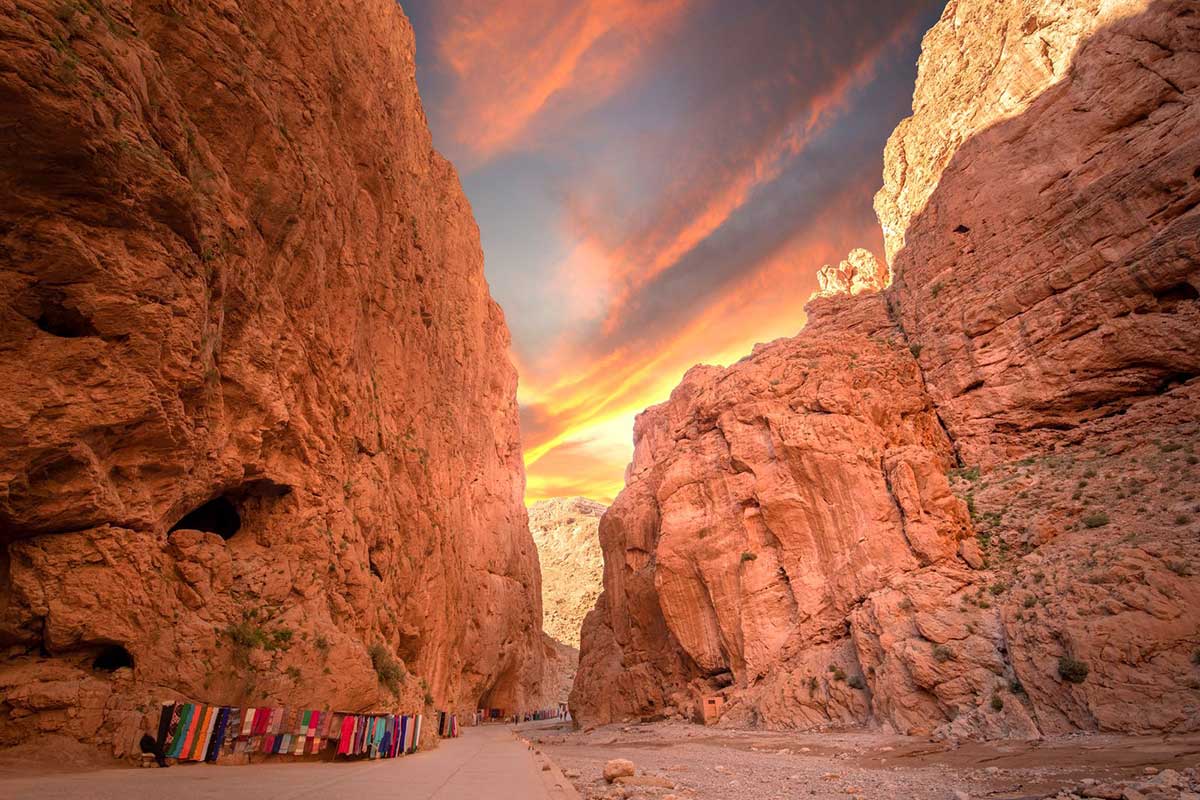
After breakfast, begin the day with a drive through the Dades Gorge, passing the famous Monkey Fingers red rock formations near Ait Oudinar before the valley opens out into the broader southern plains. Continue east to the Todra Gorge, a spectacular natural canyon carved by the Todra River through limestone cliffs that rise over 300 meters on either side. Take a refreshing walk along the river through the gorge before continuing south through Erfoud toward Merzouga.
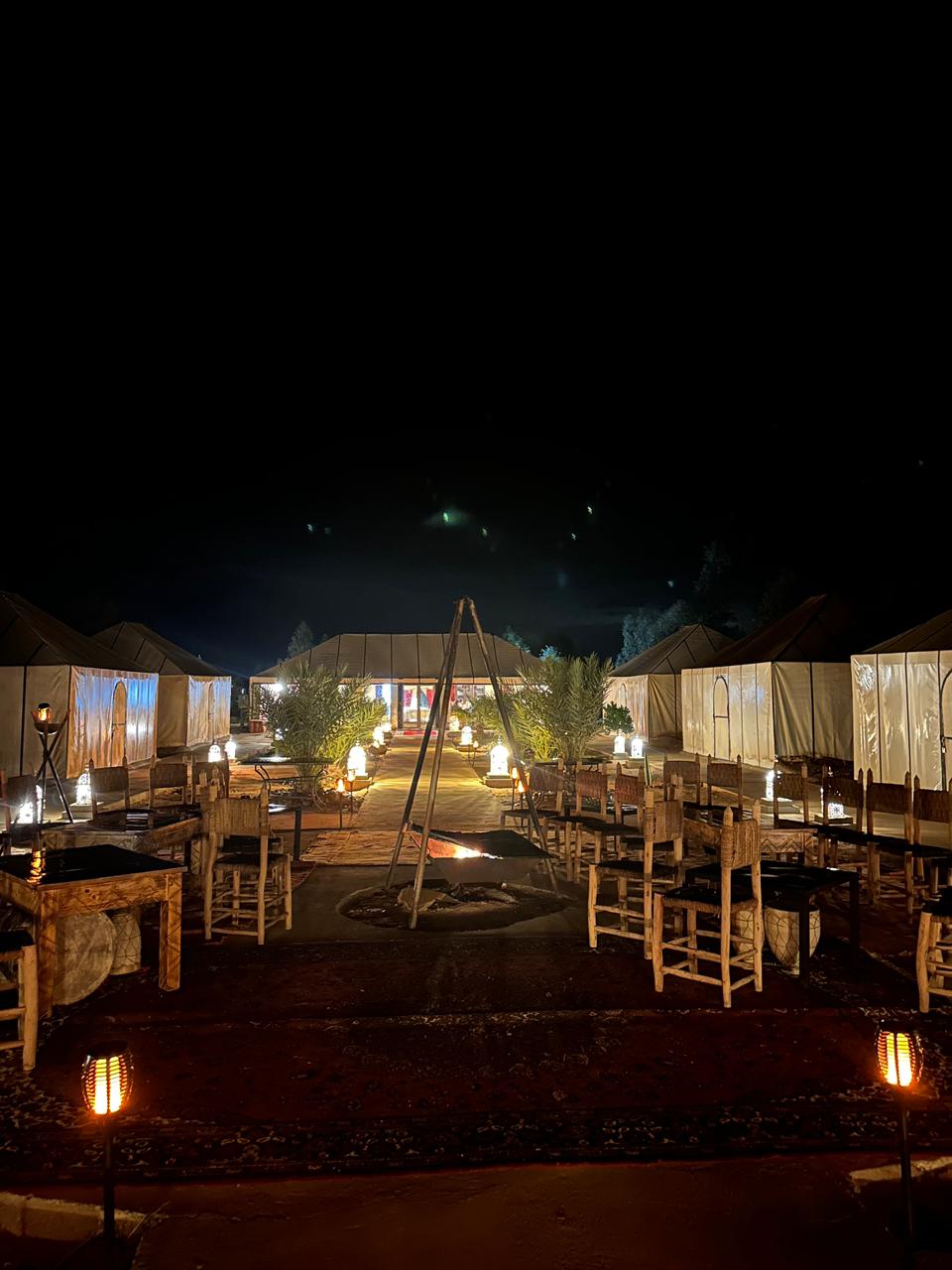
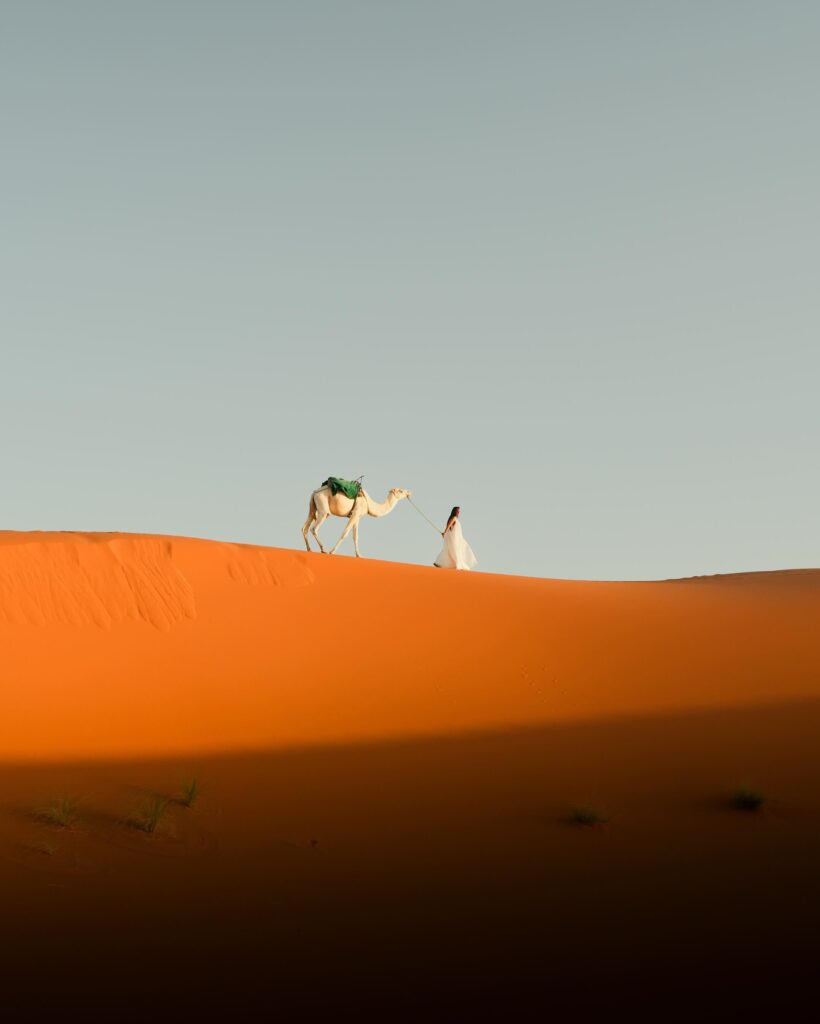
By late afternoon, the towering orange dunes of Erg Chebbi appear on the horizon. Your camels will be waiting at the edge of the desert for a sunset trek across the golden sands. As the sun descends, the dunes glow in shades of amber and rose and the silence of the Sahara settles completely around you. Arrive at your luxury desert camp to a warm welcome of mint tea and Berber bread. Enjoy a traditional Moroccan dinner under a sky full of stars, accompanied by the rhythmic sounds of live Berber music around the campfire.
Meals included: Dinner and Breakfast
Rise before dawn to witness the Sahara sunrise, one of the most peaceful and unforgettable moments of the entire journey. As the first light creeps over the dunes, the desert awakens in shades of gold and pink. After breakfast at the camp, check out late morning and transfer to your comfortable desert hotel or riad in Merzouga for the second night.
With a full afternoon free in the desert, explore the wider Merzouga region at a relaxed pace. Visit a nomadic Berber family in their tent and gain a genuine insight into their way of life. Head to Khamlia village to experience the ancient Gnawa music tradition performed live by local musicians, descendants of sub-Saharan Africans who have preserved this extraordinary musical heritage for centuries. Visit the fossil mines where millions of years of prehistoric marine life are embedded in the local rock. Optional activities in the afternoon include ATV quad biking across the dunes or a 4×4 desert excursion, available at an additional cost paid locally. Return to your desert hotel in the evening for dinner and an overnight stay.
Meals included: Dinner and Breakfast
After breakfast, leave Merzouga and begin the drive north through the pre-Saharan landscape toward the Middle Atlas Mountains. The route passes through the historic town of Rissani before entering the Ziz Valley, one of the most beautiful and photogenic landscapes in southern Morocco. The valley follows the Ziz River through a long corridor of thousands of date palms, ancient mud-brick kasbahs, and small Berber villages. Stop at the panoramic viewpoint high above the valley for sweeping photographs before continuing through the Foum Zabel tunnel and across the Tizi-n-Talghemt mountain pass.
Continue north into the Middle Atlas, where the landscape shifts dramatically from desert plains to rolling hills, cedar forests, and mountain villages. A brief stop near Azrou gives you the chance to encounter Barbary macaque monkeys roaming freely among the ancient cedar trees. Continue through the mountain roads before arriving in the peaceful valley of Bou Laajoul, a quiet and beautiful Middle Atlas setting that most Morocco itineraries never reach. Check into your accommodation for dinner and an overnight stay in one of the most serene corners of the country.
Meals included: Dinner and Breakfast
After breakfast in Bou Laajoul, continue north through the Middle Atlas toward Fes. The drive passes through Ifrane, the Switzerland of Morocco, a spotlessly clean alpine town with European-style stone chalets, manicured parks, and cool mountain air. Stop for a short walk and a coffee in Ifrane before the final stretch north to Fes.
Arrive in Fes in the late morning or early afternoon and check into your traditional riad in the heart of the old medina. The rest of the day and evening are entirely free for you to begin exploring Fes at your own pace. Wander into the medina, find a rooftop cafe for a mint tea and your first views over the ancient city, or simply settle into your riad and absorb the atmosphere of one of the world’s most extraordinary medieval cities before the full guided tour tomorrow. Fes has an excellent range of restaurants within and around the medina for an independent dinner.
Overnight stay: Traditional riad in Fes | Meals: Breakfast only
After breakfast at your riad, your local expert guide will meet you and begin the full guided cultural tour of Fes el-Bali, the ancient walled medina of Fes and one of the most complete and best-preserved medieval cities in the world. With over nine thousand alleyways, centuries-old monuments, and artisan workshops that have been operating for generations, Fes genuinely rewards a guided visit far more than an independent exploration.
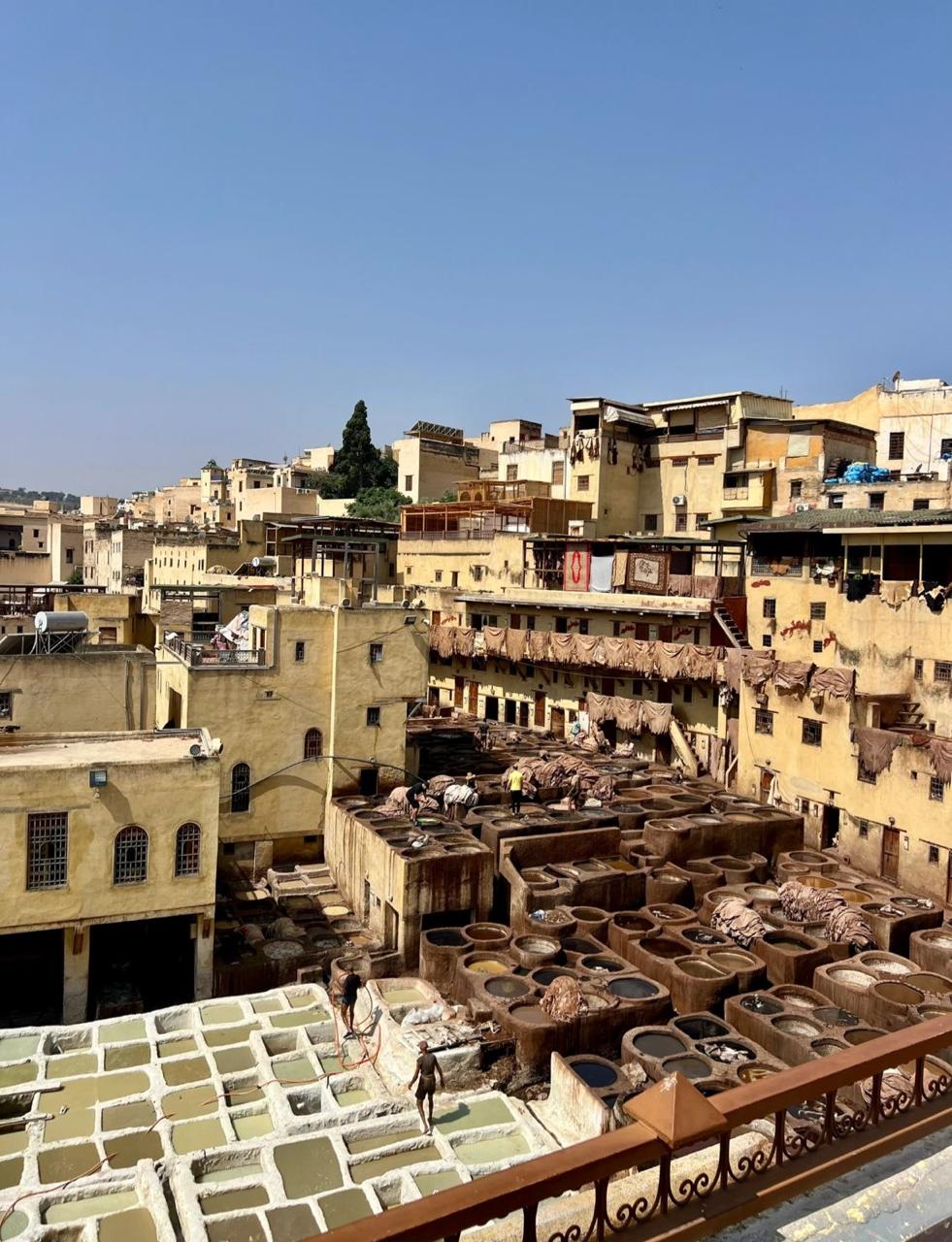
Visit Al-Qarawiyyin University, founded in 859 AD and recognized as the world’s oldest continuously operating university. Explore the Bou Inania Madrasa, a stunning 14th-century theological school of extraordinary decorative craftsmanship featuring intricate zellige tilework, carved stucco walls, and ornate cedar wood ceilings. Head to the world-famous Chouara Tanneries, where leather has been dyed using the same natural pigments and traditional methods for over a thousand years. Round off the day with a walk through the artisan workshops where coppersmiths, weavers, potters, and ceramicists practice their crafts as they have for generations. Enjoy a free evening in the city with dinner independently at one of the excellent restaurants in the medina.
Overnight stay: Traditional riad in Fes | Meals: Breakfast only
After breakfast, depart Fes and head northwest toward Chefchaouen, the famous Blue City nestled in the heart of the Rif Mountains. The drive takes approximately two and a half hours on a road that passes through fertile farmland before climbing into the forested Rif hillsides. Arrive in Chefchaouen late morning and check into your traditional riad in the medina.
The afternoon is yours to explore the Blue City freely before the guided tour tomorrow. Wander through the iconic blue-washed alleyways at your own pace, visit Outa el Hammam Square, and browse the artisan shops for handwoven textiles and leather goods. The town is at its most beautiful in the late afternoon light when the day visitors have left and the blue streets take on a quieter and more photogenic quality. Dinner independently at one of the restaurants in and around the medina.
Overnight stay: Traditional riad in Chefchaouen | Meals: Breakfast only
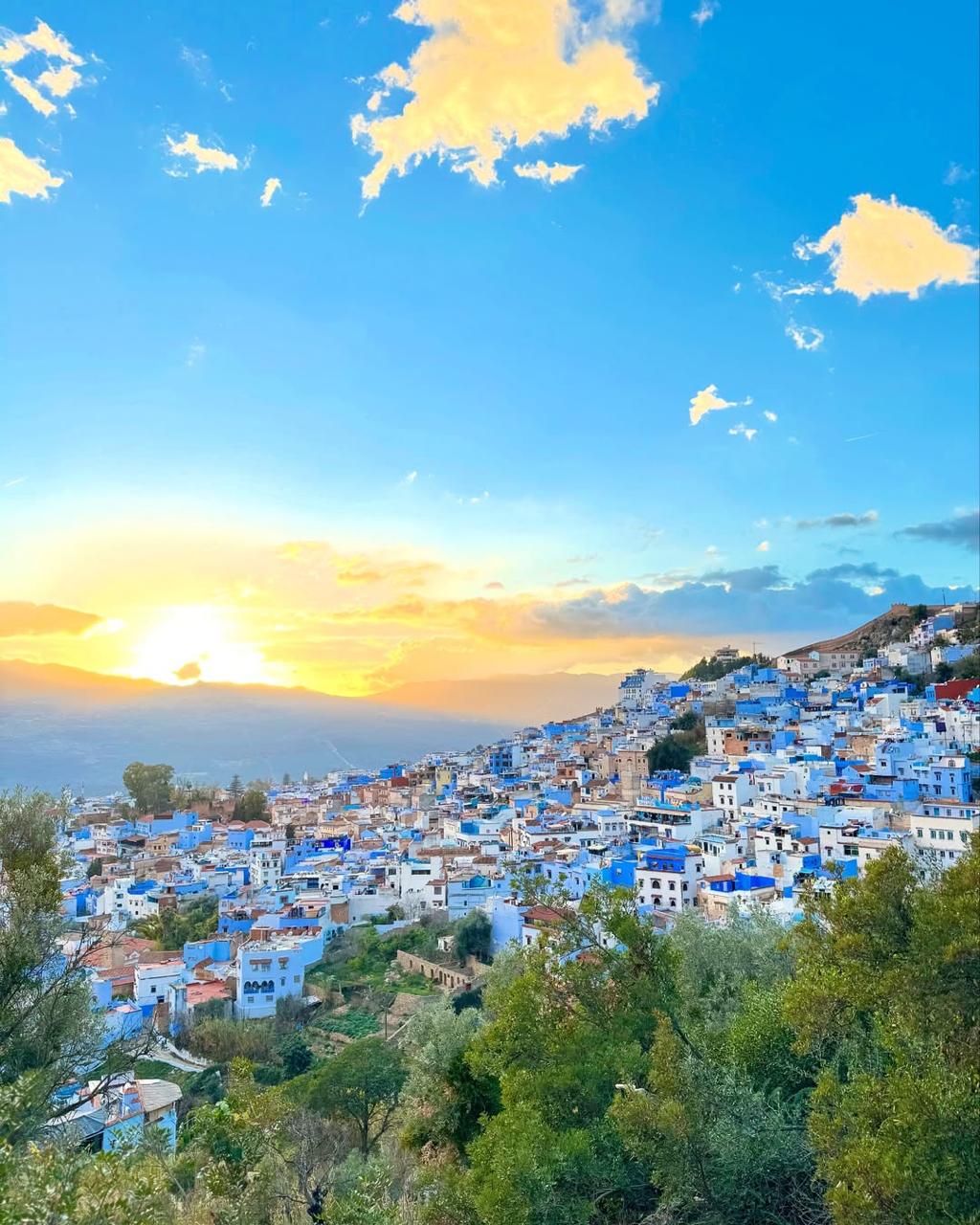
After breakfast, your local guide will meet you for a morning guided tour of the Chefchaouen medina. The tour covers the fascinating history of the town from its founding in 1471 to the arrival of Andalusian and Jewish refugees who shaped its distinctive blue aesthetic and architecture. Walk through the most photogenic quarters of the medina, visit local artisan workshops, and climb to the Spanish Mosque above the town for the best panoramic view of the blue rooftops and the surrounding Rif peaks.
After the guided tour, enjoy a final mint tea in Outa el Hammam Square before departing north toward Tangier. The drive from Chefchaouen to Tangier takes approximately two hours through the Rif Mountains, thelandscape opening out as you approach the northern tip of Morocco. Arrive in Tangier in the afternoon and check into your riad or hotel. Tangier is a city unlike any other in Morocco, shaped by centuries of international trade, diplomacy, and cultural exchange at the point where Africa and Europe come closest to touching. Spend the evening exploring the old medina, the Kasbah, or the lively seafront at your own pace. Dinner independently in the city.
Overnight stay: Riad or hotel in Tangier | Meals: Breakfast only
After breakfast, take some free time in the morning to explore more of Tangier before departing south along the Atlantic coast. If time allows, a visit to Cap Spartel, the dramatic headland where the Atlantic Ocean meets the Mediterranean Sea just 14 kilometers from the city center, is one of the most geographically extraordinary viewpoints in Morocco. The nearby Hercules Cave, a legendary sea cave whose ocean-facing opening resembles the shape of the African continent, is another worthwhile short stop on the way out of Tangier.
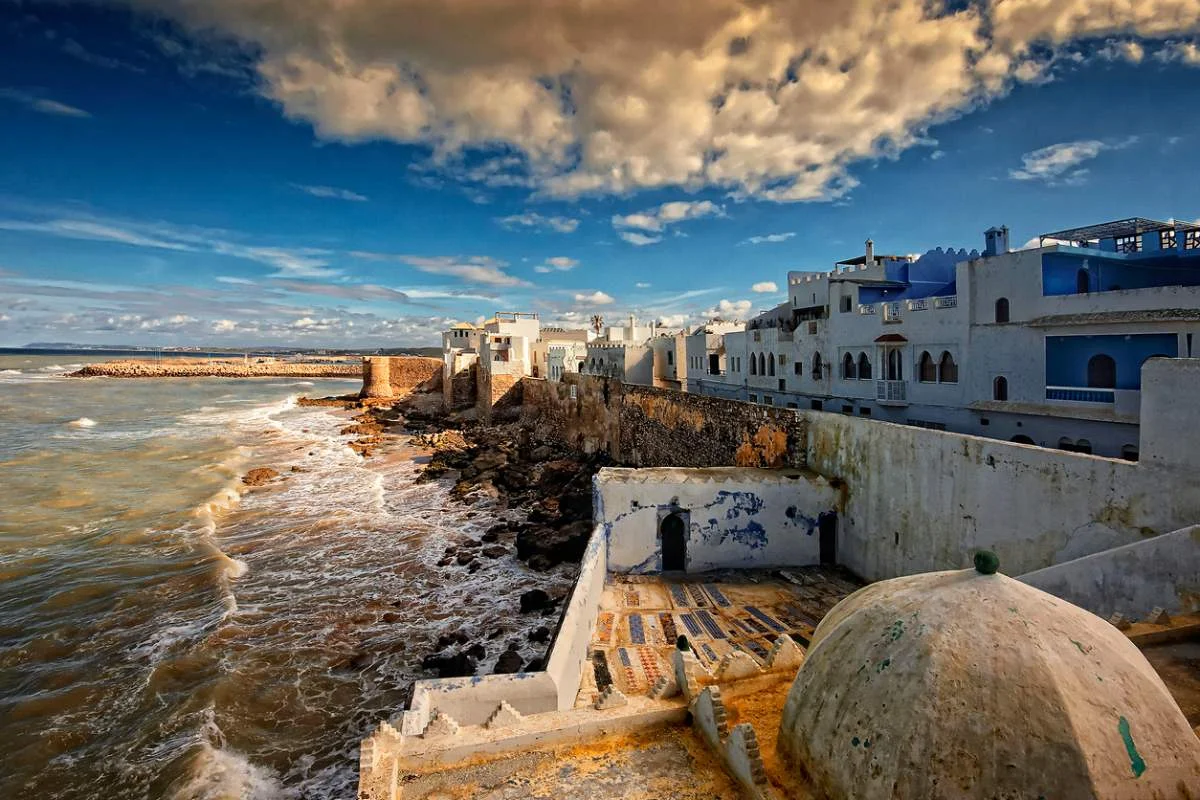
Continue south along the Atlantic coast road to Asilah, approximately 45 minutes from Tangier. This small, beautifully preserved fortified town sits within 15th-century Portuguese walls with the Atlantic Ocean on one side and a whitewashed medina on the other. Asilah is famous for its annual international arts festival, during which artists from around the world paint murals directly onto the walls of the medina, turning the town into a living open-air gallery. Wander through the medina, walk the ramparts overlooking the ocean, browse the galleries and artisan shops, and enjoy a relaxed afternoon in one of the most charming and unhurried towns on the Moroccan coast. Dinner independently in Asilah, where the fresh Atlantic seafood is particularly good.
Overnight stay: Riad or hotel in Asilah | Meals: Breakfast only
After breakfast in Asilah, enjoy a final morning walk along the ramparts or through the medina before departing south toward Casablanca. The drive takes approximately three hours along the Atlantic coast highway, passing through Kenitra and the fertile coastal plains of northwestern Morocco.
Arrive in Casablanca in the early afternoon. The evening is free to explore Morocco’s largest and most cosmopolitan city at your own pace. Walk along the Corniche, the city’s lively oceanfront promenade lined with cafes, restaurants, and views of the Atlantic, or explore the Art Deco architecture of the city center, a legacy of the French protectorate period that gives Casablanca a distinctly different character from Morocco’s older imperial cities. Dinner independently in the city, where the restaurant scene is the most varied and international in Morocco.
Overnight stay: Hotel in Casablanca | Meals: Breakfast only
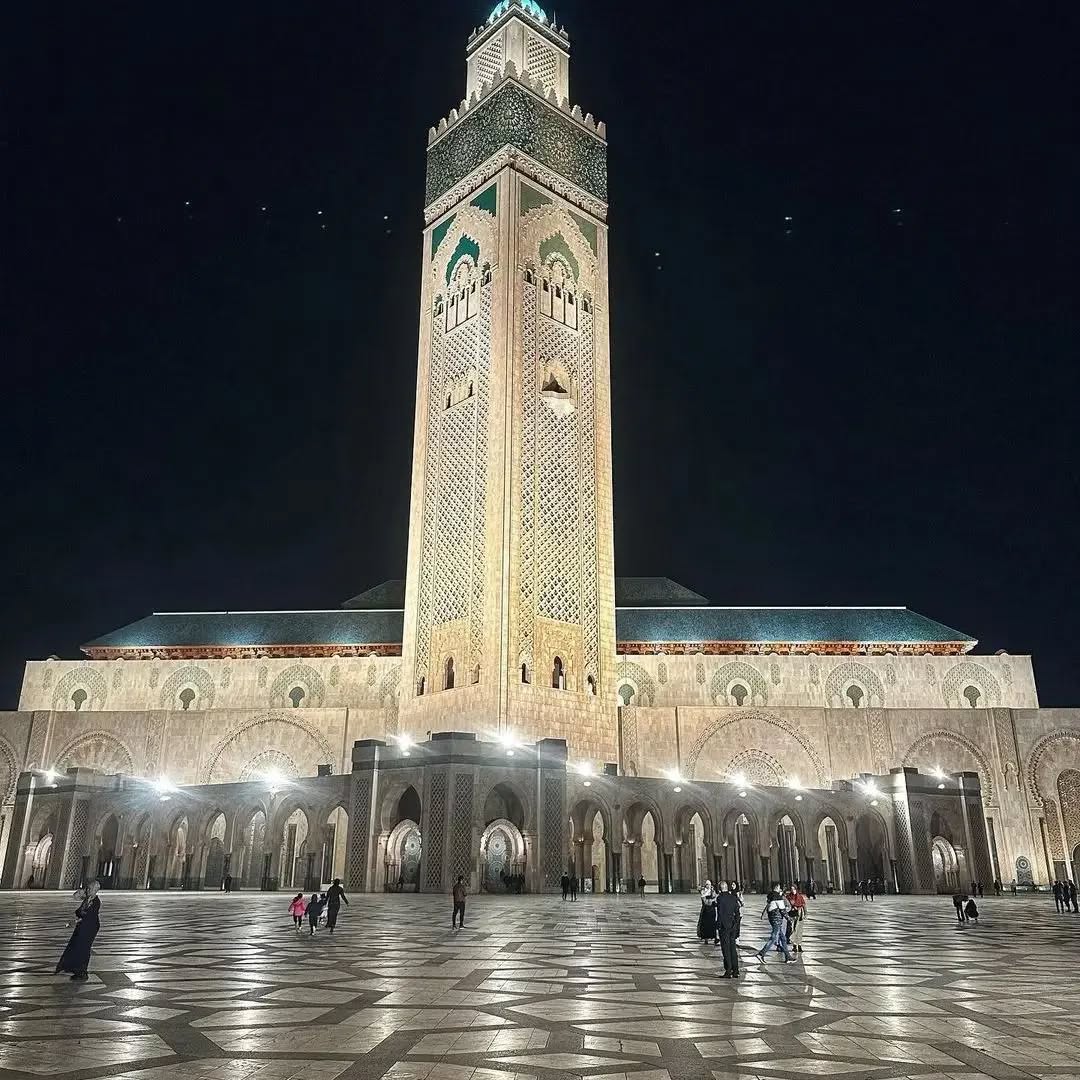
After breakfast, the morning begins with a visit to the magnificent Hassan II Mosque, one of the largest mosques in the world and Morocco’s most awe-inspiring piece of modern architecture. Built partly over the Atlantic Ocean and completed in 1993, the mosque’s 210-meter minaret is the tallest religious structure on earth. Its interior of hand-carved cedar wood, Italian marble, and intricate zellige tilework is breathtaking in its scale and detail and it is one of the few mosques in Morocco open to non-Muslim visitors. The guided interior visit takes approximately one hour and is one of the genuine highlights of any visit to Casablanca.
The rest of the day is free to explore Casablanca at your own pace. Visit the medina and the old Habous quarter, a French-built traditional Moroccan neighborhood that blends colonial planning with Moroccan architectural style. Browse the shops along Mohammed V Boulevard or simply relax at a seafront cafe and watch the Atlantic. The evening is free for a final independent dinner in Casablanca before your departure tomorrow.
Overnight stay: Hotel in Casablanca | Meals: Breakfast only
Your final morning is yours to enjoy at your own pace depending on your flight schedule. Enjoy a last breakfast at your hotel, take a final walk along the Corniche, or simply relax before departure.
At the appropriate time, your Navigate Morocco driver will transfer you comfortably to Mohammed V International Airport for your departure, bringing your 12-day Morocco journey to a warm and memorable close. Simply share your flight details with us at the time of booking and we will organize the timing to ensure a smooth and comfortable end to your trip.
End of tour with Navigate Morocco
Is this a private tour?
Yes. This is a fully private tour operated exclusively for you and your travel companions by Navigate Morocco. You will have a dedicated vehicle and driver-guide for all 12 days and will not share with any other group at any point during the journey.
Where does the tour start and end?
The tour starts in Marrakech with a pickup from Marrakech Menara Airport or your accommodation and ends with a departure transfer from your Casablanca hotel to Mohammed V International Airport on Day 12. Simply share your flight details with us at the time of booking and we will organize the timing accordingly.
Why are there two nights in the Merzouga desert area?
Two nights in the Merzouga region allows you to experience two different sides of the desert. The first night in a luxury desert camp gives you the full sunset camel trek, campfire, and stargazing experience. The second night in a comfortable desert hotel gives you a more relaxed base with full facilities, plus the time to explore nomadic families, Khamlia Gnawa music, and fossil sites without rushing.
What is Bou Laajoul and why does the tour stop there?
Bou Laajoul is a peaceful valley in the Middle Atlas Mountains, a quiet and beautiful overnight stop that most Morocco itineraries skip entirely. Stopping here breaks the long journey from the Sahara to Fes into two comfortable days, allows for a more relaxed pace through the cedar forests and mountain landscapes, and gives you a genuine experience of the Middle Atlas countryside that very few travelers ever see.
Are dinners included in the cities?
Dinners are included at Dades Valley, the Sahara desert camp, and Bou Laajoul, where restaurant choice is more limited and the included meal is part of the experience. In all major cities including Marrakech, Fes, Chefchaouen, Tangier, Asilah, and Casablanca, dinners are not included, giving you the freedom to explore each destination’s restaurant scene independently. Your driver-guide will always recommend the best options.
What is there to do in Tangier?
Tangier is one of Morocco’s most fascinating cities, shaped by centuries of international trade and cultural exchange at the point where Africa and Europe come closest. The old medina, the Kasbah, the Grand Socco, and the seafront Corniche are the main areas to explore. Cap Spartel and the Hercules Cave just outside the city are also worth visiting on the morning of Day 9 before heading to Asilah.
What makes Asilah worth an overnight stop?
Asilah is one of the most charming and underrated towns on the Moroccan coast. Its compact whitewashed medina sits within 15th-century Portuguese walls with the Atlantic on one side, and the walls are decorated with murals by international artists from the annual Asilah Arts Festival. It has a genuinely relaxed and local atmosphere, excellent fresh seafood, and a beauty that rewards a slow and unhurried visit rather than a rushed day trip.
Is the Hassan II Mosque visit included?
The mosque visit is included in the Day 11 itinerary but the entrance fee for the guided interior tour is paid locally and is not included in the tour price. Your Navigate Morocco driver-guide will accompany you and help organize the visit on the day.
Can the itinerary be customized?
Absolutely. Navigate Morocco offers fully flexible itineraries. Stops, pacing, accommodation preferences, and optional activities can all be adjusted to match your group’s interests and schedule.
What is the best time of year for this tour?
The best months are March to May and September to November, when temperatures are comfortable across all regions of the route. Summer can be very hot in the Sahara and southern Morocco, while winter is cooler but still manageable with appropriate clothing particularly in the mountains and northern Morocco.
What should I pack?
Comfortable walking shoes, light layered clothing, sunscreen, sunglasses, and a hat are essential. Bring a warm layer for cool evenings in the mountains, desert, and along the Atlantic coast. A small daypack is ideal for daily excursions and the camel trek, and a scarf is useful for the desert wind and when visiting religious sites.