
Your 12-day Moroccan adventure begins in Casablanca, Morocco’s largest city and economic capital, where your Navigate Morocco driver will meet you at the airport or your hotel. The day is dedicated to exploring the best of this dynamic city, which blends French colonial architecture, modern high-rises, and deeply rooted Moroccan traditions.
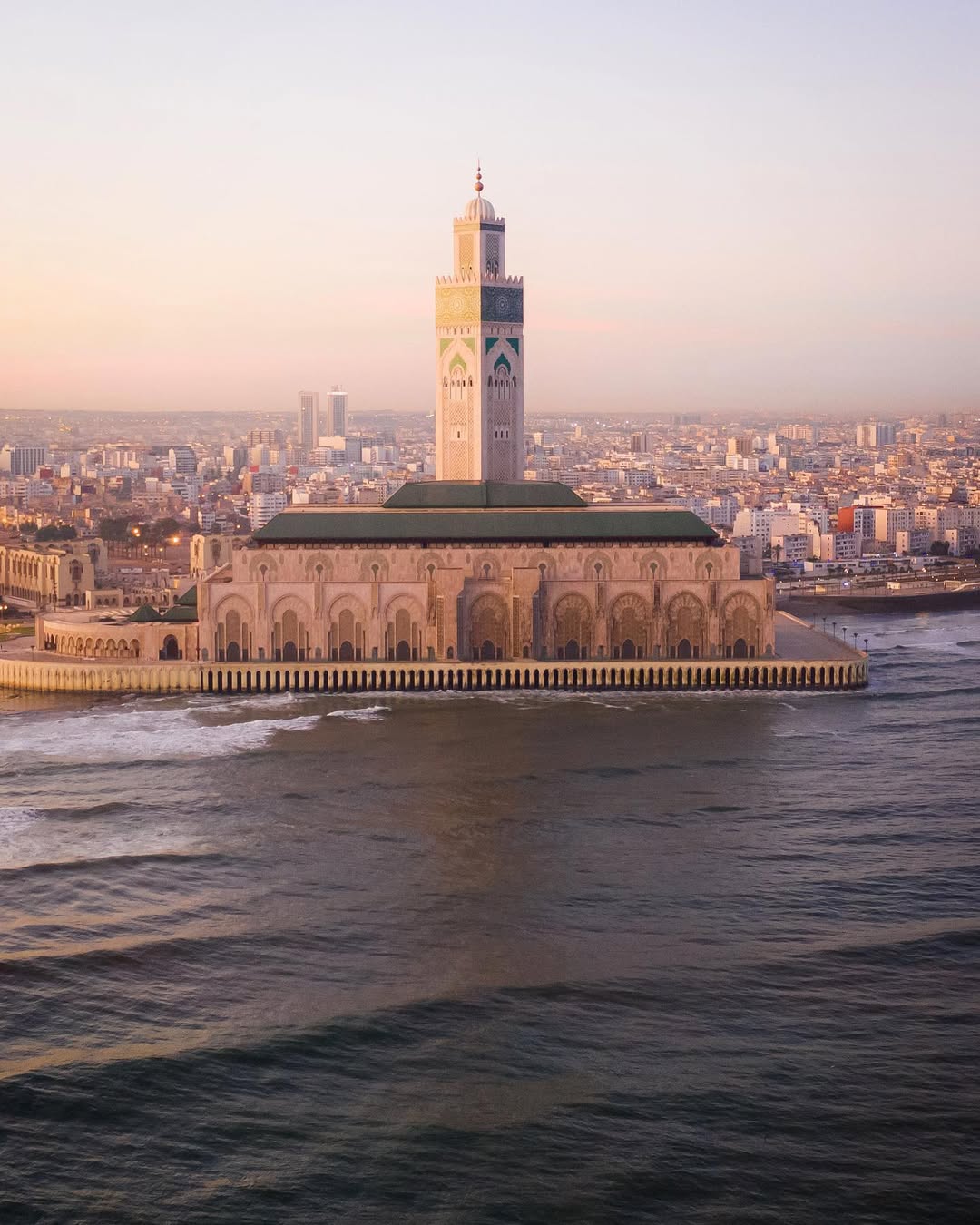
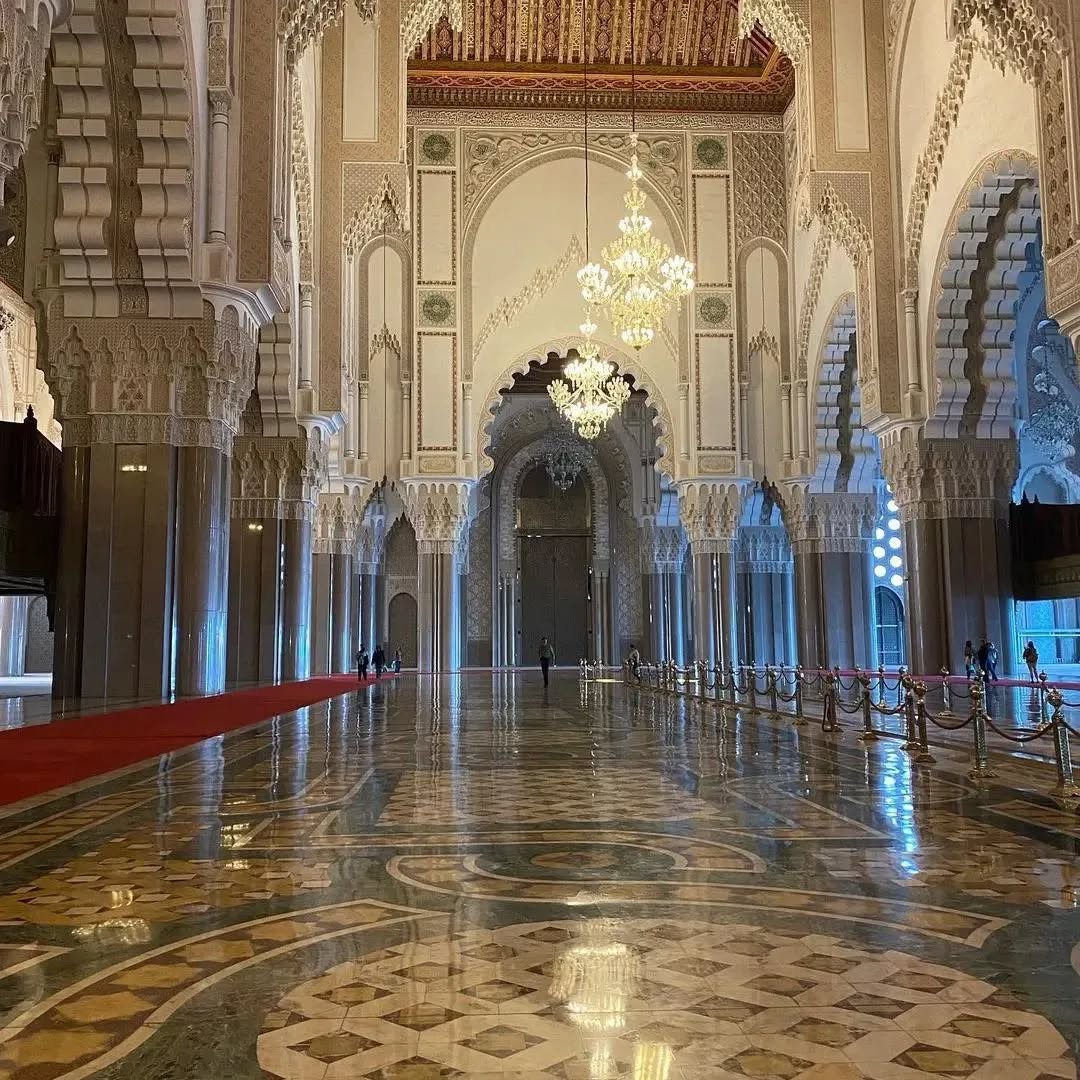
The highlight of the day is a visit to the magnificent Hassan II Mosque, the largest mosque in Morocco and one of the largest in the world. Built partly over the Atlantic Ocean and completed in 1993, the mosque’s 210-meter minaret is the tallest religious structure on earth, and its interior of hand-carved cedar wood, Italian marble, and intricate zellige tilework is breathtaking in its scale and detail. It is one of the few mosques in Morocco open to non-Muslim visitors.
After the mosque, continue to the United Nations Square, one of the city’s grand colonial-era public spaces, before taking a relaxed walk along the Corniche, Casablanca’s lively coastal promenade stretching along the Atlantic Ocean. The area is lined with cafes, restaurants, and ocean views, offering a perfect introduction to the city’s cosmopolitan character. Return to your hotel in the evening for an overnight stay.
Overnight stay: Hotel in Casablanca
After breakfast, depart Casablanca and head north to Rabat, Morocco’s refined and elegant capital city. Begin with the Hassan Tower, the imposing unfinished minaret of a 12th-century mosque that would have been one of the largest in the world had it been completed. Standing beside it is the Mausoleum of Mohammed V, a masterpiece of Moroccan royal craftsmanship housing the tombs of King Mohammed V and his two sons. Continue to the Kasbah of the Oudayas, a beautifully preserved fortified quarter with narrow Andalusian-style blue and white painted streets, fragrant gardens, and panoramic views over the mouth of the Bou Regreg River and the Atlantic Ocean.
After lunch in Rabat, continue north along the Atlantic coast to Asilah, a small and charming fortified town that feels quite unlike anywhere else in Morocco. Asilah is famous for its annual international cultural festival, during which artists from around the world are invited to paint murals on the medina walls, transforming the town into an open-air gallery. Wander through the medina to admire the striking murals, explore the narrow whitewashed streets, and visit the Skala fortress, a Portuguese-built sea wall with panoramic views over the crashing Atlantic waves. Settle into your riad for the evening and enjoy the peaceful coastal atmosphere.
Overnight stay: Riad or hotel in Asilah
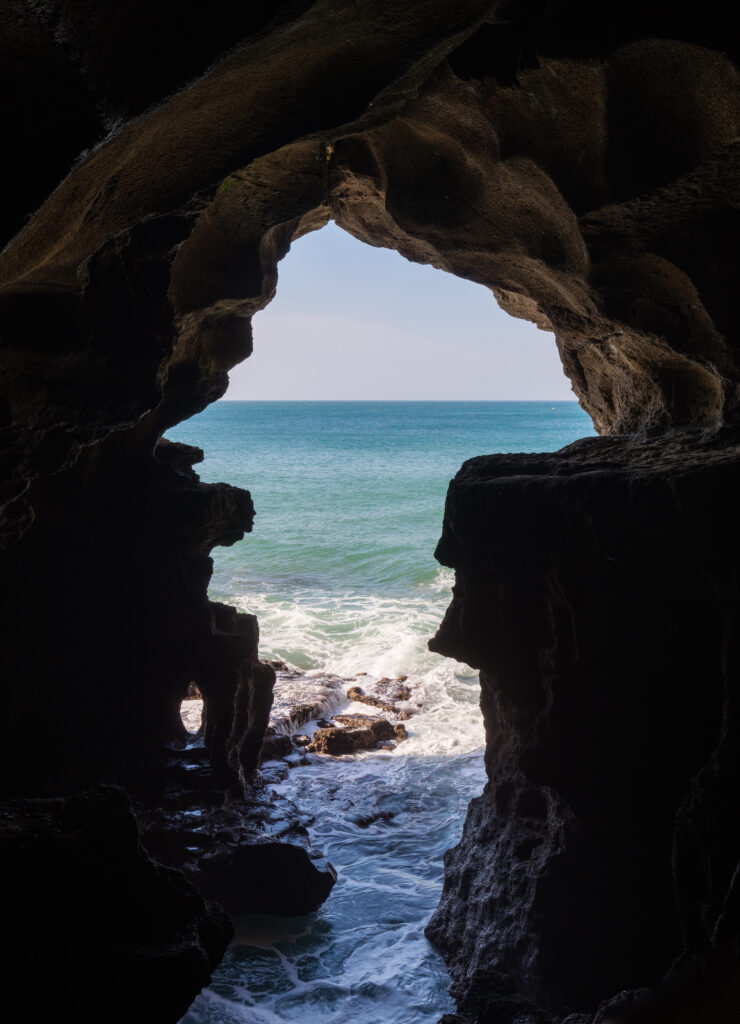
After breakfast, head north to Tangier, Morocco’s legendary gateway city where Africa and Europe feel closer than anywhere else on earth. Tangier has long attracted writers, artists, and adventurers drawn to its unique position at the meeting point of the Atlantic and the Mediterranean. Begin with a visit to Achakar Beach, a beautiful stretch of coastline just outside the city, before continuing to the famous Hercules Cave, a dramatic natural sea cave steeped in mythology, whose ocean-facing opening is said to resemble the shape of the African continent. The cave has been a place of wonder for centuries and is one of the most photographed sites in northern Morocco.
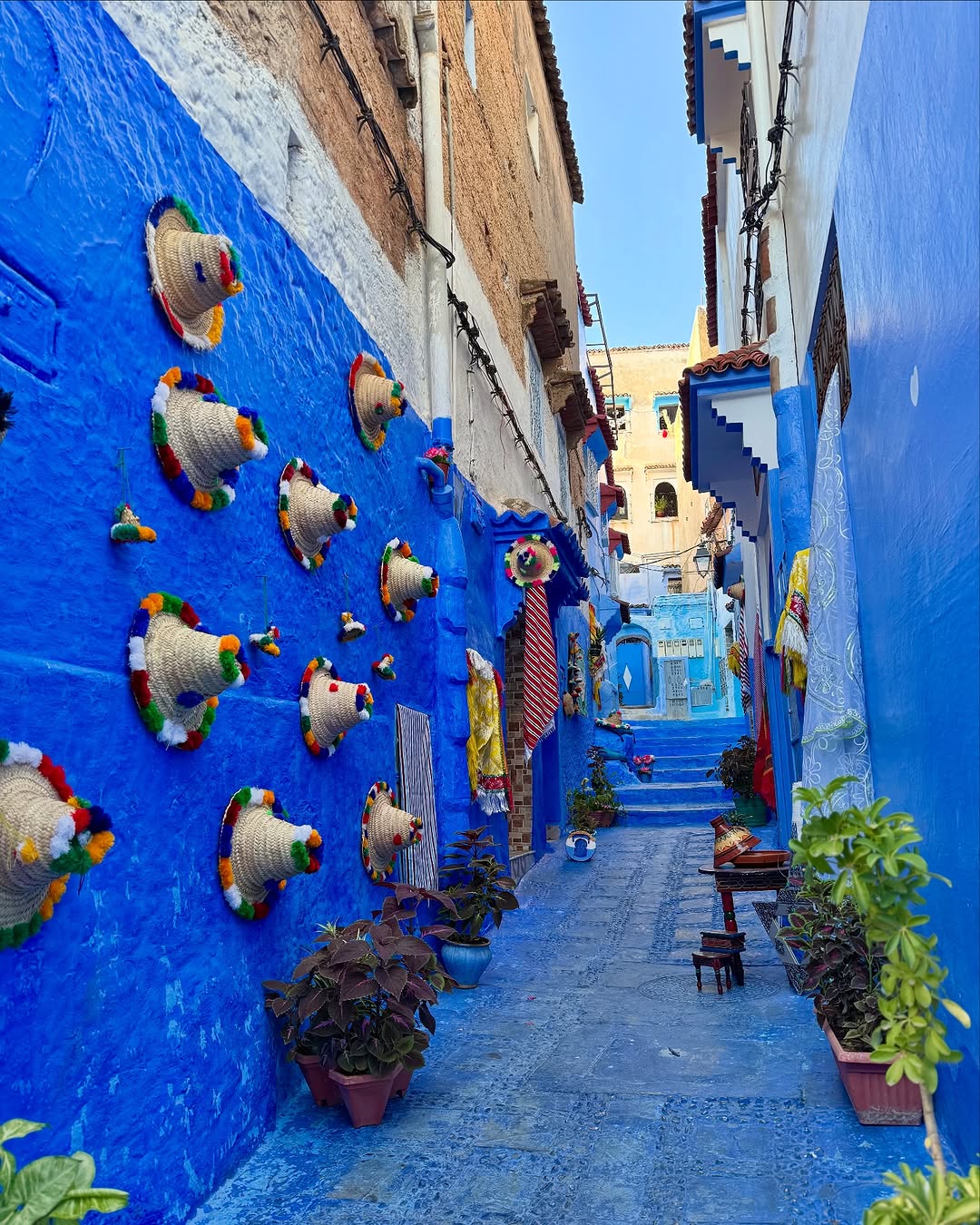
From Tangier, head south through the Rif Mountains toward Chefchaouen, one of the most beautiful and distinctive towns in Morocco. The drive through the Rif is scenic and lush, with forested hillsides and mountain villages lining the road as it climbs higher. Arrive in Chefchaouen in the late afternoon and check into your riad. Spend the evening wandering freely through the blue-washed alleyways of the medina, where nearly every wall, staircase, and doorway is painted in a different shade of blue. Settle into Outa el Hammam Square, the lively heart of the medina, for a mint tea and watch the evening life of the town unfold around you.
Overnight stay: Traditional riad in Chefchaouen
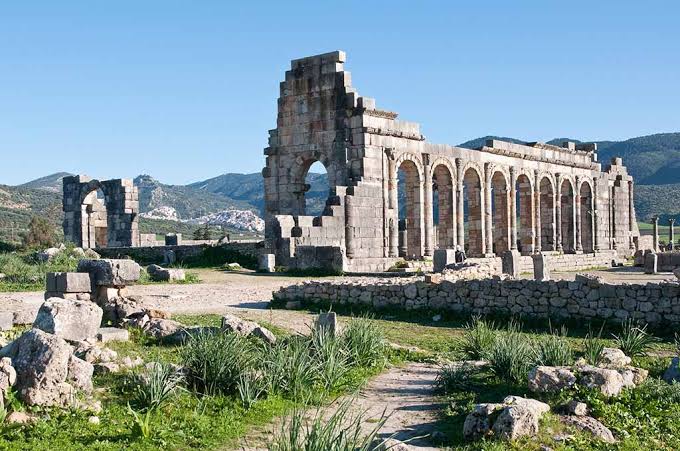
After breakfast, enjoy a final short morning walk through the blue medina before departing south. The first major stop of the day is Volubilis, Morocco’s best-preserved Roman archaeological site and a UNESCO World Heritage Site. Set among rolling green farmland near the town of Meknes, Volubilis was once one of the most important Roman outposts in North Africa. Walk through triumphal arches, along ancient paved streets, past mosaic floors of extraordinary quality, and between the bases of columns that have stood for nearly two thousand years. Your guide will bring the site to life with stories of the Roman families, merchants, and soldiers who once called this remarkable place home.
From Volubilis, continue a short distance to Moulay Idriss Zerhoun, one of Morocco’s most sacred towns and the resting place of Moulay Idriss I, the founder of Morocco’s first Arab dynasty and a direct descendant of the Prophet Mohammed. The town climbs dramatically up two hillsides and its panoramic views of the surrounding countryside are among the most beautiful in the region.
Continue to Meknes, one of Morocco’s four imperial cities and a destination often overlooked in favor of its more famous neighbors but deeply rewarding. Visit the magnificent Bab Mansour gate, considered the finest decorated gate in all of Morocco, and explore the historic medina, the Tomb of Sultan Moulay Ismail, the royal granaries, and the vast Sahrij Souani water reservoir. Stroll through the lively Lahdim Square before continuing east to Fes for an overnight stay in a traditional riad.
Overnight stay: Traditional riad in Fes
Today is entirely dedicated to Fes el-Bali, the ancient walled medina of Fes and one of the most complete and best-preserved medieval cities anywhere in the world. With a knowledgeable local expert guide, spend the day walking through a labyrinth of over nine thousand alleyways where the pace of life has changed little over centuries and the sounds, scents, and textures of medieval Morocco are very much alive.
Visit Al-Qarawiyyin University, founded in 859 AD and recognized as the world’s oldest continuously operating university. Explore the Bou Inania Madrasa, a stunning 14th-century theological school featuring some of the finest examples of Moroccan decorative craftsmanship, with intricate zellige tilework, elaborately carved stucco walls, and ornate cedar wood ceilings and screens.
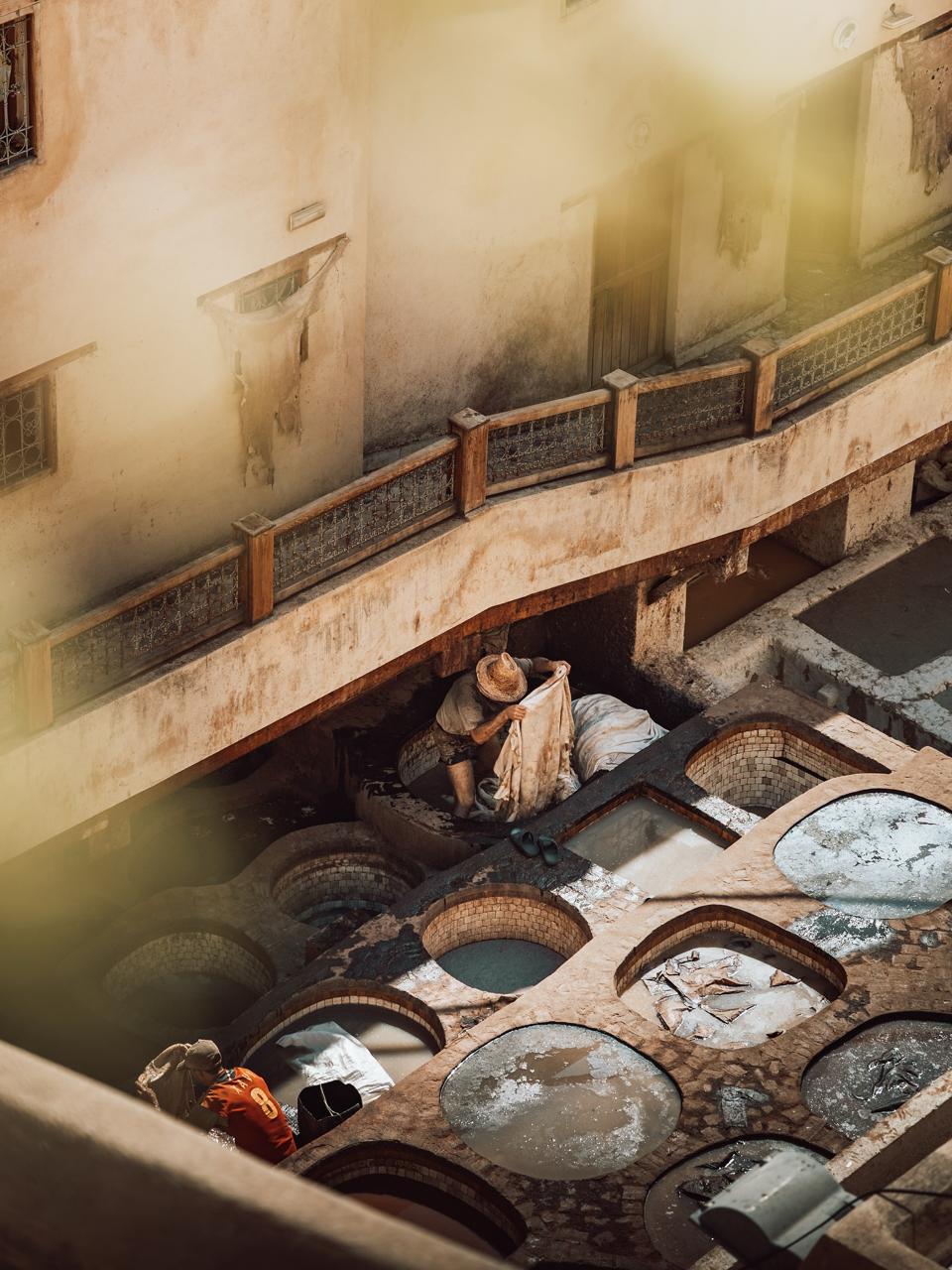
Head to the world-famous Chouara Tanneries, where leather has been dyed using natural pigments and traditional methods for over a thousand years. View the tanneries from the rooftop terraces of the surrounding leather shops, where the vivid circular dye vats spread out below in a patchwork of color that is one of the most visually striking experiences in all of Morocco. Round off the day with a walk through the artisan workshops where coppersmiths, weavers, potters, and ceramicists practice their crafts as they have for generations. Enjoy free time in the evening to browse the souk or relax at a traditional cafe.
Overnight stay: Traditional riad in Fes
After breakfast, depart Fes and head south through the scenic Middle Atlas Mountains. The first stop is Ifrane, a charming alpine town that feels entirely out of place in Morocco in the best possible way. With its stone chalets, manicured parks, clean streets, and cool mountain air, Ifrane has earned its nickname of the Switzerland of Morocco. Stop for a short walk and a coffee before continuing south through the cedar forests around Azrou, where Barbary macaque monkeys roam freely among the ancient trees, one of Morocco’s most charming wildlife encounters.
Continue south to Midelt, a quiet mountain town sitting between the Middle and High Atlas ranges, famous throughout Morocco for its high-quality apples and traditional Berber carpets, for a lunch stop. After lunch, the road descends dramatically into the Ziz Valley, one of the most beautiful and photogenic landscapes in southern Morocco. The valley follows the Ziz River through a long corridor of date palms, ancient mud-brick kasbahs, and small Berber villages. Stop at the panoramic viewpoint high above the valley for sweeping photographs before continuing through the Foum Zabel tunnel and across the Tizi-n-Talghemt pass.
By late afternoon, the towering orange dunes of Erg Chebbi appear on the horizon. Arrive in Merzouga, check into your hotel near the edge of the dunes, and enjoy a traditional Moroccan dinner as the desert settles into its extraordinary evening silence.
Meals included: Dinner and Breakfast
Begin the day early to catch the Sahara sunrise, one of the most peaceful and unforgettable moments of the entire journey. As the first light of dawn slowly illuminates the dunes in shades of gold and pink, the desert awakens in complete silence. After breakfast, embark on a full day of desert exploration and cultural experiences in the Merzouga region.
Visit a nomadic Berber family in their tent and gain a genuine insight into their quiet, self-sufficient way of life, learning about their traditions, livestock management, and daily routines in one of the most challenging environments on earth. Continue to M’fis, an abandoned mining town with a fascinating history of extracting kohl, the ancient eye cosmetic made from antimony powder that has been used by men and women across North Africa for centuries. Next, visit Khamlia, a small village whose community has preserved the ancient tradition of Gnawa music, a deeply spiritual and rhythmic style of music and dance with sub-Saharan Africanroots. Enjoy a live performance by local musicians, one of the most memorable cultural encounters of the tour.
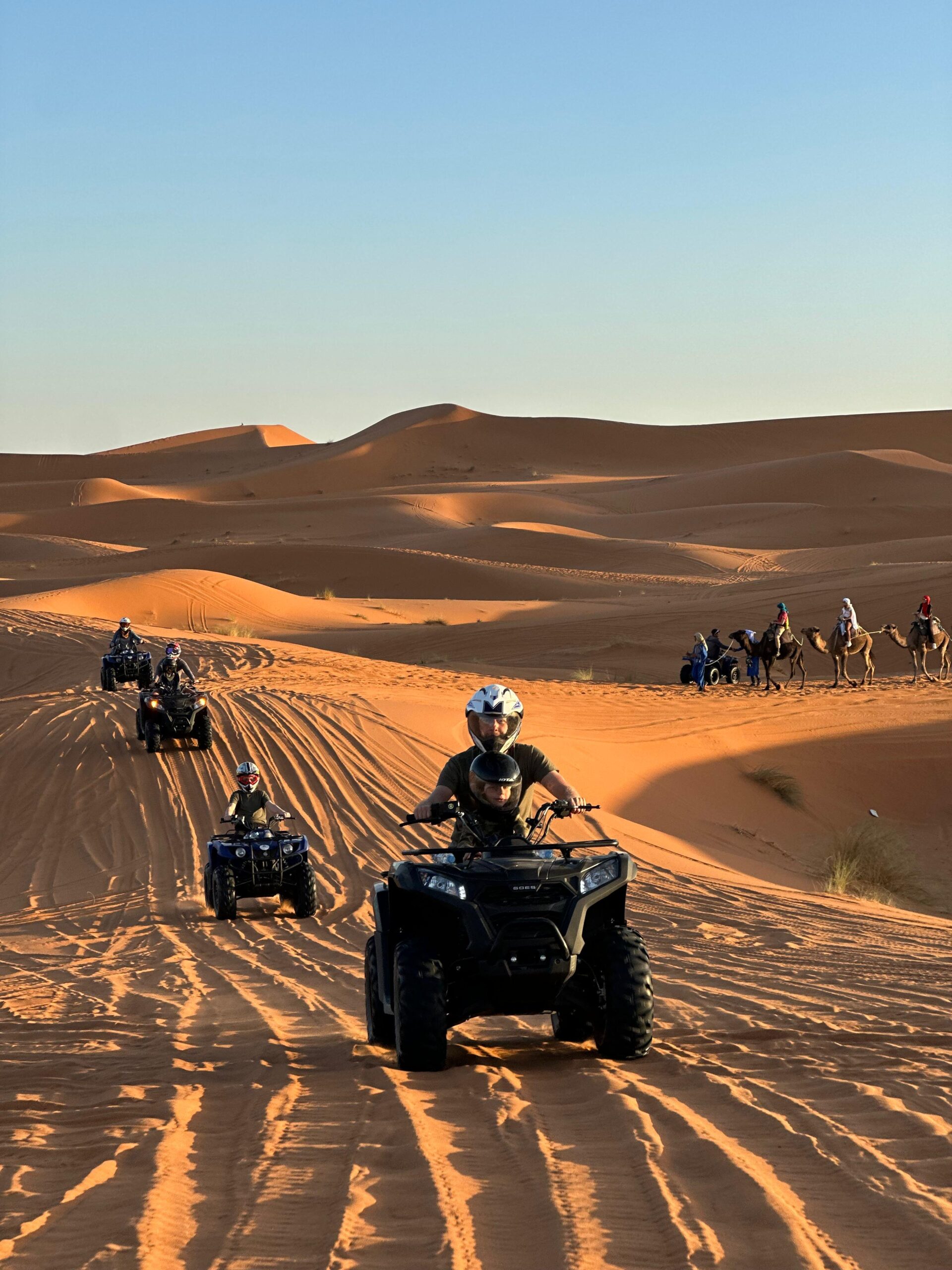
After lunch at a local restaurant, enjoy an afternoon camel trek across the golden dunes of Erg Chebbi. As the sun begins to set, the dunes glow in warm shades of amber and rose. Your guide will lead you to your luxury desert camp, where a warm welcome of mint tea and Berber bread awaits. Enjoy a traditional dinner around the campfire under a sky full of stars, accompanied by the rhythmic sounds of live Berber music.
Meals included: Dinner and Breakfast
Rise early once more to witness the desert sunrise before breakfast at the camp. After a final morning in the Sahara, begin the journey westward. The first stop is Rissani, the ancient former capital of the Tafilalt region and the historic heartland of Morocco’s Alaouite royal dynasty. If your visit falls on a market day (Tuesday, Thursday, or Sunday), the Rissani souk comes alive with local traders selling fresh dates, spices, handmade crafts, traditional rugs, and livestock, offering one of the most authentic market experiences in southern Morocco.
Continue west to the Todra Gorge, a spectacular natural canyon carved by the Todra River through limestone cliffs that rise over 300 meters on either side. At its narrowest, the walls close in to just a few meters wide, creating a dramatic corridor of sheer rock that is a favorite among climbers, hikers, and photographers. Take a peaceful walk along the river through the gorge and absorb the extraordinary scenery.
After lunch, continue into the Dades Valley, known for its winding roads, ancient kasbahs, and the famous Monkey Fingers red rock formations near Ait Oudinar. The valley is often called the Valley of a Thousand Kasbahs, and the scenery along the road more than lives up to that name. Arrive in the late afternoon and check into your riad or hotel overlooking the valley for a peaceful evening.
Meals included: Dinner and Breakfast
After breakfast, depart the Dades Valley and travel west through the Valley of Roses, named for the fragrant Damask rose fields cultivated by local Berber farmers across the hillsides. Pass through the town of Kelaat M’Gouna and continue through Skoura, with its palm groves and historic kasbahs, before reaching Ouarzazate, the Hollywood of Africa. Known for its dramatic desert landscapes and traditional kasbah architecture, Ouarzazate has been the preferred filming location for some of the most celebrated productions in cinema history. Visit the Atlas Film Studios, where iconic sets from productions including Gladiator, Lawrence of Arabia, and Game of Thrones still stand among the desert scenery.
Continue to the legendary Ait Ben Haddou, a UNESCO World Heritage Site and one of Morocco’s most iconic fortified villages. This ancient ksar, built entirely from earthen clay, rises dramatically from the riverbank in a series of towers, walls, and labyrinthine alleyways. Wander through the narrow streets, climb to the top for sweeping views of the surrounding desert, and enjoy lunch at a local restaurant in the shadow of this extraordinary monument.
In the afternoon, cross the High Atlas Mountains via the Tizi n’Tichka Pass, the highest paved road in North Africa at approximately 2,260 meters above sea level, with sweeping panoramas of mountain peaks, deep gorges, and Berber villages perched on the slopes. Descend into the red plains surrounding Marrakech and arrive in the city by early evening. Check into your riad near the medina for an overnight stay.
Overnight stay: Traditional riad in Marrakech
After breakfast, embark on a full guided tour of Marrakech with a knowledgeable local guide. Begin in the winding streets of the UNESCO-listed medina, where bustling souks, colorful textiles, and aromatic spices bring the city to life. Your guide will lead you through the different quarters of the market, explaining the history and traditions behind each craft and trade, from leatherwork and metalwork to weaving and pottery.
Visit the Saadian Tombs, a royal necropolis discovered in 1917 after being sealed for centuries, housing the ornate marble tombs of the Saadian dynasty in a setting of extraordinary decorative detail. Continue to the Majorelle Garden, a stunning botanical garden of exotic plants and electric blue architecture once owned by French painter Jacques Majorelle and later by Yves Saint Laurent. Visit the iconic Koutoubia Mosque, the largest and most iconic mosque in Marrakech, whose 70-meter minaret has guided travelers to the city for over eight centuries.
In the afternoon, explore the legendary Jemaa el-Fna Square, the beating heart of Marrakech and a UNESCO Intangible Cultural Heritage site. Watch snake charmers, storytellers, acrobats, and musicians fill the square as the evening approaches. Browse the souks for final souvenirs or enjoy free time to explore the city at your own pace before returning to your riad.
Overnight stay: Traditional riad in Marrakech
After breakfast, depart Marrakech and take the scenic drive west toward Essaouira along the Atlantic coast. The road passes through open landscapes of rolling plains and coastal scrubland, where you will spot the famous argan trees with goats perched improbably in their branches feeding on the argan fruit, one of the most photographed and unexpected sights in Morocco.
Along the way, stop at a women-run Argan oil cooperative, where you will learn about the traditional and centuries-old method of producing Argan oil, a product found only in Morocco. Watch as the argan nuts are cracked by hand, roasted, and cold-pressed using traditional techniques. Taste fresh Argan oil, local honey, and Amlou, a delicious traditional Moroccan spread made from almonds, Argan oil, and honey, before continuing to the coast.
Arrive in Essaouira, formerly known as Mogador, a fortified Atlantic port town shaped by Berber, Arab, Portuguese, and European influences over the centuries. The city’s UNESCO-listed medina is known for its whitewashed buildings, distinctive blue shutters, wide pedestrian streets, and relaxed coastal atmosphere. Explore the lively fishing port, browse the artisan workshops famous for their thuya wood craftsmanship, and walk along the Skala de la Ville, a historic sea wall lined with cannons overlooking the crashing Atlantic. Enjoy fresh grilled seafood at the port market for dinner and settle into the gentle rhythm of this beautiful city.
Overnight stay: Riad or hotel in Essaouira
On your final day, enjoy a relaxed breakfast in Essaouira and take some last moments to absorb the peaceful coastal atmosphere of this wonderful city. Walk along the wide sandy beach, explore the medina one more time, or settle into a seaside cafe with a final Moroccan coffee or mint tea while overlooking the Atlantic Ocean.
At the appropriate time, your private Navigate Morocco driver will transfer you from Essaouira to Casablanca Airport, a drive of approximately three and a half hours through the Atlantic plains. This marks the end of your 12-day Morocco journey with Navigate Morocco, a trip that has taken you from the Atlantic coast to the Sahara Desert, through ancient imperial cities, mountain passes, blue-painted alleyways, and golden dunes, leaving you with memories of Morocco’s extraordinary beauty, diversity, and warmth that will stay with you long after you return home.
End of tour with Navigate Morocco
Is this a private tour?
Yes. This is a fully private tour operated exclusively for you and your travel companions by Navigate Morocco. You will have a dedicated vehicle and driver-guide throughout all 12 days and will not share with any other group at any point during the journey.
Where does the tour start and end?
The tour starts in Casablanca with an airport pickup and ends with a transfer from Essaouira back to Casablanca Airport on Day 12. The final transfer from Essaouira to Casablanca takes approximately 3.5 hours and will be timed to suit your flight schedule.
What type of accommodation is included?
You will stay in a carefully selected mix of traditional riads, comfortable hotels, and a luxury desert camp in Merzouga. All accommodations are chosen for their comfort, cleanliness, and authentic Moroccan character.
What meals are included?
Daily breakfast is included throughout the tour. Dinners are included at the Sahara Desert camp and at selected accommodations along the route. Lunches and additional dinners are not included, giving you the freedom to explore local restaurants and street food at your own pace.
Is the camel trek suitable for all travelers?
Yes. The camel trek across the Erg Chebbi dunes is slow-paced and guided by experienced local handlers, making it suitable for all travelers including those who have never ridden a camel before. A 4×4 transfer to the desert camp can be arranged as an alternative if preferred.
Are entrance fees included?
Entrance fees to monuments, kasbahs, museums, and archaeological sites are not included in the tour price, giving you the freedom to choose which sites you wish to enter. Your guide will advise on the best options based on your interests and the time available at each stop.
Can the itinerary be customized?
Absolutely. Navigate Morocco specializes in custom private tours. Stops, hotels, pacing, and optional activities can all be adjusted to fit your travel style, interests, and schedule. Simply get in touch and we will tailor the experience for you.
What is the best time of year for this tour?
The best months are March to May and September to November, when temperatures are comfortable across all regions of the route. Summer can be very hot in the Sahara Desert and southern Morocco, while winter is cooler but still manageable with appropriate clothing, particularly in the mountains and along the Atlantic coast.
Is this tour suitable for families with children?
Yes. This tour is suitable for families, couples, solo travelers, and small groups. The camel trek, desert camp experience, Barbary macaque encounter, and Argan oil cooperative visit are particularly popular with younger travelers. The pace can be adjusted to suit all ages.
What optional activities are available?
In Merzouga, optional activities include ATV quad biking, sand buggy rides across the dunes, and additional sandboarding. In Fes and Marrakech, an optional Moroccan cooking class with a local family is available. In Marrakech, a hot air balloon ride at sunrise is a popular optional experience. All optional activities are at an additional cost.
What should I pack?
Comfortable walking shoes, light layered clothing, sunscreen, sunglasses, and a hat are essential for all regions of the route. Bring a warm layer for cool evenings in the mountains, desert, and along the Atlantic coast in Essaouira. A small daypack is ideal for daily excursions and the camel trek, and a scarf is useful for the desert wind and when visiting religious sites.
Do I need a visa to enter Morocco?
Visa requirements depend on your nationality. Many nationalities can enter Morocco visa-free for stays of up to 90 days, but it is always best to check with your local consulate or embassy before travel and ensure your passport is valid for at least 6 months beyond your travel dates.