
Climbing Toubkal is the best mountain adventure in Morocco. At 4,167 meters, Jebel Toubkal is the highest peak in North Africa. Yet in summer, you don’t need climbing skills to reach the top. You need good legs, warm layers and a licensed guide. Fit hikers do it in two days from Marrakech.
This guide covers the route, how hard it really is, the rules, where you sleep, when to go and what to pack. It’s based on the questions our travelers ask us most.
Climbing Toubkal: Key Facts
| Summit height | 4,167 m (13,671 ft) |
| Start point | Imlil village, 1,740 m |
| Refuge height | About 3,207 m |
| Distance Imlil to refuge | About 10 km, 5–6 hours |
| Refuge to summit | About 3–4 hours up |
| Typical trip length | 2 days (3 days for an easier pace) |
| Best season | June to October |
| Guide required | Yes, a licensed mountain guide |
Where Is Mount Toubkal?
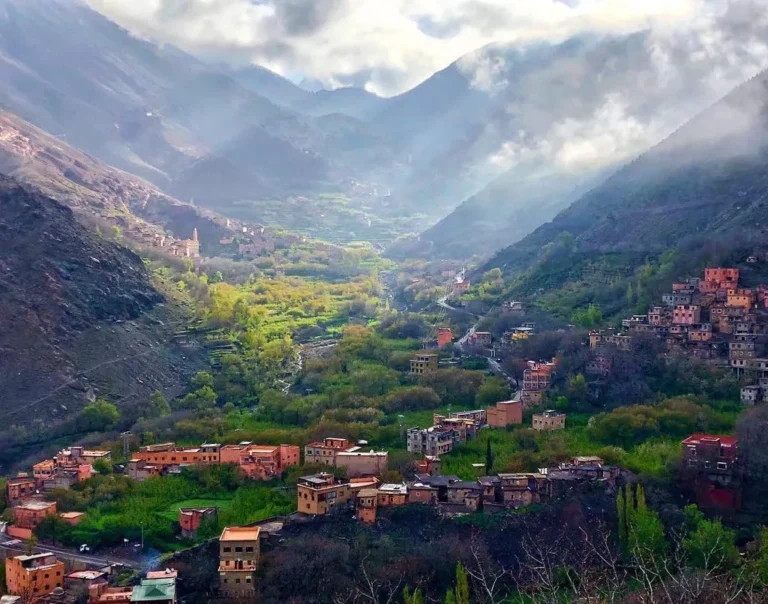
Toubkal sits in the High Atlas, about 65 km south of Marrakech, inside Toubkal National Park. Every ascent starts at Imlil, a mountain village about 1.5 hours by car from the city. From there, a trail follows the Mizane Valley up to the refuges below the summit.
The Route for Climbing Toubkal in Two Days
Day 1: Imlil to the Toubkal Refuge
You leave Imlil in the morning and walk through walnut groves to the village of Aroumd. The trail then follows the valley floor, climbing steadily past the small shrine of Sidi Chamharouch. Mules carry your bags, so you only need a daypack. After 5 to 6 hours, you reach the refuges at about 3,207 meters. Dinner is early, and so is bedtime.
Day 2: Summit and Descent
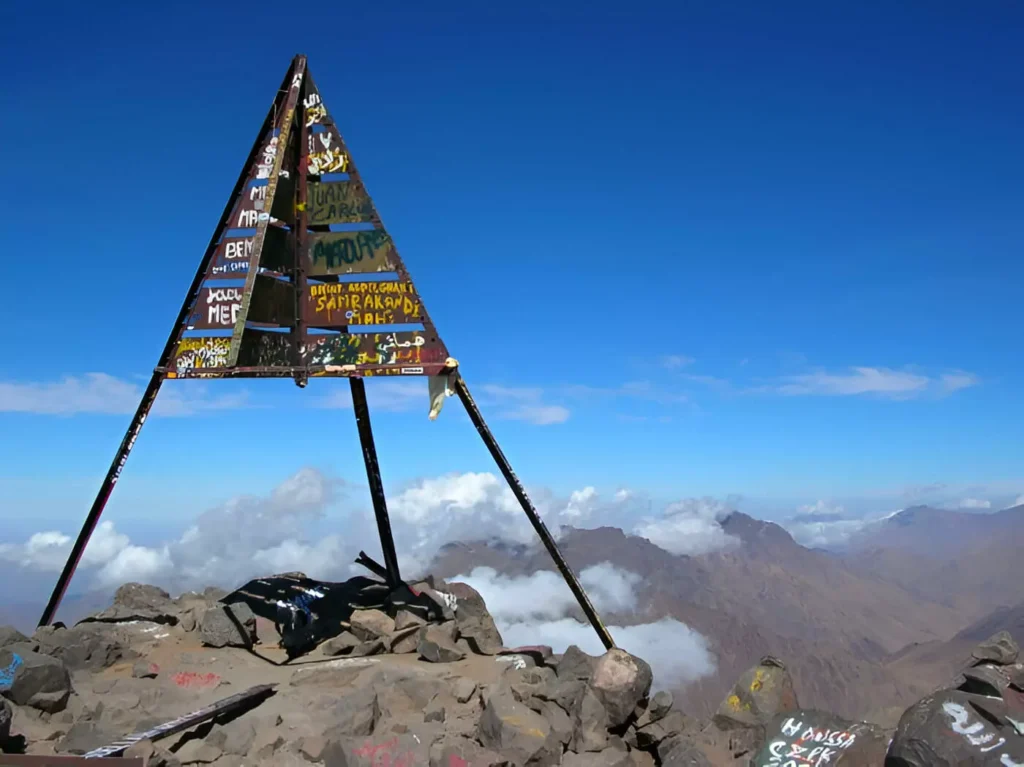
Guides usually start before dawn, with headlamps. The path climbs a steep, rocky slope for 3 to 4 hours. At the top, a metal pyramid marks the summit. On a clear day, you can see across the High Atlas and toward the Sahara. Then comes the long part: back to the refuge for breakfast, and down to Imlil in the afternoon. It’s a 9 to 10 hour day in total.
How Hard Is Climbing Toubkal?
In summer, climbing Toubkal is a hard hike, not a technical climb. There is no rope work or scrambling on the standard route. The challenge is the altitude and the length of the second day. You climb about 1,000 meters to the summit, then descend more than 2,400 meters to Imlil.
If you hike regularly and can walk uphill for several hours, you can do it. If you are not used to mountains, choose a 3-day trek. The extra night in a village guesthouse splits the climb and helps you adjust to the altitude.
Altitude Sickness
Some people get headaches, nausea or tiredness above 3,000 meters. Walk slowly, drink plenty of water and tell your guide if you feel unwell. Most symptoms ease quickly once you descend.
Do You Need a Guide for Climbing Toubkal?
Yes. Since 2019, Moroccan authorities require hikers heading to the Toubkal refuges and summit to be accompanied by a licensed mountain guide. There are checkpoints on the trail above Imlil. A good guide also knows the weather, sets a safe pace and handles the refuge booking and meals.
Where You Sleep: The Toubkal Refuges
Two refuges sit side by side at about 3,207 meters: the CAF Refuge du Toubkal and Les Mouflons. Both offer shared dormitories, simple meals and basic bathrooms. Nights are cold even in summer, so bring or rent a sleeping bag. In peak season the refuges fill up, so your guide books ahead.
Best Time for Climbing Toubkal
- June to October: the main season. The trail is usually free of snow and the weather is stable.
- April, May and November: possible, but expect snow patches and cold nights.
- December to March: a winter ascent. Snow and ice cover the route, so you need crampons, an ice axe and winter experience.
Summer days can be hot in Imlil and freezing on the summit at dawn. Always pack for both.
Packing List for Climbing Toubkal
- Hiking boots with good grip, already worn in
- Warm layers: fleece, down jacket, hat and gloves
- Waterproof jacket
- Headlamp for the early summit start
- Sunglasses, sunscreen and a sun hat
- Water bottles or a hydration bladder (2 liters)
- Snacks for the summit day
- Sleeping bag (or rent one at the refuge)
Climbing Toubkal in 2 Days or 3 Days?
The 2-day trek is the most popular because it fits into a short trip. But the second day is long and tough. A 3-day trek adds a first night in a village guesthouse, often in Aroumd or a nearby village. You then walk a shorter stretch to the refuge on day two, summit on day three, and walk down with fresh legs.
- Choose 2 days if you hike often, are fit, and have limited time in Morocco.
- Choose 3 days if you want more time to adjust to the altitude, enjoy the villages, or are traveling with teenagers.
Tips From Our Guides
- Start slowly on day one. People who rush the first hours struggle on the summit day.
- Drink before you feel thirsty. The dry mountain air dehydrates you fast.
- Eat breakfast at the refuge even if you are not hungry. You need the energy for the descent.
- Bring cash for drinks at the refuge and a tip for your guide and muleteer.
- Keep one warm layer in your daypack at all times. The weather changes quickly above 3,000 meters.
How Much Does Climbing Toubkal Cost?
Prices depend on group size and what is included. Our private 2-day Mount Toubkal trek from Marrakech starts from $320 per person for two hikers. It includes transfers from Marrakech, a licensed guide, a mule for your bags, the refuge night and meals on the trail. Shared group treks are cheaper, but you follow a fixed schedule.
Not Ready for the Summit?
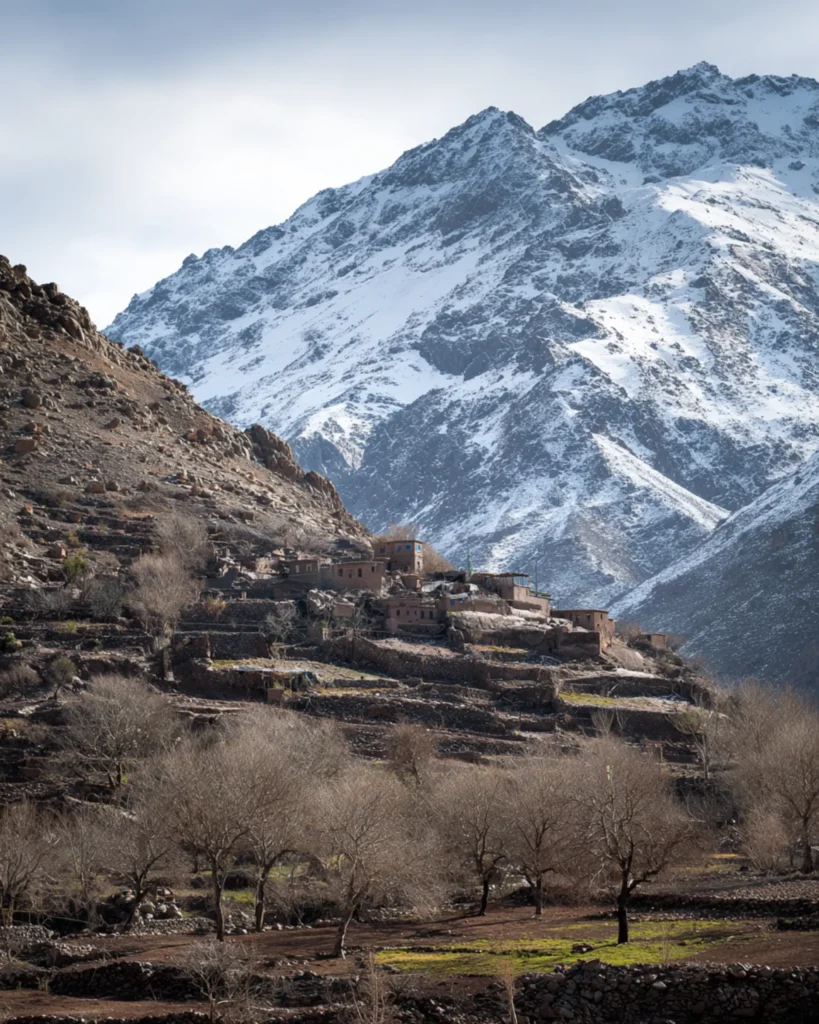
You can still enjoy the mountain. Our Imlil and Toubkal National Park day trip includes a guided walk through Berber villages with views of the peak. For an easier day, try the Ourika Valley day trip, one hour from Marrakech.
Frequently Asked Questions
Can beginners climb Toubkal?
Fit beginners can reach the summit in summer with a guide. Choose a 3-day trek if you have little hiking experience.
Can you climb Toubkal in one day?
Some very fit hikers do it, but it means walking for 12 hours or more with a big altitude gain. We recommend two days for safety and enjoyment.
Is there snow on Toubkal in summer?
Usually not on the main route from June to October. Small snow patches can remain in early June after a snowy winter.
Where can I leave my luggage?
Most hotels and riads in Marrakech will store your main bags while you trek. You only take what you need for two days.