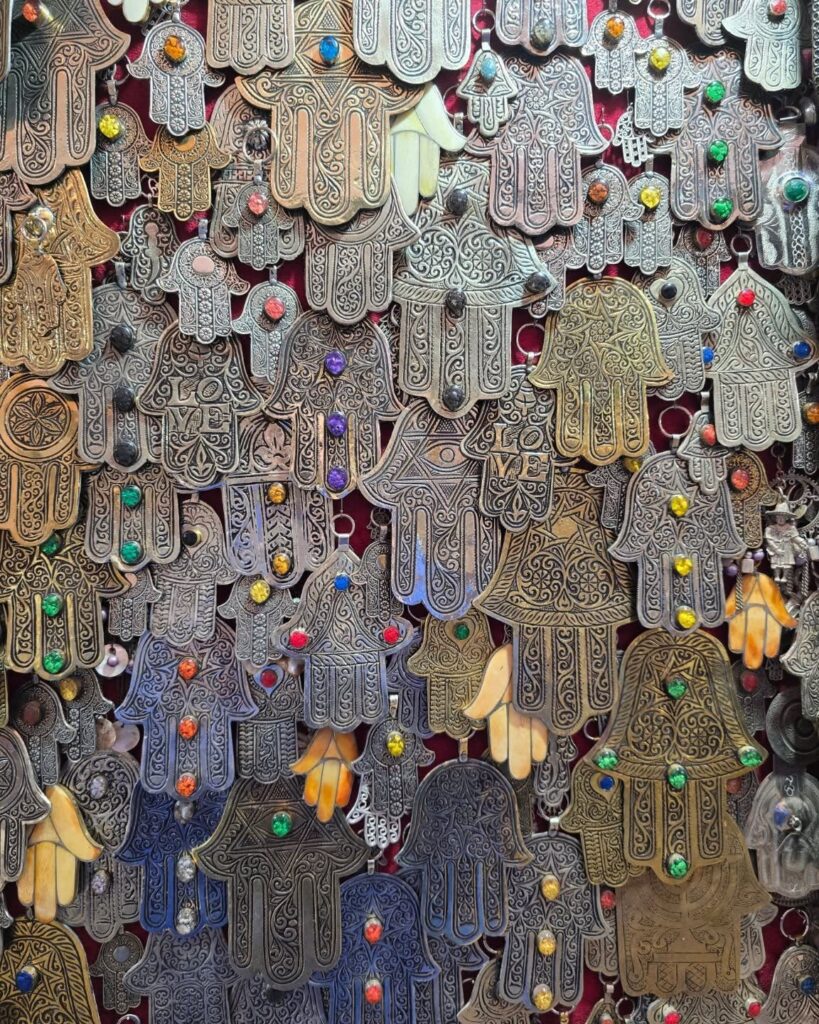
The Hand of Fatima in Morocco is one of the most recognizable symbols you will see on a trip: an open hand, often with an eye in the palm. It appears on jewelry, wall hangings and home decor. This guide explains what it means, where the name comes from, how old the symbol is and how people of different faiths use it.
Hand of Fatima in Morocco: The Short Answer
The Hand of Fatima is a palm-shaped amulet popular across North Africa and the Middle East. It is believed to protect against the evil eye, and it is often seen as a sign of blessings, strength and good luck. In Morocco it is commonly called the khamsa, from the Arabic word for five. The more general name for the symbol is the hamsa.
Hand of Fatima in Morocco: Names and Meaning
Khamsa means five, a reference to the five fingers. The Hebrew word hamesh also means five. The name “Hand of Fatima” was popularized by European colonists in French North Africa, so it is not an original Arabic term. Other names include the Hand of Miriam in Sephardi and Mizrahi Jewish use, and the Hand of Mary among Levantine Christians.
Many designs place an eye in the palm. Fingers spread apart are said to ward off evil, while fingers held together are said to bring luck. Some traditions also say upward fingers repel harm and downward fingers bestow blessings. You may hear sayings such as khamsa fi ainek, which means five in your eye, and people may say tfu, tfu, tfu to avert bad luck. For more local phrases, read our guide to Darija phrases for travelers.
Who Was Fatima? The Story Behind the Name
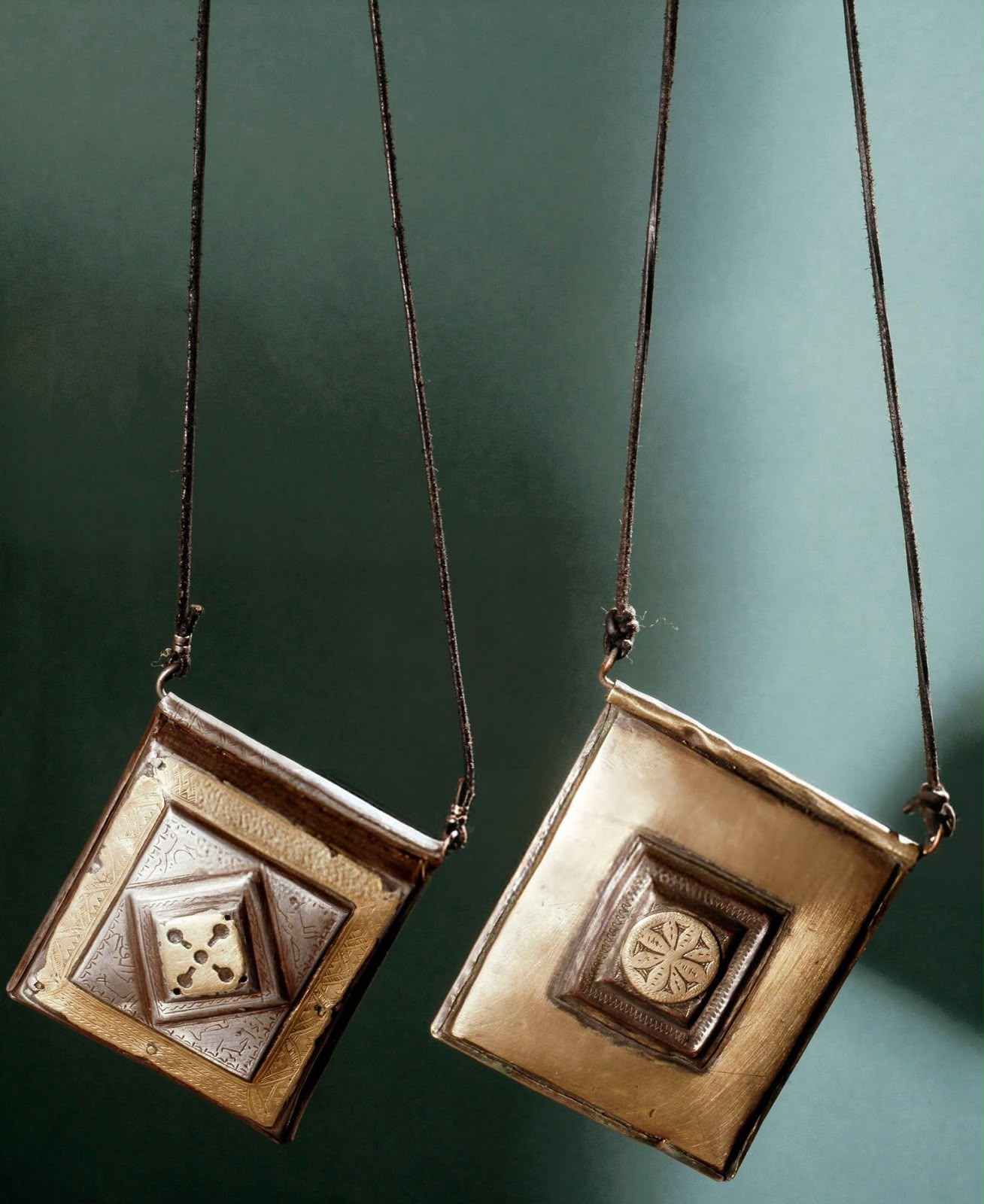
In Islamic popular belief the hand is widely linked to Fatima, the daughter of the Prophet Muhammad. In Shia Islam, the five fingers are said to stand for five holy figures: Muhammad, Ali, Fatimah, Hasan and Husayn. The name Hand of Fatima appears to be comparatively recent, so the link between the hand and Fatima is better seen as popular tradition than as an ancient rule.
Hand of Fatima in Morocco: A Short History
The symbol is much older than the name. Open-hand motifs appear across the ancient Near East, including hand amulets linked to the goddess Ishtar in Mesopotamia. Scholars link the hamsa to pre-Islamic origins, but they do not agree on one single source.
In the Muslim world the khamsa is concentrated in the west, in the Maghreb and al-Andalus. It is documented in al-Andalus from the 13th century, and Spanish Moriscos made khamsas that were popular in Granada. Church authorities banned them in 1526. Some Salafi authorities reject the amulet as impermissible. For the shared past between Spain and Morocco, you can also explore our guide on Moroccan Andalusian heritage (in Spanish).
One Symbol, Several Faiths
The hand is not only Muslim. Sephardi and Mizrahi Jews used it widely, and it decorates ketubahs, Torah accessories and Haggadahs. It is also connected to the Hebrew letter shin, the first letter of a name of God. Levantine Christians call it the Hand of Mary. To go deeper into Jewish life in Morocco, see our Jewish heritage tour of Morocco.
Hand of Fatima in Morocco Today: Where You Will See It
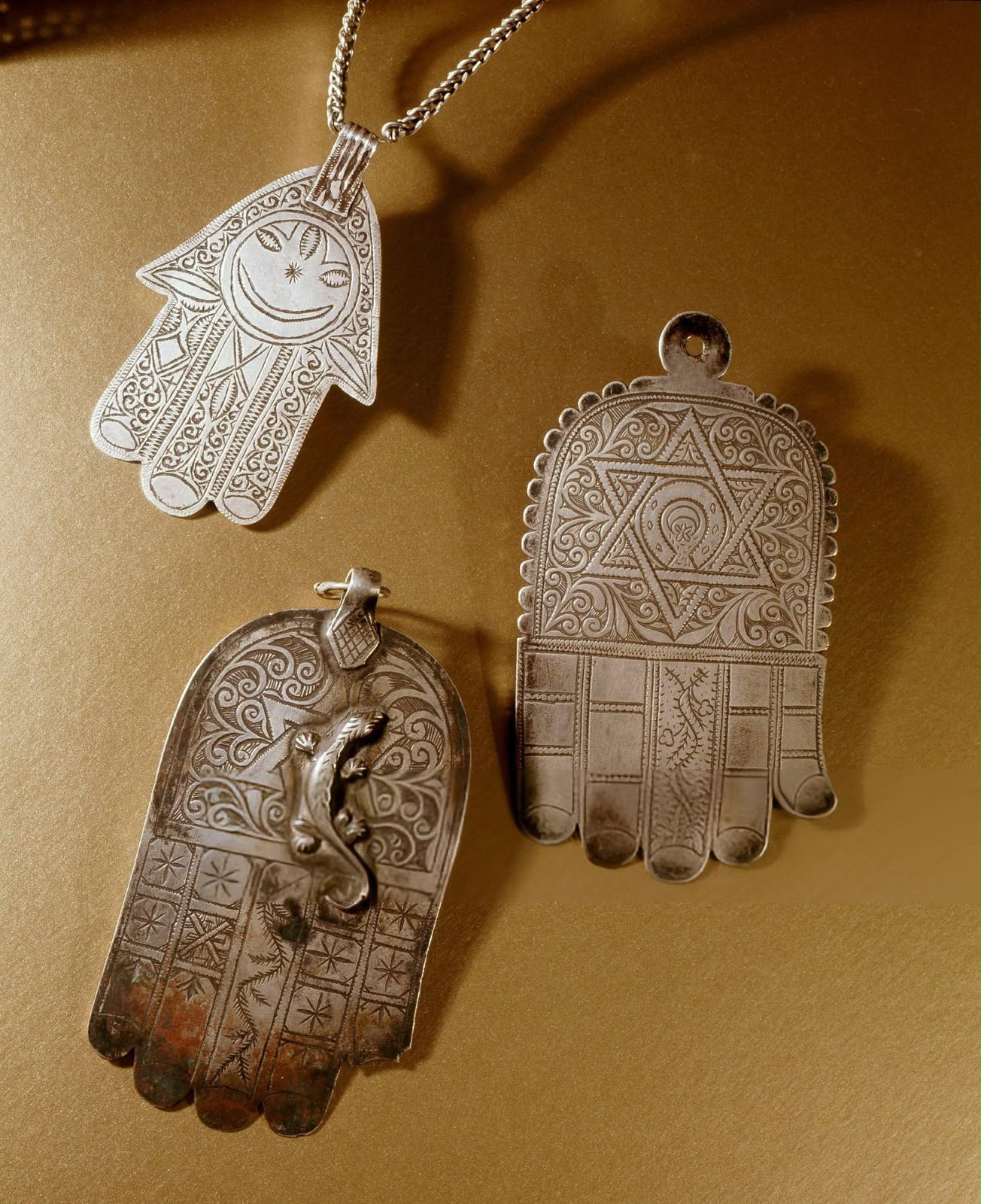
Today the symbol is found on gold and silver jewelry, necklaces, keychains, tilework and wall decor. Traditionally it was carved in jet or made of silver, which people believed to be pure and magical. It is sometimes painted red on house walls or doorways, especially to protect expectant mothers and new babies. A common stylized version uses five circles around a central circle for the palm.
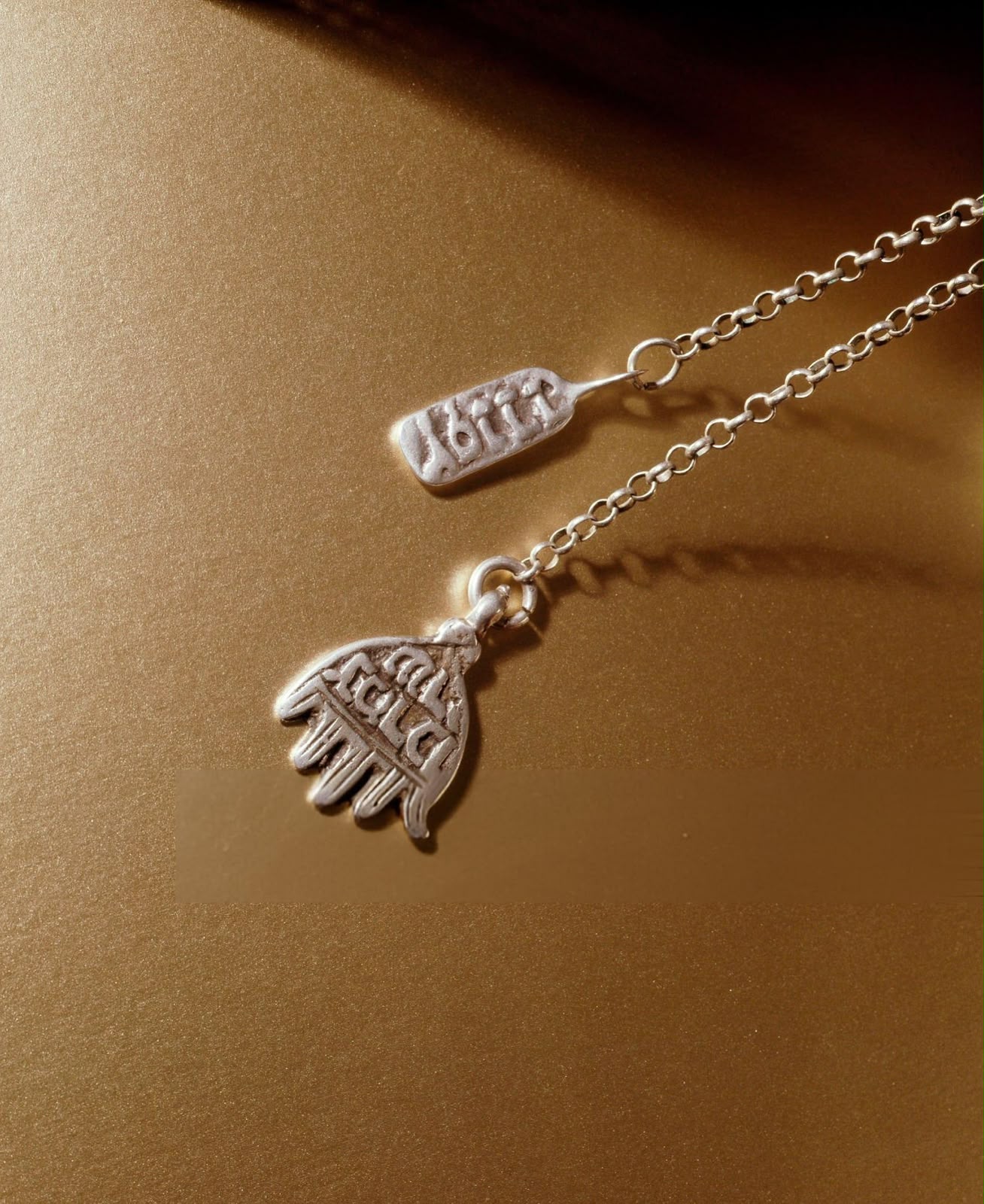
Keep your eyes open in the medinas of Marrakech and Fes, where craft stalls sell metalwork, textiles and jewelry. Our guide to the riad vs hotel choice will help you pick a base near the old town.
Buying a Hand of Fatima in Morocco: Tips
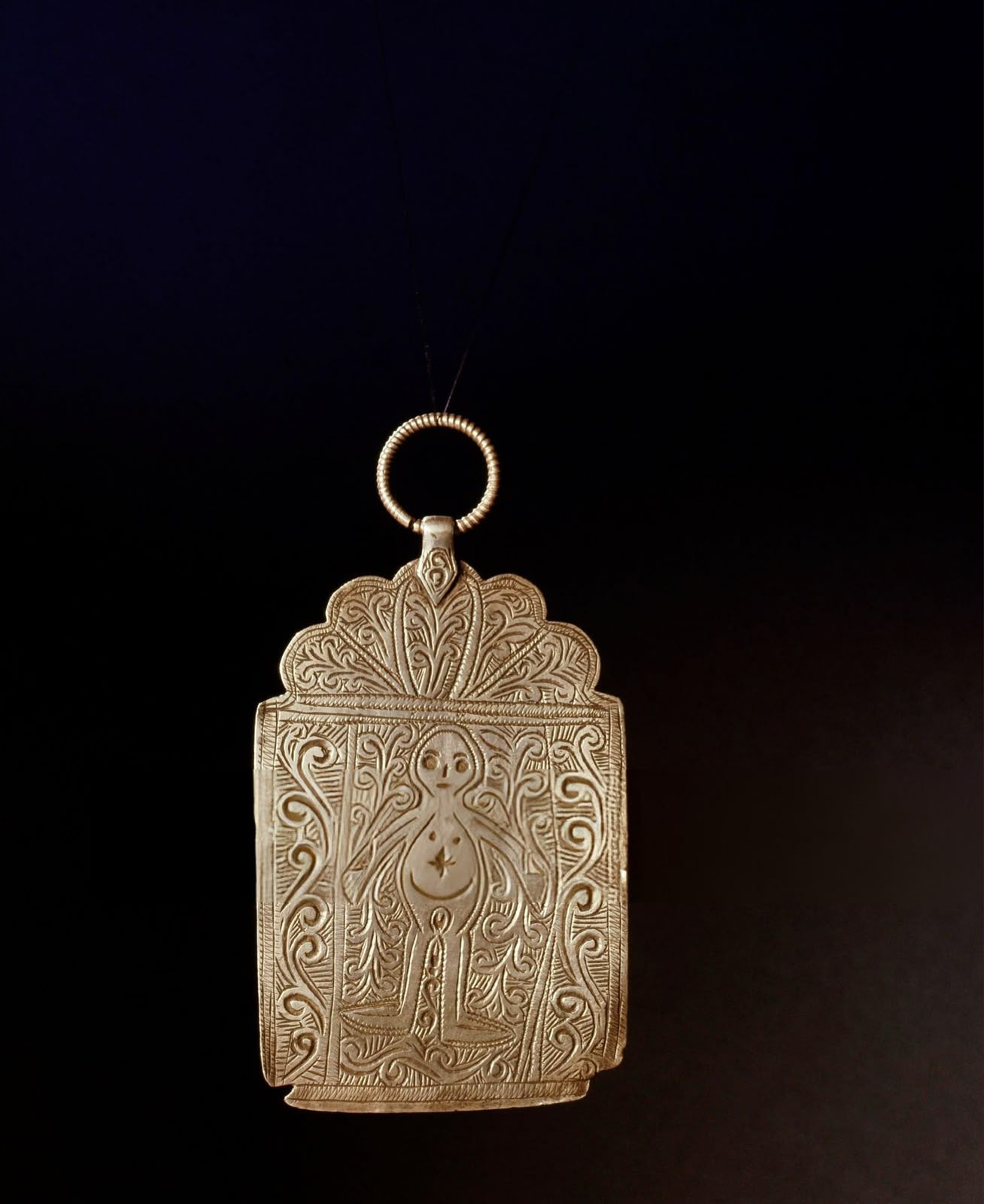
If you want to bring one home, look for the material first: silver and jet are traditional, gold is common in jewelry, and the hand also appears in tile. Compare a few shops before you buy, and read our guide to cash in Morocco so you know when you need cash and when a card works. Many travelers also like to support women-led cooperatives, such as those in our story on the women behind Morocco’s argan oil cooperatives.
Plan your shopping around the rest of your route. Our 7 days in Morocco itinerary and our guide on how many days you need in Morocco show how to fit medinas, crafts and the desert into one trip. Check the best time to visit Morocco before you book.
Hand of Fatima in Morocco: Frequently Asked Questions
What is the Hand of Fatima in Morocco?
It is a palm-shaped amulet, called khamsa in Morocco, believed to protect against the evil eye and bring blessings and good luck.
What does the Hand of Fatima mean?
The hand stands for protection, and the five fingers give the khamsa its name. The eye in the palm is a common feature.
Is the Hand of Fatima in Morocco only Islamic?
No. It is tied to Islamic popular belief in the Maghreb, but scholars link it to pre-Islamic origins. Sephardi and Mizrahi Jews and Levantine Christians use it too, and some Salafi authorities reject it.
Which way should the Hand of Fatima face?
Traditions differ. Fingers spread apart are said to ward off evil, and fingers together are said to bring luck.
Want to see Moroccan crafts, medinas and culture on a private trip? Message us your dates and we will plan it with you.
Message us on WhatsAppNavigate Morocco is a team from the Sahara desert who work as a family. We will be glad to help you plan your Hand of Fatima in Morocco discoveries and the rest of your route.
More Navigate Morocco guides: Why is Chefchaouen blue, Volubilis Morocco, Morocco natural wonders, Morocco desert tour cost.