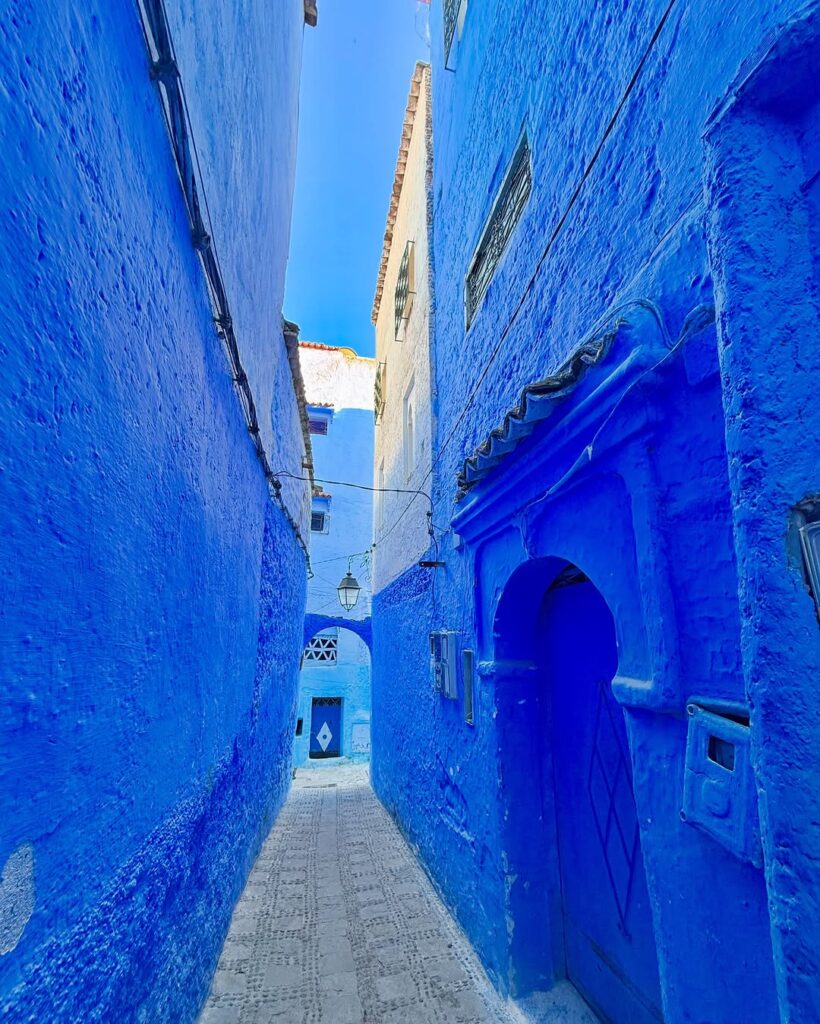
So, why is Chefchaouen blue? There is no single confirmed answer. Locals, guides and writers give several explanations, from a Jewish tradition to the color of heaven, and none of them is proven. This guide explains the main theories, what we know for certain about the town, and how to see it on a trip. You can also read our wider guide on why Chefchaouen is worth the detour.
Why Is Chefchaouen Blue? The Short Answer
The honest answer is that nobody knows for sure. Travel writers often say that the town’s Jewish residents started the blue tradition, others say the paint keeps mosquitoes away, and some link the color to the sky and to heaven. A local account adds that tourism played a role. We explain each theory below, so you can decide which one you prefer.
Why Is Chefchaouen Blue? The Four Main Theories
Theory 1: The Jewish Residents
The most repeated story is that the town’s Jewish residents began painting buildings blue, perhaps in the 1930s, in place of the green that is associated with Islam. Travel writers describe this as something that is “thought to” be true, and some sources, including the Wikipedia page on Chefchaouen, do not mention it at all. We therefore treat it as a popular tradition and not a proven fact.
Theory 2: Mosquitoes and Heat
Others say that the blue paint repels mosquitoes, or that it keeps houses cooler under the strong sun of the Rif Mountains. People repeat both ideas, but we found no evidence behind them. They are good stories to hear from a local guide.
Theory 3: The Sky and Heaven
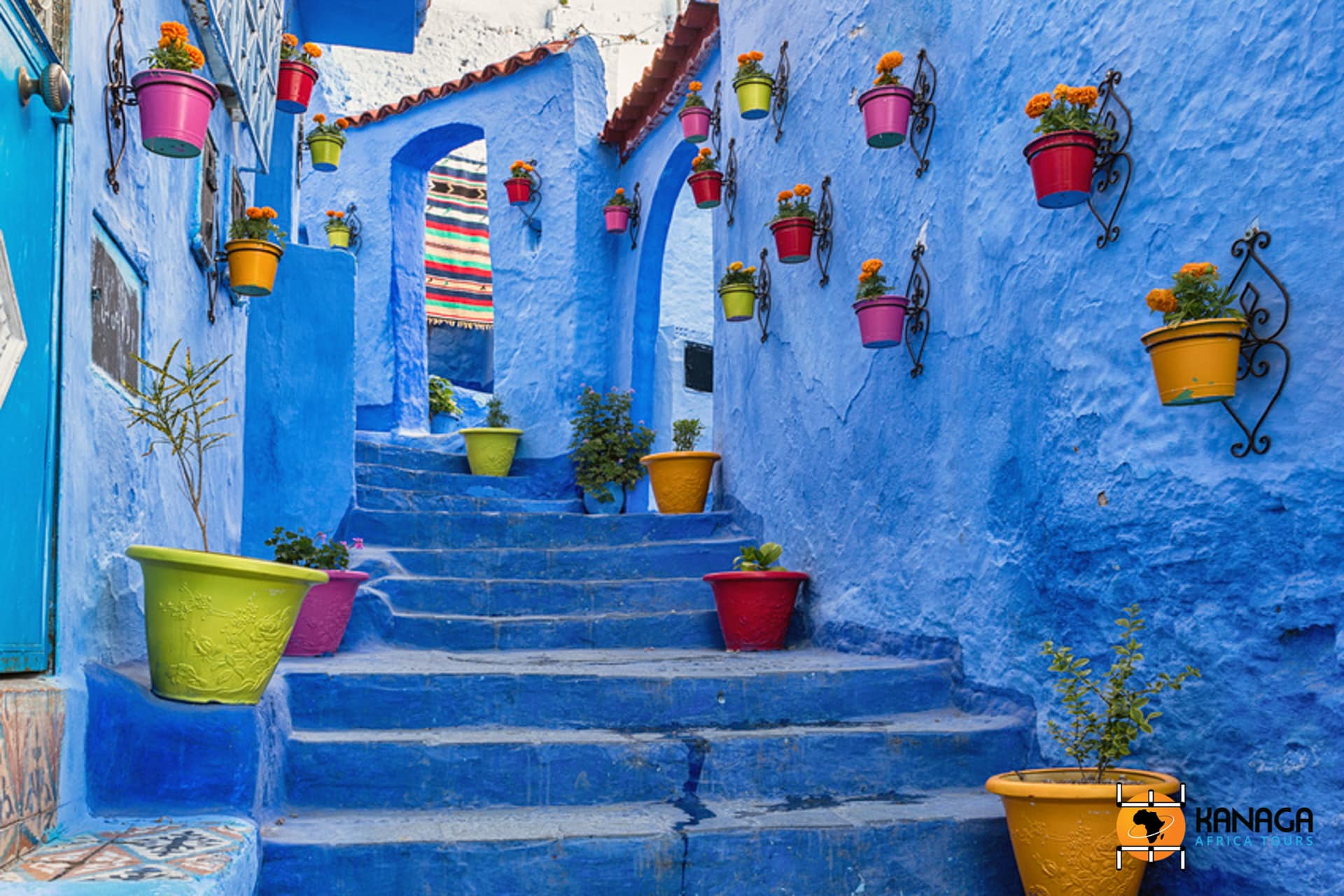
A more spiritual explanation says that the blue represents the sky and heaven, and that it reminds people to live a spiritual life. This idea fits the atmosphere of the medina, where the blue walls seem to blend with the sky above the lanes.
Theory 4: Tourism
Some locals say that the walls were required to be painted blue in the 1970s to attract tourists. This is a local account and not an established fact. What is clear is that the blue now draws visitors from around the world.
Why Is Chefchaouen Blue? What We Know for Certain
Some facts are well documented. The town was founded in 1471 by Ali ibn Rashid as a small kasbah to defend against Portuguese attacks. It sits in the foothills of the Rif Mountains in northern Morocco, between Tetouan and Ouezzane, at roughly 600 m above sea level. After the Reconquista, Andalusi Muslims, Moriscos and Spanish and Portuguese Jews settled here and built Andalusi-style quarters, which is why the architecture feels different from the rest of Morocco.
The Spanish occupied the city in 1920 as part of their protectorate, and Spain left the area in 1956, the year Morocco became independent. Today the municipality has about 46,000 residents, based on the 2024 census.

Why Is Chefchaouen Blue? What to See in the Town
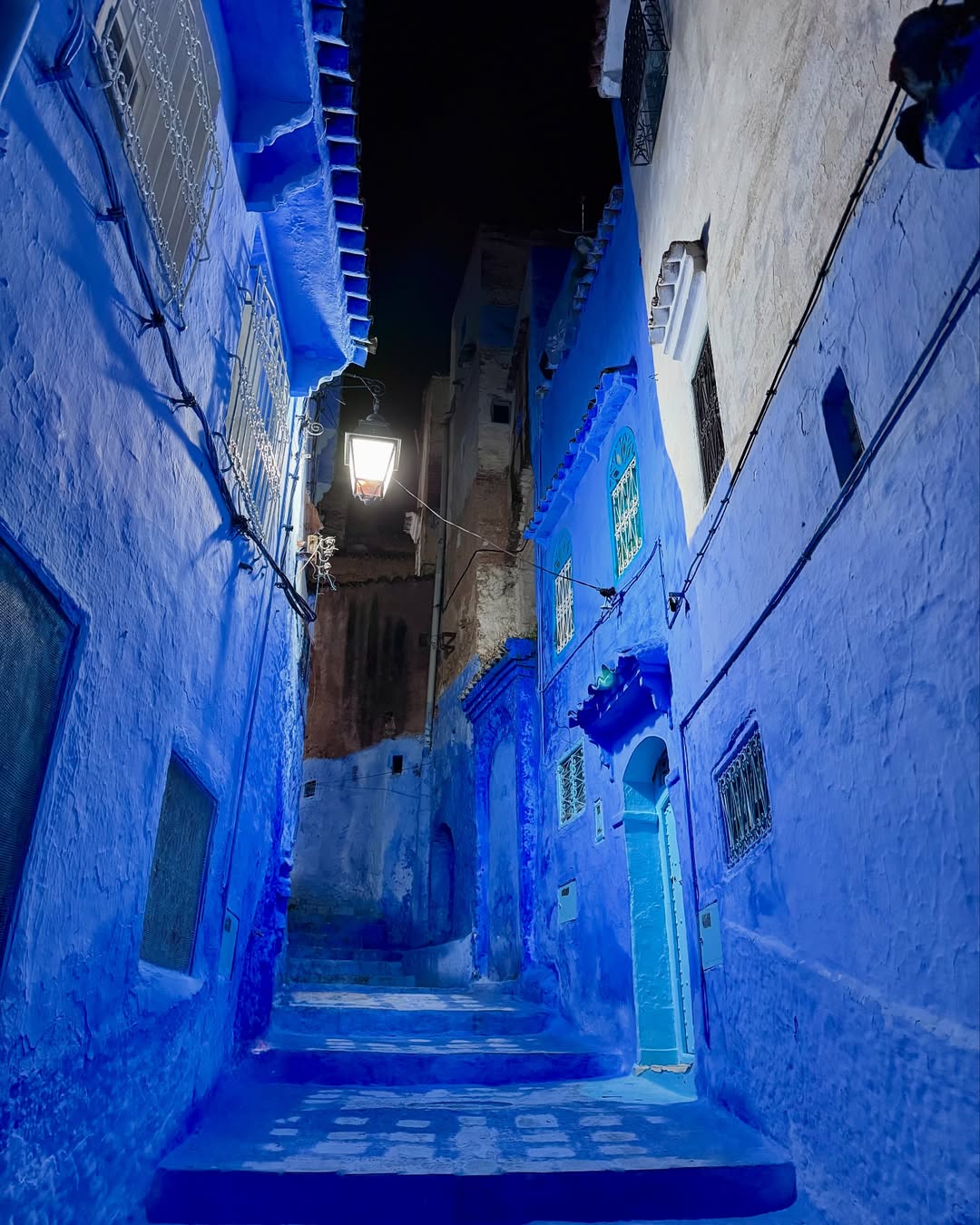
The center of the medina is Plaza Uta el-Hammam, a market square surrounded by the kasbah, the Great Mosque and an old caravanserai. The kasbah is the oldest part of the town and is now a museum with a garden courtyard. The Ras El Maa spring, just east of the medina, was the original water source. As you walk, notice the many shades of blue, from pale sky blue to deep cobalt, and how each lane has its own mood. For a view over the whole town, walk up to the Spanish Mosque, which was built in the 1920s and is now a popular lookout point.
Why Is Chefchaouen Blue? How to Visit
Chefchaouen is a good addition to a northern route, and our Fes vs Marrakech guide helps you choose your base. For the whole country, see 7 days in Morocco and how many days you need in Morocco. Pick the season with the best time to visit Morocco, and read how cash in Morocco and tipping in Morocco work.
If you are still mapping the country, start with whether Morocco is in Africa and compare cities in Is Marrakech worth visiting. To end the trip in the desert, see a 3 or 4 day desert tour. For food on the way, use our Moroccan food guide and learn a few Darija phrases.
Because the story changes from person to person, the best way to learn it is to ask. Every guide and shop owner may tell you a slightly different version, and that is part of the experience. Collect the explanations as you walk, then choose the one that feels right to you.
FAQ: Why Is Chefchaouen Blue?
Why is Chefchaouen blue?
There is no confirmed reason. The main theories are a Jewish tradition, mosquito and heat protection, the color of the sky and heaven, and tourism.
Where is Chefchaouen?
It is in the Rif Mountains in northern Morocco, between Tetouan and Ouezzane.
When was Chefchaouen founded?
Ali ibn Rashid founded it in 1471 as a small kasbah to defend against Portuguese attacks.
Is Chefchaouen worth visiting?
Yes, if you enjoy photography, walking and a calmer pace. Our detour guide explains how to fit it in.
Want Chefchaouen added to your Morocco trip? Message us your dates and we will plan the route.
Message us on WhatsAppNavigate Morocco is a team from the Sahara desert who work as a family. We will be glad to help you plan your visit to the blue city and the rest of your Morocco trip.
More Navigate Morocco guides: Largest city in Morocco, Erg Chebbi vs Erg Chigaga, Morocco desert tour cost, things to do in Merzouga.