In this guide 8
- Medjool date history begins in the Tafilalet
- Bayoud disease: the threat to Medjool dates from Morocco
- 1927: Walter Swingle in Boudnib
- Medjool date history in the Nevada desert
- Medjool dates in California and Arizona
- Medjool dates from Morocco today
- Taste the Medjool date in its homeland
- FAQ: Medjool date history
The Medjool date history is one of the great food stories of the world. The king of dates was born in the oases of southeast Morocco. In 1927 an American botanist carried eleven young palms from a Moroccan oasis to the United States, just as a disease was killing the palm groves at home. Those few palms, saved in the desert of Nevada, gave the world the Medjool dates grown in California today. Here is the full story, and where to taste the Medjool in its homeland.
Medjool date history begins in the Tafilalet
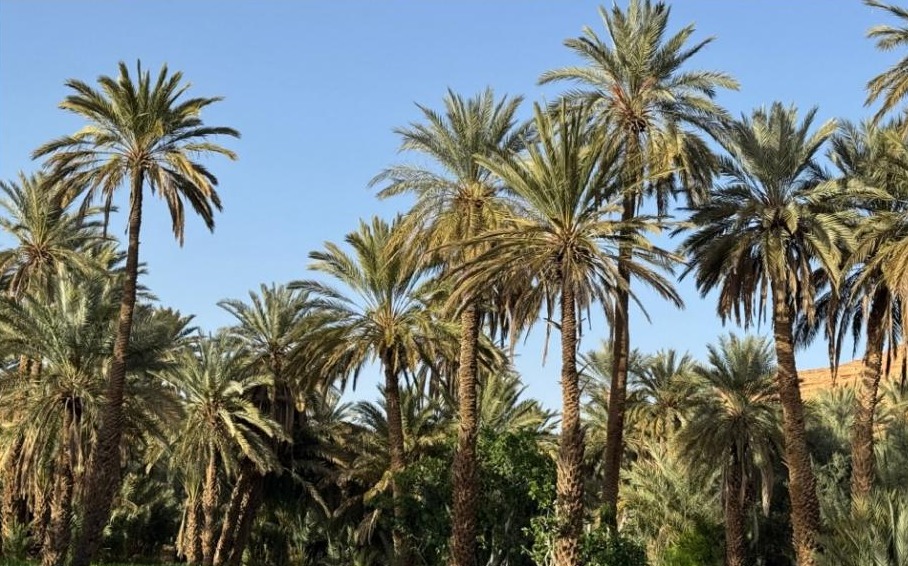
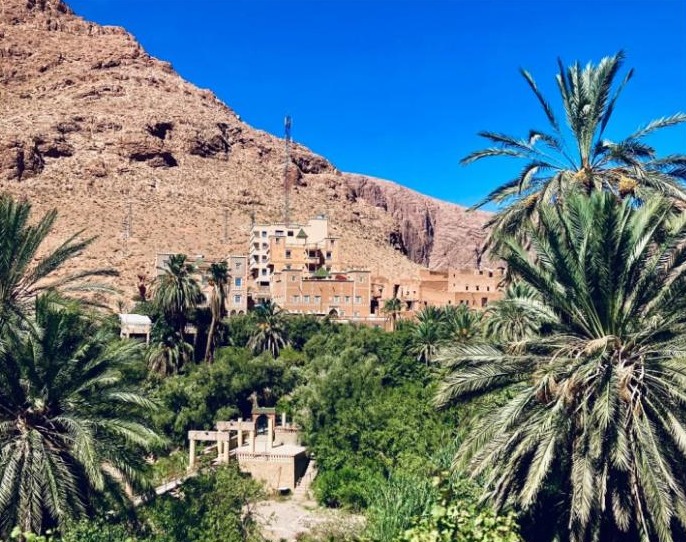
The Medjool, written Mejhoul in Morocco, comes from the Tafilalet, the great date oasis of southeast Morocco (JSTOR Daily). In fact, the American botanist Walter Swingle called it the greatest date oasis of Africa. Tafilalet dates grow along the Ziz River, around Erfoud and Rissani, and in the smaller oases of the region such as Boudnib.
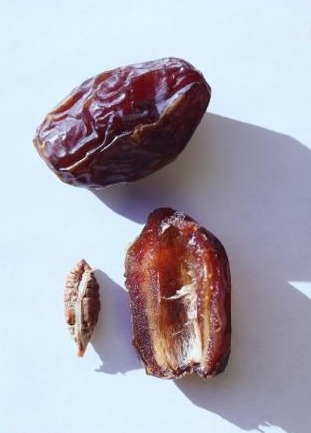
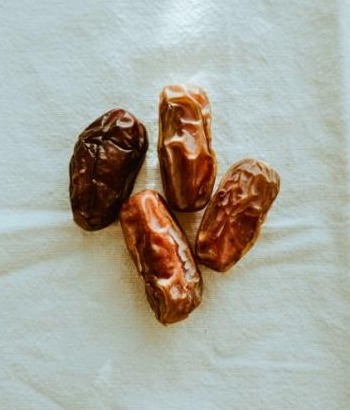
The Mejhoul was the pride of these oases. Above all, it is large, soft and very sweet, which is why it is called the king of dates. For this reason, many Moroccans still remind visitors that the Medjool is a Moroccan date first (Morocco World News).
Bayoud disease: the threat to Medjool dates from Morocco
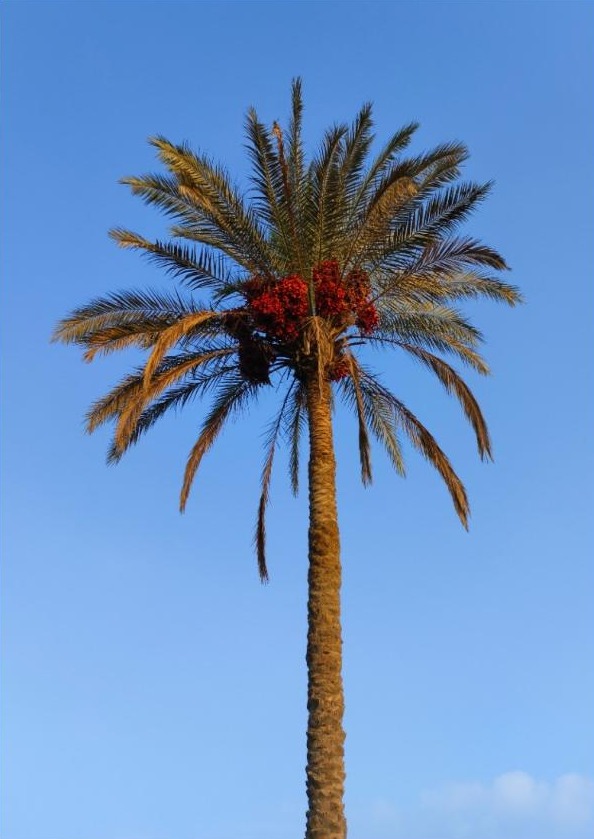
The story of the Medjool date starts with a disease. In short, Bayoud disease is a fungus that kills date palms. It was first reported in Zagora in 1870, and over about a century it destroyed more than twelve million palms in Morocco (FAO). Then, by the 1920s, it was spreading through the Medjool palms of the Tafilalet, and the famous date was in danger.
1927: Walter Swingle in Boudnib
In spring 1927, Walter Swingle, a plant scientist of the United States Department of Agriculture, joined a French team sent to study Bayoud disease. On the way, the team first stopped for a few days at the French Foreign Legion post of Boudnib. The local oasis had about 9,000 date palms (JSTOR Daily).
In one garden Swingle found a small group of healthy Medjool palms. So he asked to buy offshoots, the young palms that grow at the foot of a mother tree. Eleven offshoots from one healthy palm were packed in a box and sent to the United States. This is the origin of Medjool dates in America, and the turning point of the Medjool date history.
Medjool date history in the Nevada desert
The offshoots reached Washington in June 1927 and were checked for disease. After that, they were planted in a lonely corner of southern Nevada, on the Colorado River upstream from Needles, far from any other date palm (ICT News). As a result, no disease could reach them there.
At first, a local agent, Frank Thackery, organised the planting. For seven years an elderly Chemehuevi couple, the Johnsons, looked after the palms in the desert heat. Dogs destroyed two offshoots. However, the other nine survived. By the mid 1930s they had produced 64 new offshoots.
Medjool dates in California and Arizona
In the mid 1930s, the nine palms and their 64 offshoots were moved to the United States Date Garden in Indio, California. Sources give 1935 or 1936 for the move. In 1944 the first offshoots went to growers in California and Arizona (Mejhoul cultivar study). Soon the Coachella Valley, Yuma and the Bard Valley became the American home of the Medjool.
Today the descendants of the Boudnib palms grow about a quarter of all dates in the United States (JSTOR Daily). Later, from the 1950s, Israel also brought in thousands of offshoots, including descendants of the American Medjools. So every one of the Medjool dates California farms grow today has Moroccan roots.
Medjool dates from Morocco today
Morocco never lost its Mejhoul. Since then, Moroccan researchers have developed palms that resist Bayoud disease, and the oases are being replanted. The Draa Tafilalet region now has about 6.49 million date palms and more than 225 varieties. For the 2026 to 2027 season, Morocco expects a record harvest of about 177,000 tonnes (FreshPlaza).
Meanwhile, each autumn, Erfoud hosts the International Date Fair. The 15th edition opened on 28 October 2026. Read our guide to Erfoud Morocco to plan a visit.
Taste the Medjool date in its homeland
The best way to end the Medjool date history is to taste one where it began. The road from Fes to Merzouga crosses the Ziz Valley and the Tafilalet. In addition, the Rissani market, south of Erfoud, sells Tafilalet dates on Tuesday, Thursday and Sunday. Dates and mint tea also welcome you at a Sahara desert camp dinner.
Our 2 day Sahara desert tour from Fes and 7 day imperial cities and Sahara tour both pass through the date country. Autumn is harvest time, see the best time to visit Morocco.
FAQ: Medjool date history
Where do Medjool dates come from?
Medjool dates come from the Tafilalet in southeast Morocco. The first Medjool palms in the United States came from the oasis of Boudnib.
Who brought the Medjool date to California?
The American botanist Walter Swingle took eleven offshoots from Boudnib in 1927. They grew in Nevada first, and their offspring reached Indio, California, in the mid 1930s.
Why did the Medjool leave Morocco?
Bayoud disease was killing date palms in Morocco. So Swingle found healthy Medjool palms and sent offshoots to the United States, far from the disease.
What is the Medjool date history in short?
The Medjool was born in the Tafilalet of Morocco. In 1927 eleven offshoots went to the United States to escape Bayoud disease, and their descendants now grow in California, Arizona and many other countries.
Is Mejhoul the same as Medjool?
Yes. Mejhoul is the Moroccan name and Medjool is the common English spelling of the same date.
Can I visit Medjool date palms in Morocco?
Yes. The palm groves of the Tafilalet around Erfoud and Rissani are on the road to the Sahara, and dates are harvested in autumn.
Want to taste the Medjool where its story began? Tell us your dates and we will plan your trip through the oases to the Sahara.
Message us on WhatsApp