Moroccan etiquette is easy to learn, and people notice when you try. Morocco is a warm, welcoming country with strong traditions shaped by Islam and family life. A few simple habits help you make friends and avoid awkward moments. This guide covers the customs that matter most for tourists, from greetings and meals to dress, photos and the souks.
Greetings and Moroccan Etiquette
Greetings are important in Morocco. Say “Salam alaykum” (peace be upon you), and you will hear “Wa alaykum salam” in return. People often ask about your health and your family before getting to business. So take the time to answer. Learn a few more words in our guide to Darija phrases.
A handshake is normal between men. In addition, some people touch their heart after shaking hands, which shows respect. Between men and women, wait to see if the other person offers a hand. A hand on the heart and a smile is always polite.
Moroccan Etiquette at the Table
In Morocco, meals are shared, and they come with their own customs. Here is what to know if you eat with a Moroccan family or at a desert camp.
- Wash your hands before the meal. A host may bring a basin and a kettle to the table.
- Eat with your right hand. The left hand is seen as unclean.
- Eat from the part of the shared dish in front of you.
- Use bread as your spoon to scoop the tagine.
- Do not waste bread. Many Moroccans see it as a gift from God.
- Your host will keep offering food. Say “Shukran, l-hamdu lillah” (thank you, praise God) when you are full.
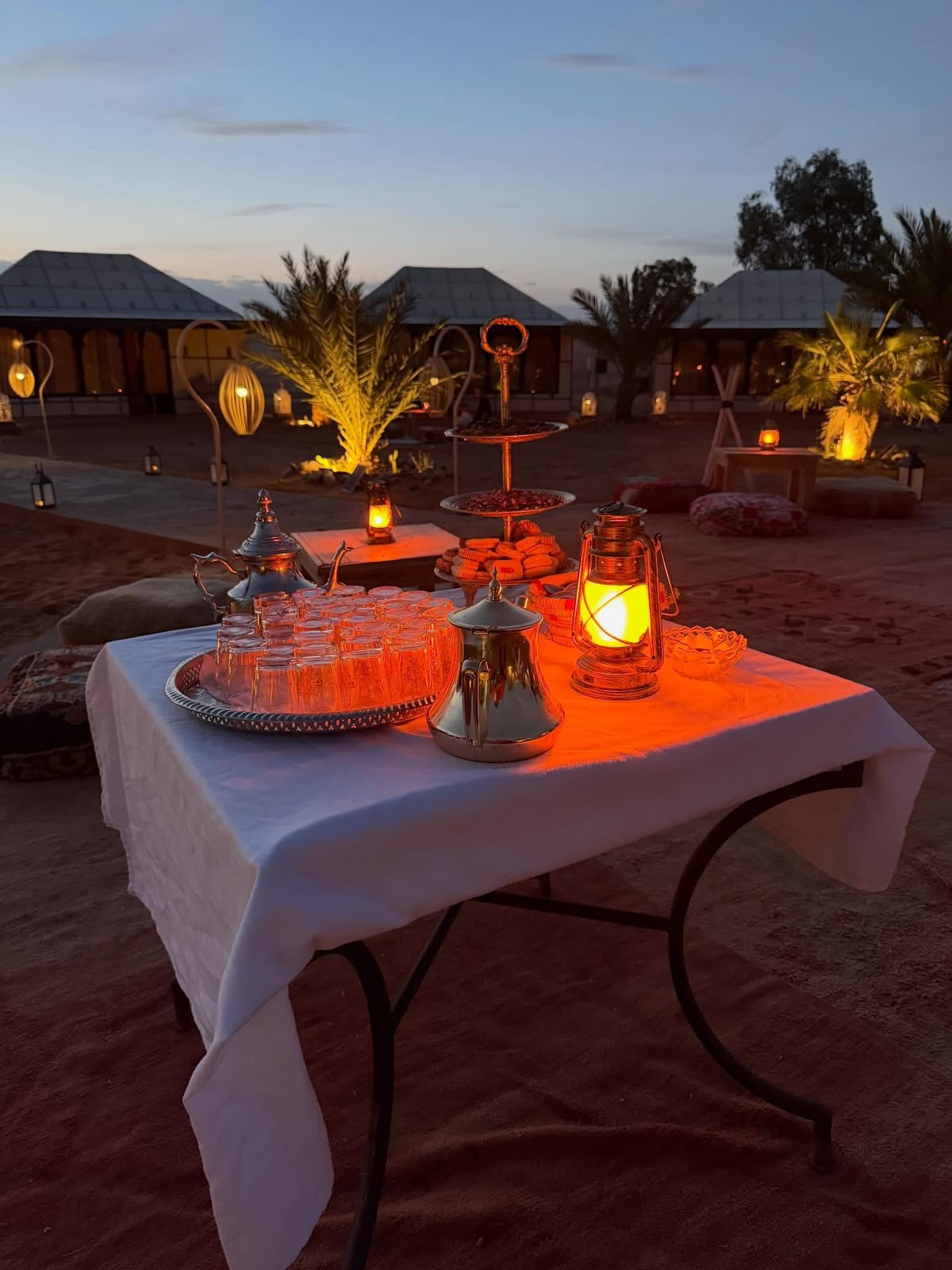
Above all, mint tea is the sign of welcome. Accept at least one glass, even if you do not want more. Read our Moroccan food guide for the dishes to try.
What to Wear: Moroccan Etiquette on Dress
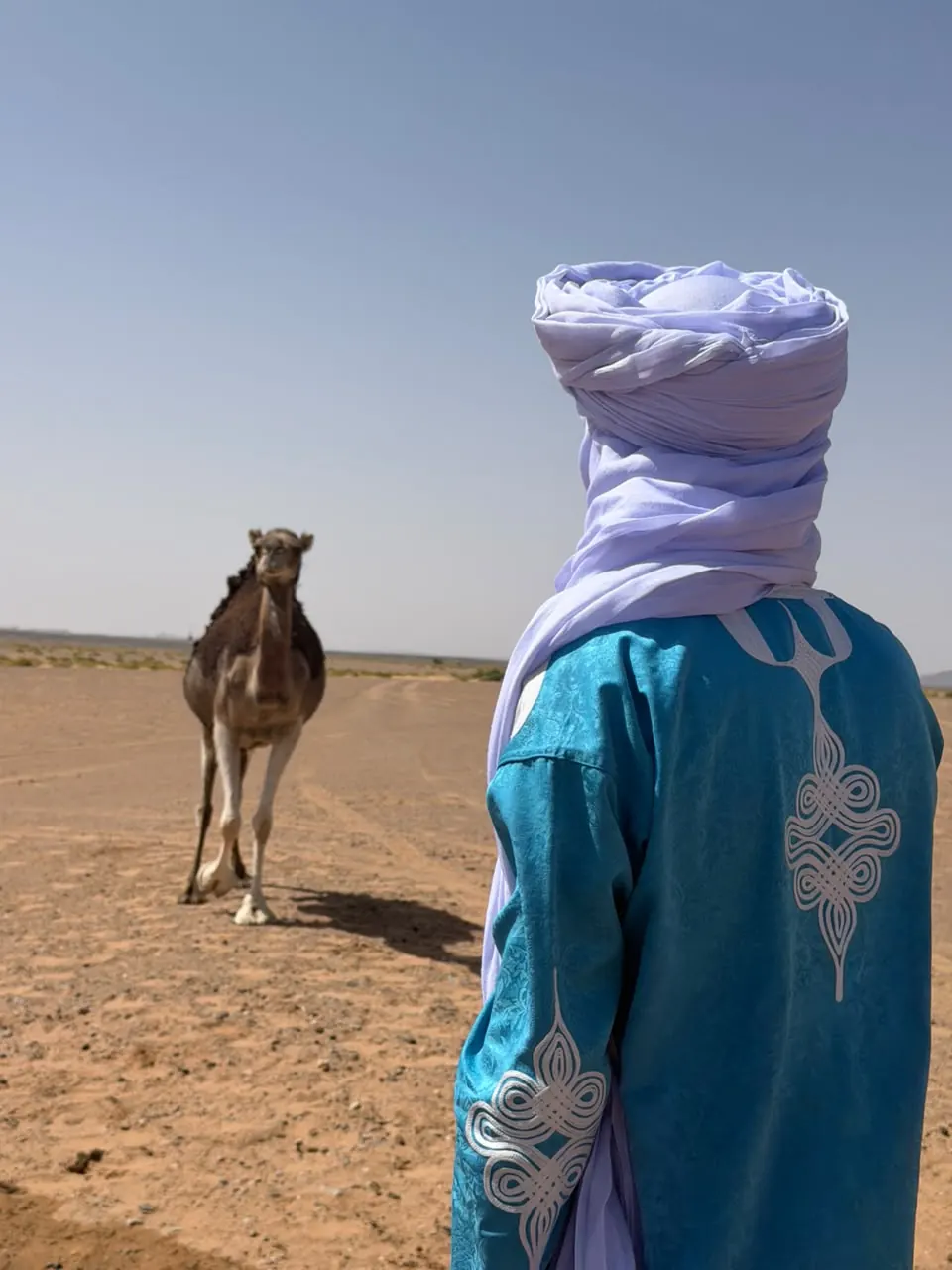
Morocco is relaxed about clothing for visitors, but modest dress is more respectful. In towns and villages, cover your shoulders and knees. Loose, light clothes also keep you cool. Beachwear belongs at the beach or the pool. Women can read our guide on what to wear in Morocco for women. For the desert, see what to wear in the Sahara desert.
Moroccan Etiquette in Mosques and Religious Places
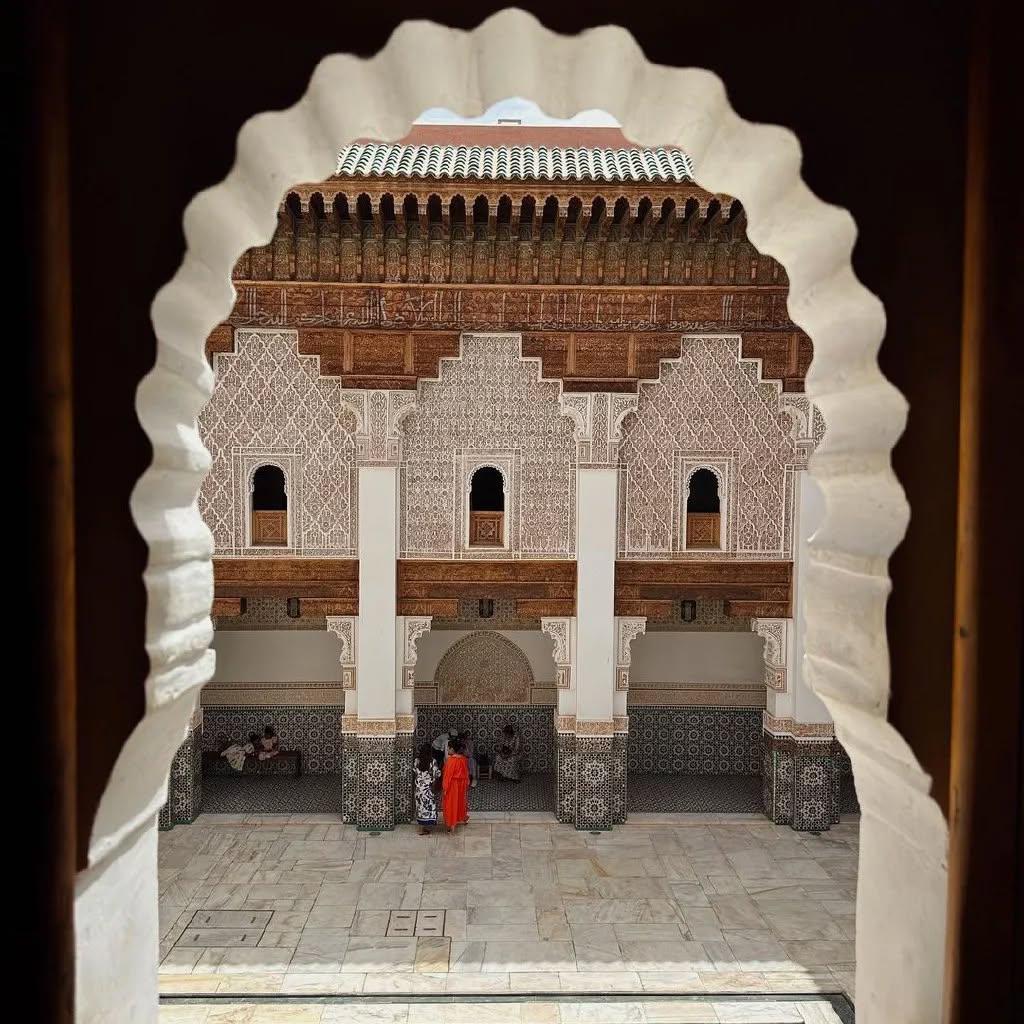
In most of Morocco, non-Muslims cannot enter working mosques. The big exception is the Hassan II Mosque in Casablanca, which offers guided visits. However, you can still admire other mosques from outside, such as the Koutoubia in Marrakech. Madrasas like the Ben Youssef Madrasa are open to visitors.
Near mosques, speak quietly during the call to prayer. Friday is the main prayer day, and some shops close around midday.
Photos and Moroccan Etiquette
Always ask before you photograph a person. Indeed, many people, especially women and older people, prefer not to be in photos. Also, some performers in the main squares expect a small tip for a picture. If someone says no, smile and put the camera away.

Moroccan Etiquette in the Souks
Bargaining is part of shopping in the souks. Start at about half of the first price and meet in the middle. Stay friendly and patient, as it is a conversation, not a fight. However, if you agree on a price, you should buy. To say no to a seller, a smile and “La, shukran” (no, thank you) is enough. Finally, carry small notes, because many shops take cash only. Our guide to cash in Morocco explains why.

Tipping as Part of Moroccan Etiquette
Tips are common and appreciated. People tip waiters, porters, guides, drivers and the camp team. However, the amount is up to you. Our guide to tipping in Morocco gives clear figures.
Being a Guest in a Moroccan Home
Moroccan hospitality is famous. If a family invites you home, bring a small gift such as pastries or fruit. Take off your shoes at the door if your hosts do. Greet the oldest person first. Then accept the tea, and do not rush to leave after the meal.
In Berber villages and nomad tents, the same rules apply. Our guide to a day in the life of a Berber nomad shows how desert families live.
Ramadan and Moroccan Etiquette
During Ramadan, Muslims do not eat, drink or smoke from dawn to sunset. Tourists can still eat in hotels and many restaurants. Out of respect, avoid eating or drinking in the street during the day. After sunset, the streets fill with life as families break the fast.
Other Moroccan Etiquette Tips
- Keep public affection light. Holding hands is fine, but long kisses in public are not.
- Drink alcohol only in licensed bars, hotels and restaurants, never in the street.
- Do not point the soles of your feet at people when you sit.
- Use your right hand to give and receive money.
- Expect to hear “Inshallah” (if God wills) about plans. It is a common way of speaking.
Why Moroccan Etiquette Matters
Moroccans are patient with visitors, and nobody expects you to know every rule. Even so, making the effort makes a big difference. A greeting, a smile and a little respect turn a simple visit into a real welcome. For more tips before you travel, read Morocco for solo female travelers and Black American travelers in Morocco.
Travel Morocco with Local Guides
Our driver-guides grew up in the desert and the mountains. On every tour they explain local customs as you go, so you never feel lost. Popular choices are the 3-day Marrakech to the Sahara tour, the 7-day cultural and heritage tour and our day trips from Marrakech. To plan your route, read 7 days in Morocco.
Send us a message on WhatsApp at +212 609 490 681 or use the contact page.
Want a guide who knows the local customs?
Message us on WhatsAppMoroccan Etiquette: FAQ
What is the most important Moroccan etiquette rule?
Use your right hand for eating and giving, and greet people before you ask for anything.
Can tourists enter mosques in Morocco?
Most mosques are closed to non-Muslims. The Hassan II Mosque in Casablanca is open for guided visits.
Is it rude to refuse mint tea in Morocco?
It is polite to accept at least one glass. Mint tea is a sign of welcome.
What should tourists avoid in Morocco?
Avoid taking photos of people without asking, eating in the street during Ramadan and drinking alcohol in public.
Do I need to cover my head in Morocco?
No. Women do not need to cover their hair. Covering shoulders and knees is enough.
Navigate Morocco is a team from the Sahara desert who work as a family, as our ancestors did. We will be glad to help you feel at home in Morocco.
More Navigate Morocco guides: the Hand of Fatima, activities in Marrakech, things to do in Agafay Desert, Jemaa el Fna, Morocco in winter, Fes.