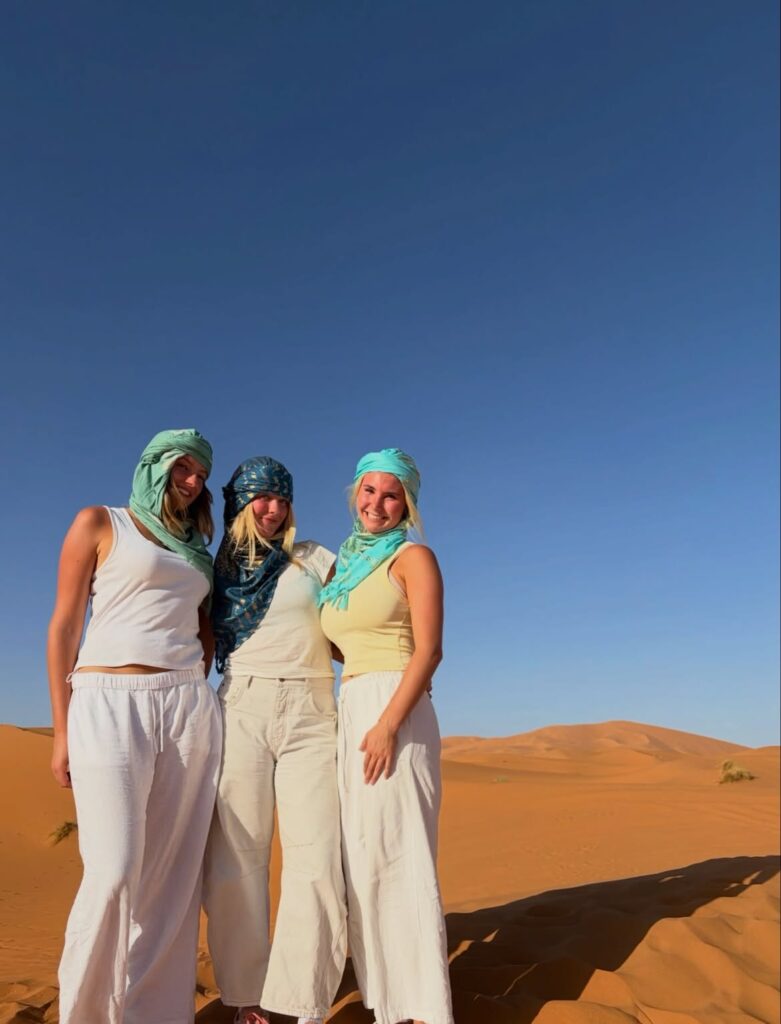
What to wear in the Sahara desert comes down to three things: the sun by day, the camel ride, and the cold after sunset. Get those right and the whole trip is more comfortable, from the first dune to sunrise. This guide covers clothes for the day, the ride and the night, then each season, for women and men, plus what to leave at home.
For the full suitcase, including documents, chargers and medicine, see the Sahara packing guide. This page covers clothes only.
What to Wear in the Sahara Desert: The Short Answer
Wear loose, light cotton with long sleeves and long trousers by day. Add a scarf for sun and sand, sunglasses, and shoes you can slip off. Bring a warm layer for the night, because the desert cools fast once the sun goes down.
The swing is bigger than most people expect. Weather sites show daytime highs of about 18 °C around Merzouga in December, with nights near 5 °C. In July, days can reach about 42 °C. So the right clothes depend on the month as much as the hour.
What to Wear in the Sahara Desert During the Day
This advice on what to wear in the Sahara desert applies to the Erg Chebbi dunes at Merzouga and to Erg Chigaga alike, since both are part of the Sahara. For a comparison of the two, read Erg Chigaga vs Merzouga.
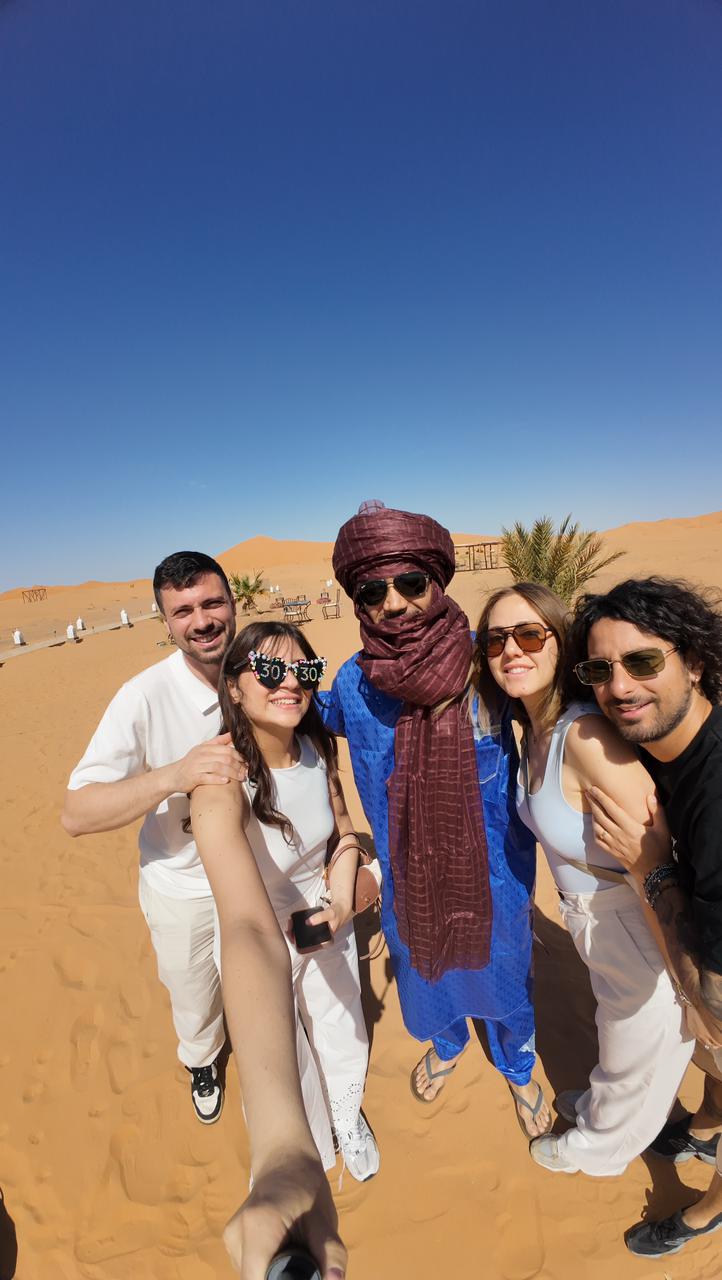
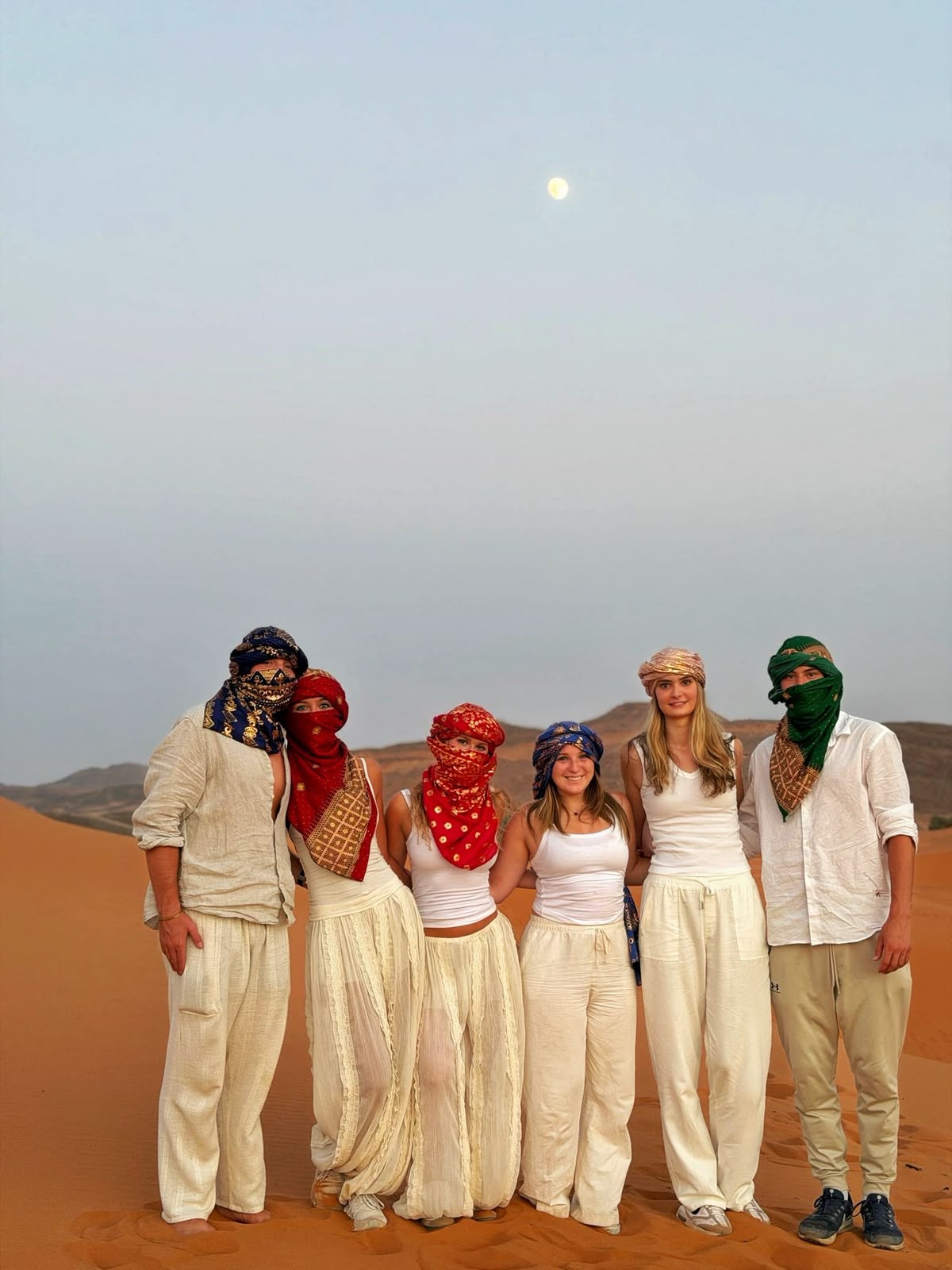
Loose cotton or linen works best. It lets air move, dries fast and does not trap heat the way tight synthetic fabric does. Light colors reflect the sun, so white, beige and pastel shades are popular. Long sleeves may sound hot, but they keep the sun off your skin and slow sweating.
Long, loose trousers are better than shorts for walking the dunes. The sand is hot, the sun is strong, and wind can blow sand against bare legs. Shorts are fine at the camp itself if you prefer them.
Shoes for the Sahara Dunes
Sand gets into every closed shoe, so many travelers walk the dunes barefoot in the morning and evening. At midday the surface is too hot for bare feet, so keep sandals or light trainers close. Choose sandals with a back strap, or trainers that slip on and off easily. Flip-flops tend to come off on the slopes.
Sandboarding and quad biking have their own tips. See the sandboarding guide and the quad biking guide.
Scarf, Hat and Sunglasses
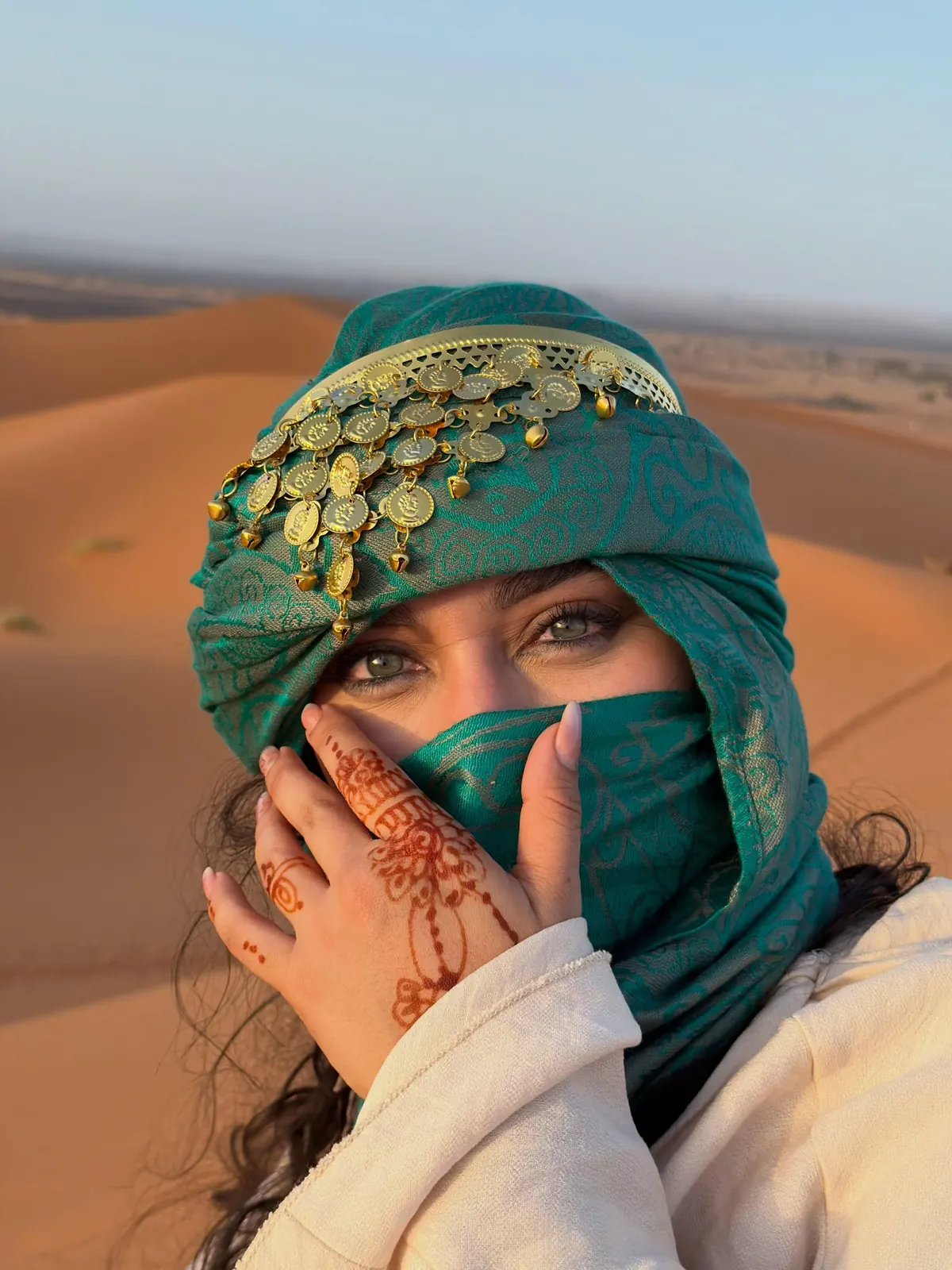
A large cotton scarf is the most useful item in the Sahara. Wrapped around the head and neck, it blocks the sun. Pulled over the nose and mouth, it filters wind and sand. Your guide can show you how to wrap it.
Sunglasses protect your eyes from glare and blowing sand. If you wear contact lenses, bring glasses too, because dust can irritate them. Add sunscreen on the face and the backs of the hands.
What to Wear in the Sahara Desert for the Camel Ride
For the ride, the key item in what to wear in the Sahara desert is long, loose trousers. The saddle rubs the inside of your knees, and bare legs get sore on a long ride. Skip very tight jeans and short skirts. Wear a top you can layer, because the ride often runs into sunset, when the air cools quickly.
Keep your phone and camera in a zipped pocket or a small cross-body bag. Pack a small bag for the night, and ask your guide how the rest of your luggage is handled. A scarf helps here too. It keeps the sun off your neck at the start of the ride and sand out of your face if the wind picks up.
What to Wear in the Sahara Desert at Night
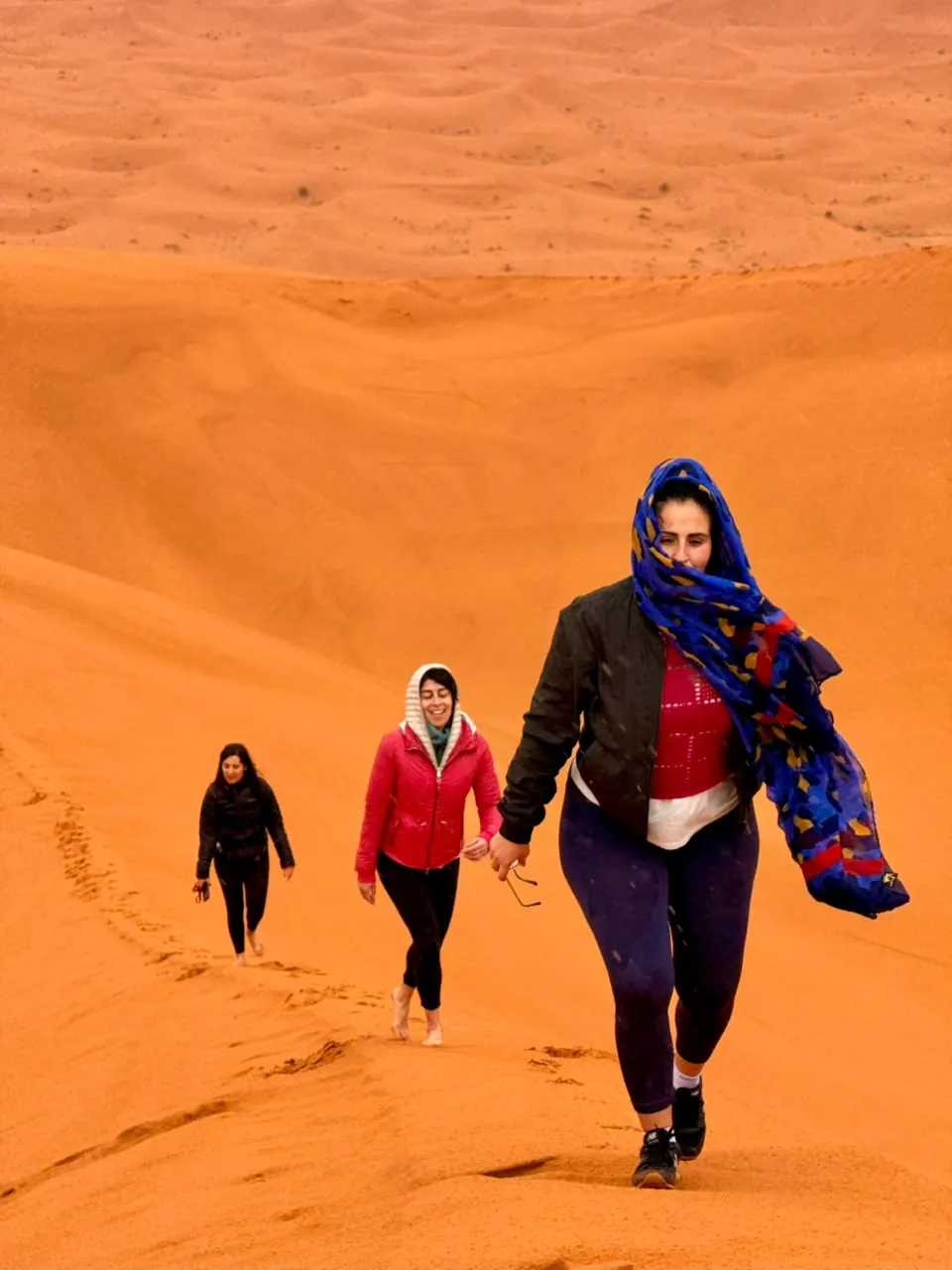
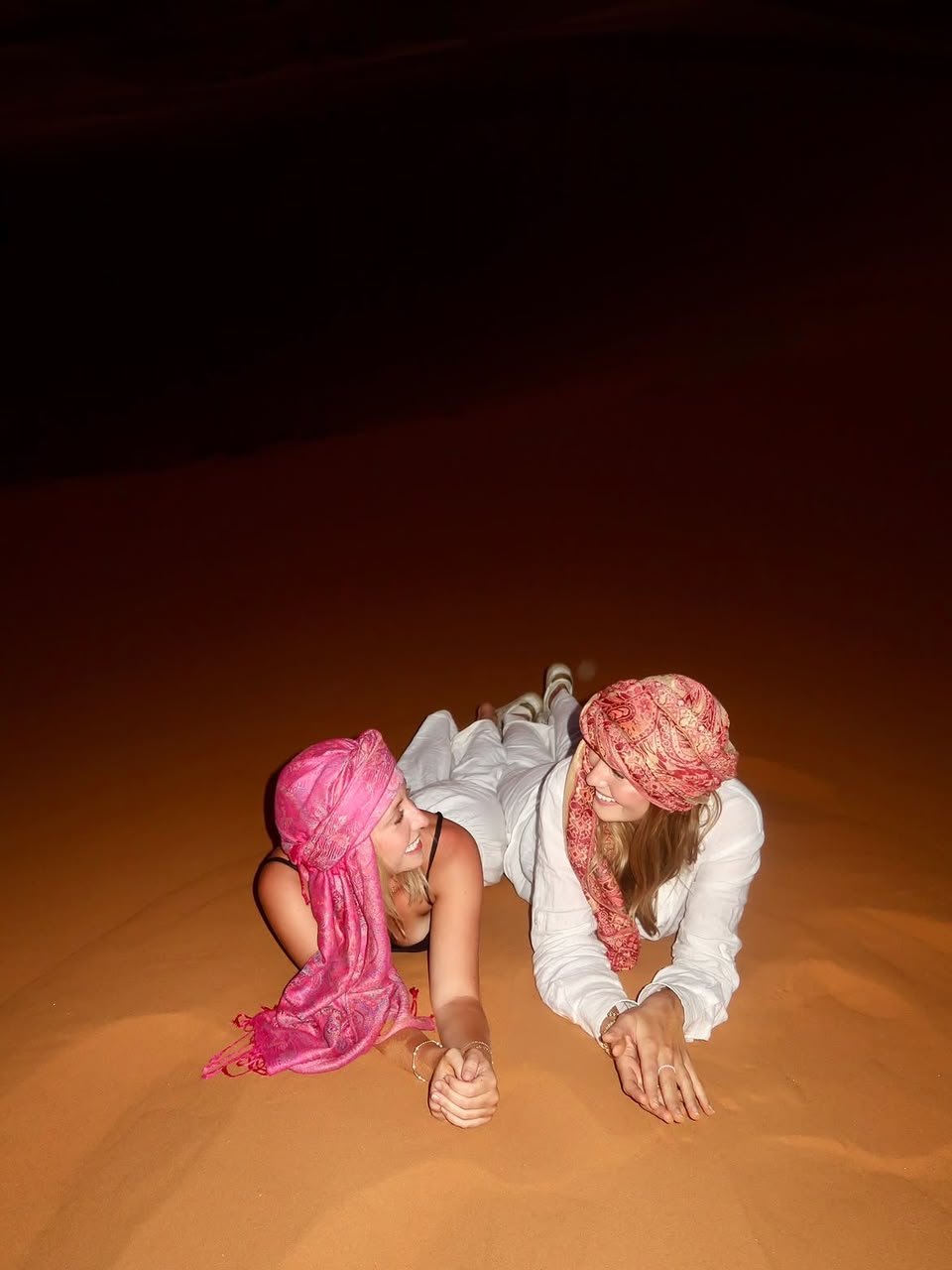
The night is the part of what to wear in the Sahara desert that needs the most planning, because the desert loses heat fast after sunset. A warm layer matters more than most people expect, even when the day was hot. Wear a base layer, a fleece or wool sweater, and a windproof jacket. Add warm socks, and in winter, a hat and gloves.
Dinner, music around the fire and stargazing all mean sitting still outdoors, and sitting still makes you colder. Bring the jacket to dinner. For sleeping, pack warm pajamas and a pair of dry socks. Camps provide blankets, and many luxury tents also have heating, as the guide to a night in a Sahara desert camp explains. Sunrise is cold again, so keep your warm clothes within reach.
What to Wear in the Sahara Desert Through the Year
What to Wear in the Sahara Desert in Winter
From November to February, days are pleasant, around 18 °C in December, but nights can fall to about 5 °C or lower. Pack a warm coat or thick fleece, a hat, gloves and thermal base layers. This is the season when the night clothes matter most.
What to Wear in the Sahara Desert in Spring and Autumn
In March to May and September to October, days are warm and nights are cool. Light cotton works by day, with a fleece and a light jacket at night. Wind can raise sand in the afternoon, so keep a scarf in your bag.
What to Wear in the Sahara Desert in Summer
From June to August, daytime highs can reach about 42 °C in July. Wear the lightest cotton you have, cover your skin, and drink water often. Nights are warmer, but a light layer is still useful in the early morning. For help choosing dates, read the guide to the best time to visit Morocco.
What Women Should Wear in the Sahara Desert
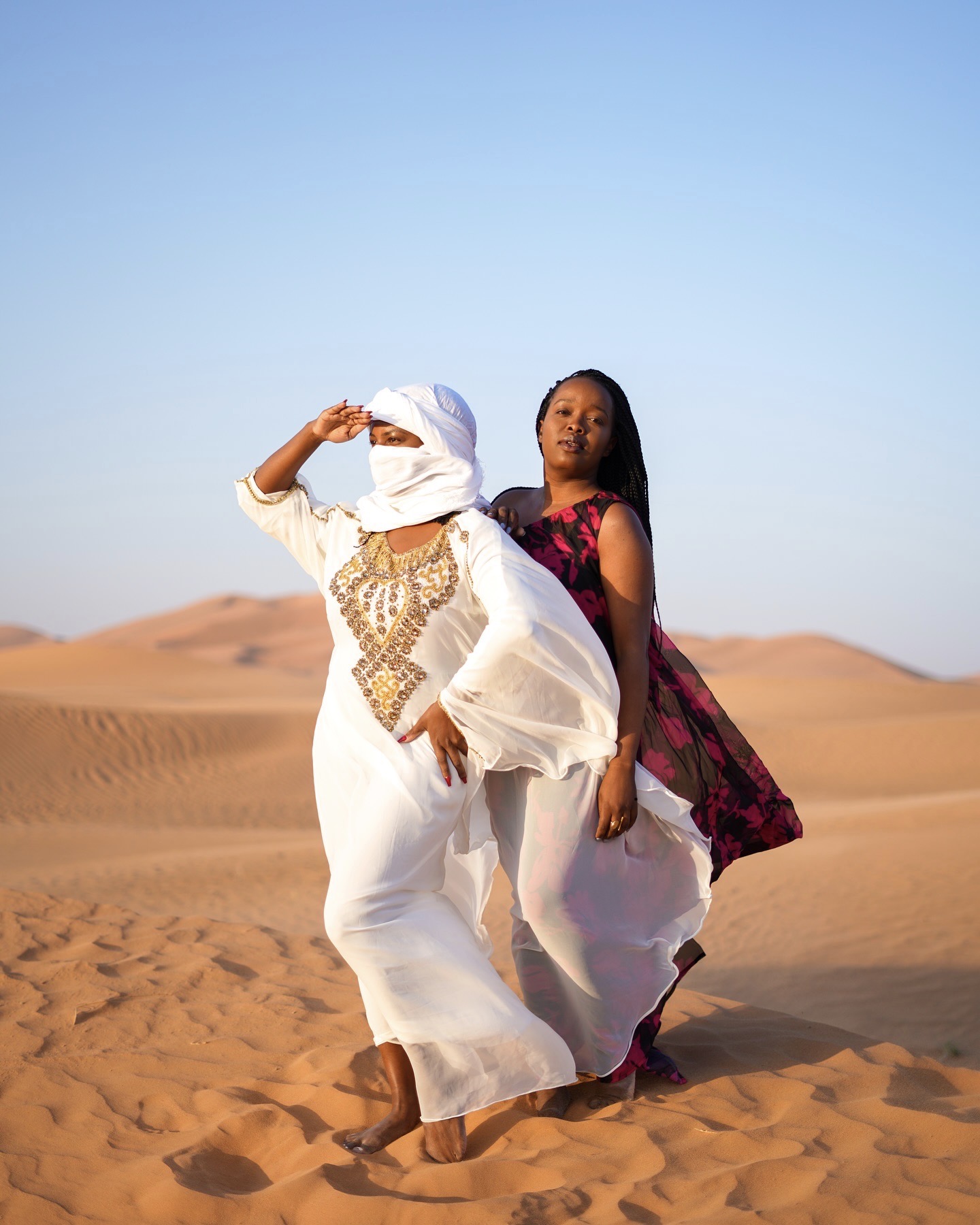
What to wear in the Sahara desert is mostly the same for women and men. Out on the dunes, comfort comes first. Loose trousers or a long cotton dress, a long-sleeved top and a scarf all work well. A long, loose dress is fine for the camp and for photos, but trousers are easier on a camel.
The towns on the way, such as Rissani and Erfoud, and the villages near the dunes are more conservative. Covered shoulders and knees help you blend in and attract less attention. The scarf you use against the sun doubles as a shoulder cover. For more on safety and etiquette, read the solo female travelers guide.
What Not to Wear in the Sahara Desert
Most mistakes in what to wear in the Sahara desert come from a few items that cause more trouble than they are worth. Heavy denim jeans are hot by day and stiff on a camel. Dark synthetic tops trap heat. Flip-flops slip off on the slopes, and high heels or brand-new shoes are a poor choice on sand. Large jewelry can snag or get lost in the sand. A big suitcase is awkward to carry to camp, so repack a small bag for the night.
What to Wear in the Sahara Desert on Our Tours
The advice on what to wear in the Sahara desert suits every Sahara trip, from the 3-day Marrakech to the Sahara tour to the 4-day Sahara desert tour. If you are unsure which to pick, the 3 or 4 day desert tour guide compares them.
FAQ: What to Wear in the Sahara Desert
Can I wear shorts in the Sahara desert?
Yes, at the camp and on the dunes, and many travelers do. For the camel ride, long trousers are more comfortable. In towns and villages, covered knees are more respectful.
Do I need to cover my head in the Sahara?
It is not required, but a scarf or hat is strongly recommended. It protects you from sun and sand, and your guide can show you how to wrap it.
What shoes should I wear on the Sahara dunes?
For what to wear in the Sahara desert on your feet, light trainers or sandals with a back strap work best. In the cool hours of morning and evening, many travelers go barefoot.
What should I wear in the Sahara desert in winter?
For what to wear in the Sahara desert in winter, think in layers. Light clothes for the day, then a fleece, a windproof jacket, a hat, gloves and warm socks for the evening and night.
What should I sleep in at a desert camp?
Warm pajamas and dry socks. Camps provide blankets, luxury tents often have heating, and standard camps have more limited heating, so it is better to bring a warm layer.
Not sure what to bring for your dates? Message us on WhatsApp at +212 609 490 681 or use the contact page. We are a team from the Sahara desert who work as a family, and we will tell you what to expect in your month.
More Navigate Morocco guides: dirt bike rides in Merzouga, things to do in Merzouga, Merzouga vs Zagora, Agafay vs Merzouga, the Gnawa village of Khamlia, the drive from Marrakech to the Sahara.