
Jemaa el-Fna (also spelled Jemaa el-Fnaa) is the main square of the medina in Marrakech, and a natural first stop in the city. This Jemaa el-Fna guide covers its history, what happens by day and by night, what to eat, how to handle the performers and prices, and when to go, so you can plan your visit. It is the heart of any Marrakech visit and fits easily into 7 days in Morocco.
Jemaa el-Fna at a glance
Wikipedia describes Jemaa el-Fna as a square and market in the Marrakesh medina and the city’s main square. UNESCO calls it a triangular square at the entrance of the medina, surrounded by restaurants, stalls and public buildings, where everyday commerce and entertainment run from morning into the night. UNESCO listed the cultural space on its intangible heritage list in 2008, after proclaiming it a Masterpiece in 2001, and the medina itself is a separate World Heritage site.
What does Jemaa el-Fna mean?
The name is debated. Wikipedia says the best-known explanation links it to an unfinished mosque begun under the Saadian sultan Ahmad al-Mansur, who ruled from 1578 to 1603, and later abandoned, possibly because of plague. Other theories include “assembly of the dead”, tied to public executions around the year 1050, and “mosque at the end of the world”. Because the sources do not agree, we treat the meaning as uncertain.
A short history of Jemaa el-Fna
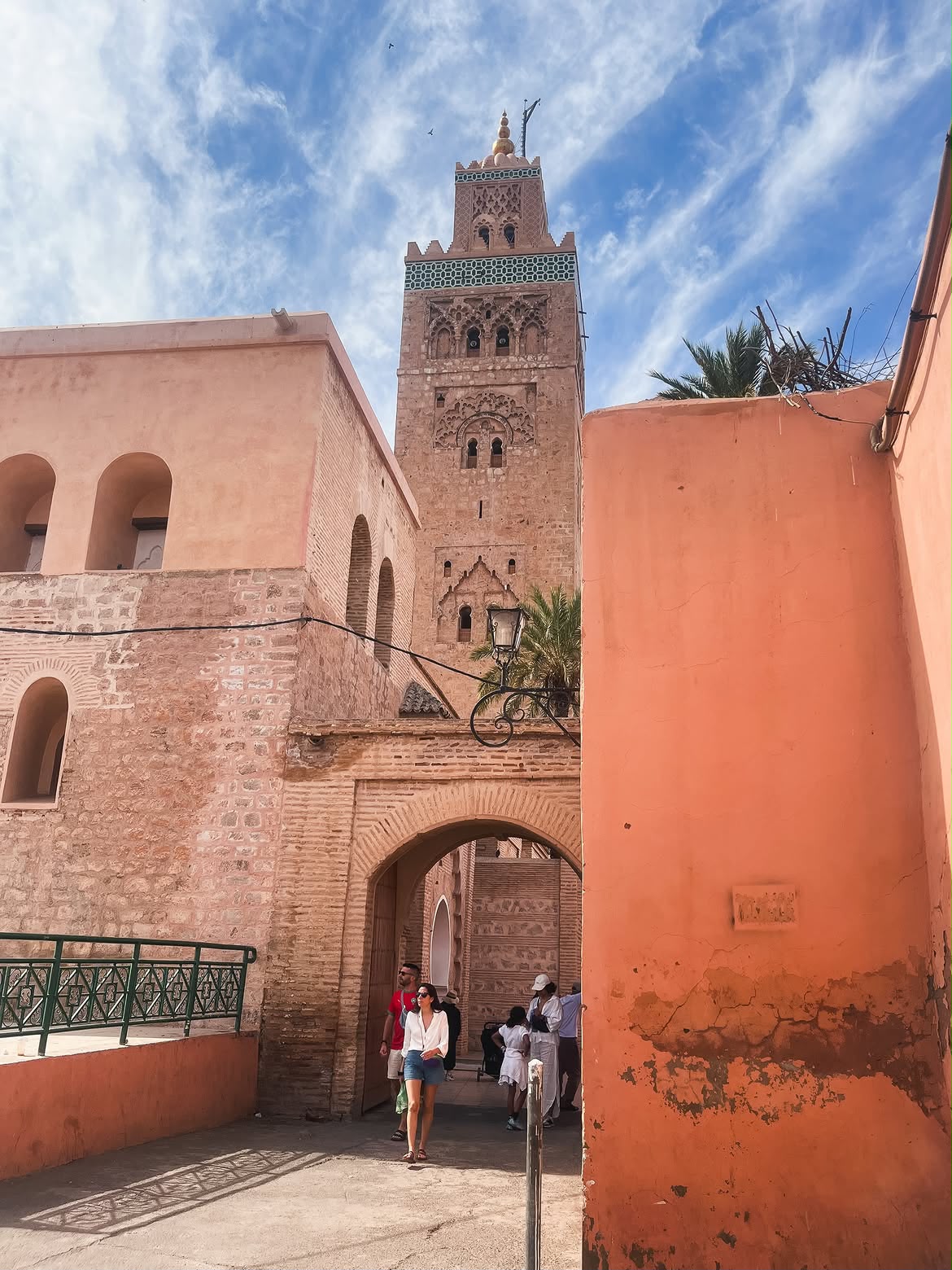
Marrakesh was founded by the Almoravids in 1070, and the square began as a market and gathering place. Wikipedia says it hosted executions, parades and festivals, and that the Almohads took the city in 1147 and began the Koutoubia Mosque, whose minaret you can still see from the square.
Things to do in Jemaa el-Fna
See Jemaa el-Fna by day
By day, Wikipedia says, the square has orange juice stalls, water sellers with leather bags and brass cups, snake charmers and people with chained macaques. Passaporte no Bolso calls the morning quieter and easier for orientation but less exciting, because the square is still setting up. The Wikipedia article adds that the animal trade conflicts with Moroccan protections for these species, so we suggest skipping animal photos.

Visit Jemaa el-Fna at sunset and after dark
Late afternoon to sunset is the best balance, says Passaporte no Bolso, as stalls go up and performers arrive. From about 7 pm it describes peak intensity with more noise, more vendor pressure and more crowding. Wikipedia lists dancing boys, storytellers, magicians and traditional medicine sellers, and UNESCO names storytellers, Berber musicians, Gnaoua dancers and henna artists. If you love golden hour, see our sunset in Morocco guide, and the Gnawa music you hear here is also featured in Essaouira.
Eat at the Jemaa el-Fna food stalls
Dozens of food stalls appear in the evening, according to Wikipedia. Passaporte no Bolso says common dishes are tagine, couscous and skewers, and advises choosing busy stalls with high turnover and checking menus and prices before you sit. For more dishes to try, read our Moroccan food guide, and carry small notes; see cash in Morocco and tipping in Morocco.
Browse the souks beside Jemaa el-Fna
The square borders the Marrakesh souk, which serves both locals and tourists, and narrow medina streets lead off it. Be careful with prices: Passaporte no Bolso warns that haggling after you have consumed something rarely favors the visitor. A few Darija phrases help.

How to handle Jemaa el-Fna: prices, photos and performers
Passaporte no Bolso advises confirming prices before ordering, especially orange juice. It says many performer and animal interactions, and photos with them, are paid, and that anything handed to you, such as tea or an animal, should be treated as a paid interaction, so politely decline if you do not want it. It suggests stopping to watch the Gnaoua musicians and contributing thoughtfully. For safety tips, read our solo female travel guide, and for clothing see what to wear in Morocco for women.
The best time to visit Jemaa el-Fna
Passaporte no Bolso suggests visiting twice, once by day and once in the late afternoon or evening. For the season, compare Morocco in summer, Morocco in November and Morocco in winter, or see the best time to visit Morocco.

Where to stay near Jemaa el-Fna
Many travelers sleep in a riad inside the medina; see riad versus hotel in Morocco. Staying inside the medina keeps you near the square. We could not confirm walking times for specific riads.
Jemaa el-Fna and the rest of your trip
From Marrakech you can continue to the desert: our Marrakech to the Sahara drive guide explains the road, and the 3 or 4 day desert tour and desert tour cost guides show how to plan it. Prefer a short escape? Compare the Agafay desert and Merzouga. Choosing between cities? Read Fes versus Marrakech, and for romance see the best places in Morocco for couples and our Morocco honeymoon ideas.
Jemaa el-Fna FAQ
Is Jemaa el-Fna worth visiting?
Yes. UNESCO describes it as a meeting point for locals and visitors, and it is the easiest introduction to the medina. See how many days you need in Morocco for planning.
When is Jemaa el-Fna busiest?
In the evening. Wikipedia says crowds peak after dark, when food stalls fill the square.
What does Jemaa el-Fna mean?
The meaning is debated; one leading theory points to an unfinished mosque of the Saadian era.
Is Jemaa el-Fna free to visit?
It is a public square, but Passaporte no Bolso says many performer and animal photos are paid, so agree on or decline them first.
Want Jemaa el-Fna and the medina on your Morocco route? Message us your dates and we will plan it with you.
Message us on WhatsAppNavigate Morocco is a team from the Sahara desert who work as a family. We will be glad to help you plan your Jemaa el-Fna visit and the rest of your route, from the medina to the dunes.
More Navigate Morocco guides: Is Marrakech worth visiting?, Fes vs Marrakech, Moroccan food guide, Sunset in Morocco.
Just south of the square, see our El Badi Palace Marrakech guide.
After the square, take a day trip with our Ouzoud Waterfalls Morocco guide.
