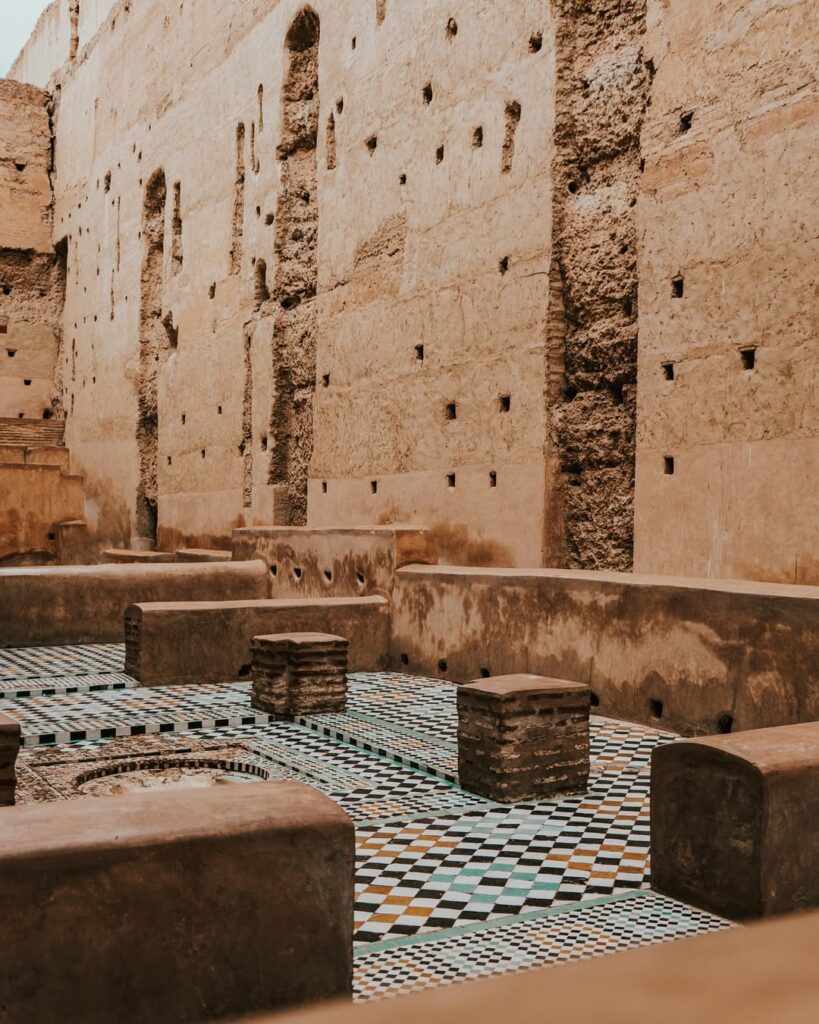
El Badi Palace in Marrakech is a ruined 16th-century Saadian palace whose giant courtyard, sunken gardens and rammed-earth walls still show how grand it once was. This El Badi Palace guide covers the history, what to see today, practical visitor tips and how it fits with the rest of Marrakech, so you can plan your visit. It pairs naturally with Jemaa el-Fna and with a visit to Marrakech.
El Badi Palace at a glance
According to Wikipedia, the El Badi Palace was built by Sultan Ahmad al-Mansur of the Saadian dynasty, who ruled from 1578 to 1603, and an earlier palace by Moulay Abdallah al-Ghalib stood on the same site. It was a reception palace meant to display the sultan’s wealth and power. The name al-Badi’ means “the Incomparable”, and the article says the palace was probably funded by the Portuguese ransom paid after the Battle of the Three Kings in 1578.
A short history of El Badi Palace
How the El Badi Palace was built
Wikipedia says work began in December 1578 and, according to the chronicler al-Ifrani, took fifteen years and finished in 1593. History Hit says it was largely complete by the early 1580s and that the sultan kept decorating it for at least 20 more years, so sources disagree on the finishing date and we avoid giving one. The decoration included Italian marble columns, gold, onyx, tilework, carved stucco and gilded ceilings, per Wikipedia. History Hit says it had over 350 rooms, courtyards, gardens and a large pool, but that figure is unsourced, so treat it as approximate.
How the El Badi Palace fell into ruin
Wikipedia says Sultan Moulay Ismail ordered the palace demolished in 1707 to 1708, reusing its materials in Meknes, although dismantling likely began earlier and continued after his reign. History Hit says the palace was in complete decay by the early 18th century. The gold and marble are gone, but the walls and pool outlines remain.
What to see at the El Badi Palace
The courtyard and sunken gardens
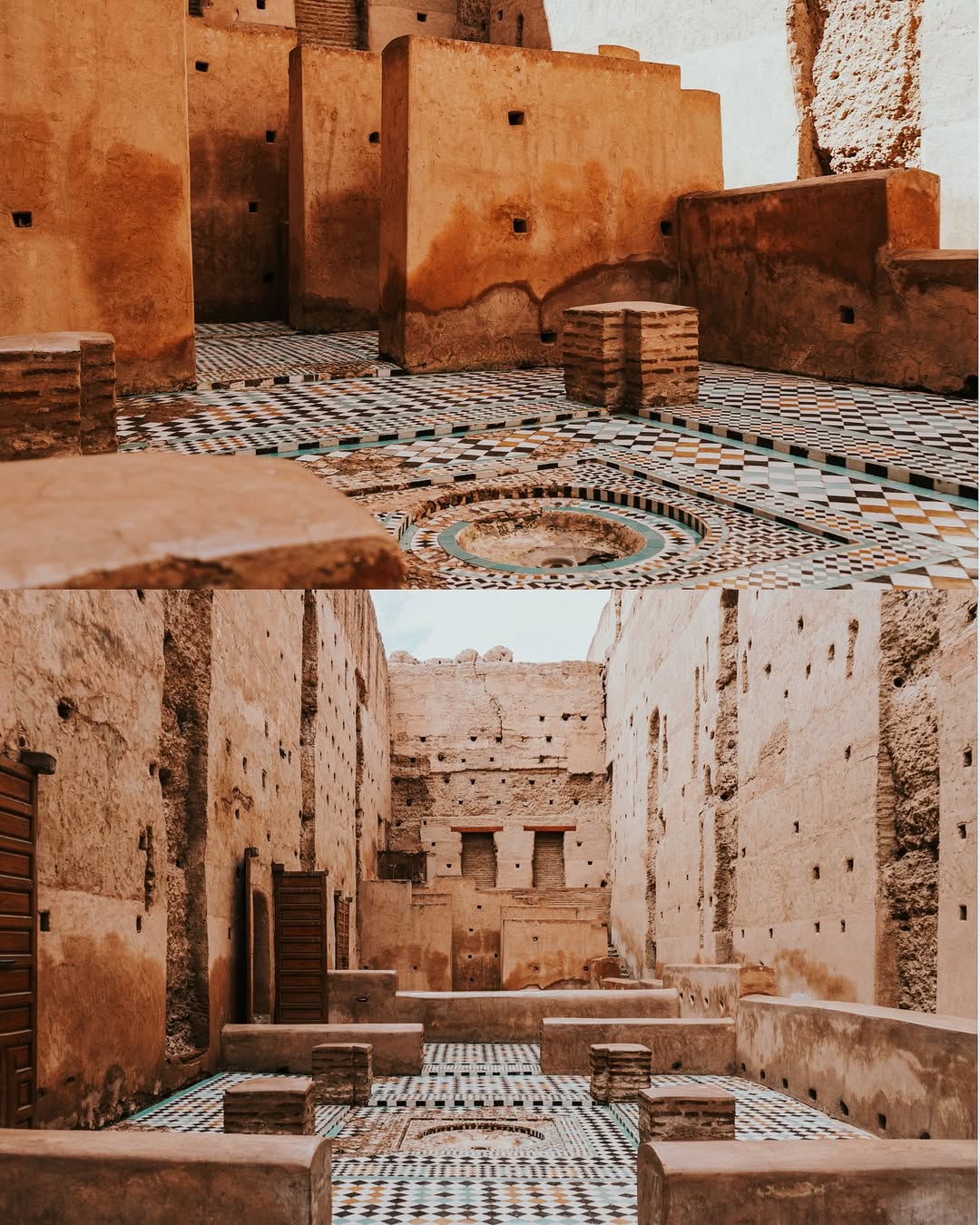
The vast courtyard measures 135 by 110 m, and the central pool is 90.4 by 21.7 m, with four smaller basins along the sides, according to Wikipedia. History Hit says remnants of the reflection pools and sunken gardens survive. The tiled floors still show zellige patterns against the earthen walls.
The ramparts and gateways
History Hit says the ramparts offer views of the ruins, and MarocMama says the upper level gives views over the medina and, on clear days, the High Atlas. Both sources are from 2020 to 2022, so check which areas are open today.
The Koutoubia minbar and exhibitions
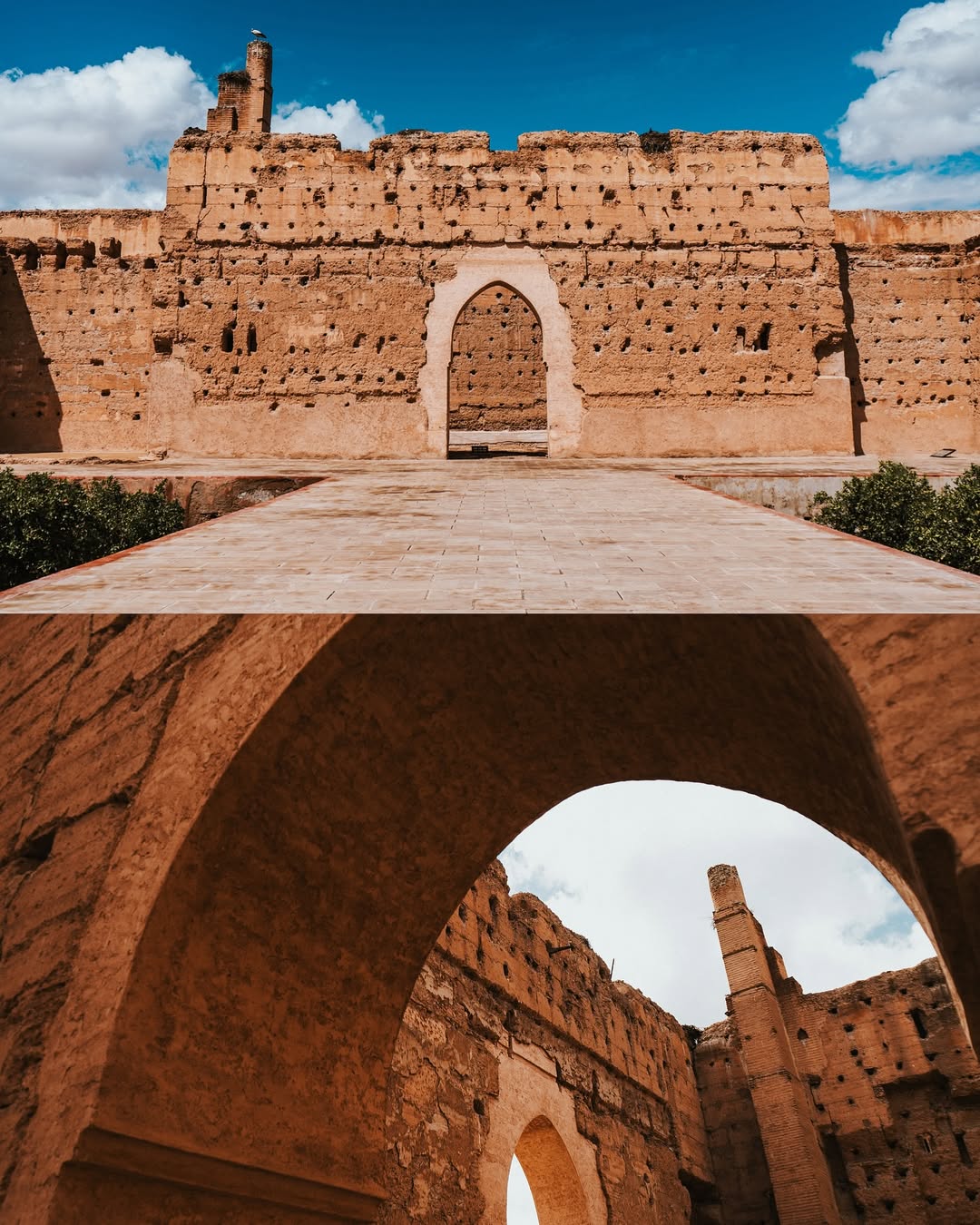
Wikipedia says the palace displays the 12th-century Almoravid minbar from the Koutoubia Mosque, and that more exhibition spaces opened in 2018. History Hit says the Khayzuran Pavilion hosts contemporary art exhibitions, and an underground section covers the conditions of enslaved people and prisoners. MarocMama says the underground chambers were not signposted at the time, so ask staff.
Storks and festivals
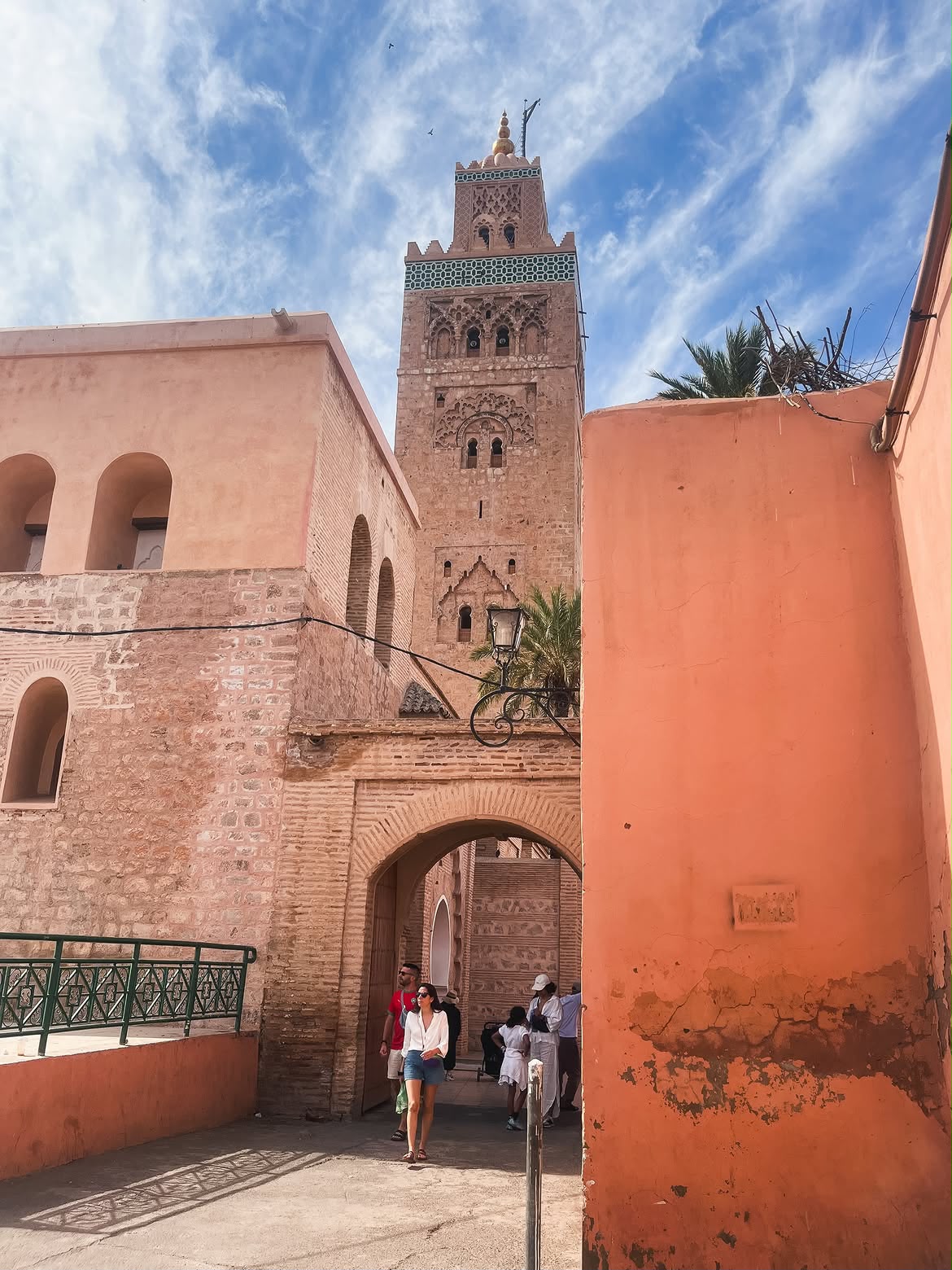
MarocMama says storks nest on the ruined walls, but Wikipedia does not mention them, so we cannot confirm it. Wikipedia says the Marrakesh Folklore Festival was held in the palace for a number of years, and MarocMama describes a festival in June or July. Dates change, so confirm before you go.
Visiting the El Badi Palace: practical tips
History Hit says the palace is slightly south of central Marrakech, across Avenue Imam El Ghazali from the Bahia Palace, and that it is about a 15 minute walk from the center. The route goes through Place des Ferblantiers and then right along the ramparts. MarocMama lists entry at 70 dirhams and opening hours of 9 am to 5 pm, and suggests about 1 to 1.5 hours, but that article is from 2021 and 2022, so confirm prices and hours. It also suggests modest clothing and sun protection; see what to wear in Morocco for women. Bring small notes; see cash in Morocco and tipping in Morocco. It is close to the Saadian Tombs.
The best time to visit the El Badi Palace
Much of the site is open to the sky, so MarocMama suggests bringing sun protection. Compare Morocco in summer, Morocco in November and Morocco in winter, or see the best time to visit Morocco. A visit near sunset can combine with our sunset in Morocco guide.
Where the El Badi Palace fits in your Marrakech trip
Combine it with the medina and Jemaa el-Fna, then eat well using our Moroccan food guide. Many travelers stay in a riad; see riad versus hotel. Planning more days? Read 7 days in Morocco and how many days you need in Morocco. Choosing between cities? See Fes versus Marrakech. For romance, see the best places in Morocco for couples and Morocco honeymoon. Heading for the dunes? Read the drive from Marrakech to the Sahara, Agafay desert versus Merzouga and Ait Ben Haddou. Solo? Read the solo female travel guide.
El Badi Palace FAQ
Who built the El Badi Palace?
Sultan Ahmad al-Mansur of the Saadian dynasty, who began work in 1578, according to Wikipedia.
Why is the El Badi Palace in ruins?
Wikipedia says Moulay Ismail ordered it demolished in 1707 to 1708 and reused its materials in Meknes, though dismantling probably began earlier.
What does El Badi Palace mean?
Al-Badi’ means “the Incomparable”, per Wikipedia.
How long do you need at the El Badi Palace?
MarocMama suggests about 1 to 1.5 hours, based on what visitors say.
How far is the El Badi Palace from the center of Marrakech?
About a 15 minute walk, according to History Hit.
Want the El Badi Palace and the medina on your Morocco route? Message us your dates and we will plan it with you.
Message us on WhatsAppNavigate Morocco is a team from the Sahara desert who work as a family. We will be glad to help you plan your El Badi Palace visit and the rest of your route, from the palaces of Marrakech to the dunes.
More Navigate Morocco guides: Jemaa el-Fna Marrakech, Is Marrakech worth visiting?, Fes vs Marrakech, Sunset in Morocco.