
Larache Morocco is a quiet Atlantic port with a Spanish colonial centre, and just outside it stand the Roman ruins of Lixus, one of the oldest sites on the Moroccan coast. This Larache guide covers the ruins, the old town, the history and how to reach both from Tangier, so you can decide whether to add them to a northern route. It pairs well with Tangier, Asilah and Tetouan.
Larache at a glance
According to Wikipedia, Larache lies in northwestern Morocco on the south bank where the Loukkos River meets the Atlantic, roughly 80 km southwest of Tangier. The 2024 census recorded 133,731 people in the commune. Blackgate, a travel site, says the town is about an hour and a half’s drive along the coast from the Strait of Gibraltar and small enough to see in one day.
Its history is layered. Wikipedia says Portuguese settlers drove out the inhabitants in 1471, the town passed to Spain in 1610, and Moulay Ismail conquered it in 1689. Spain occupied Larache again in 1911 and held it until 1956. Blackgate adds that the Spanish community has not entirely gone, that Spanish is more common than French in the town and that Arabic is still the main language. That mix is why Larache feels different from the cities further south. For a similar Iberian thread, see Andalusian heritage between Morocco and Spain.
Lixus: the Roman ruins
Lixus is on a plateau above the Loukkos River, a few miles from Larache, according to Archaeology magazine. The magazine says the earliest traces date to the 8th century BC, when Phoenicians founded one of their first outposts in the western Mediterranean here. Wikipedia’s Larache page gives conflicting dates for the same ancient city, 8th to 7th century BC in one place and 1180 BC in another, so treat the exact founding date as uncertain.
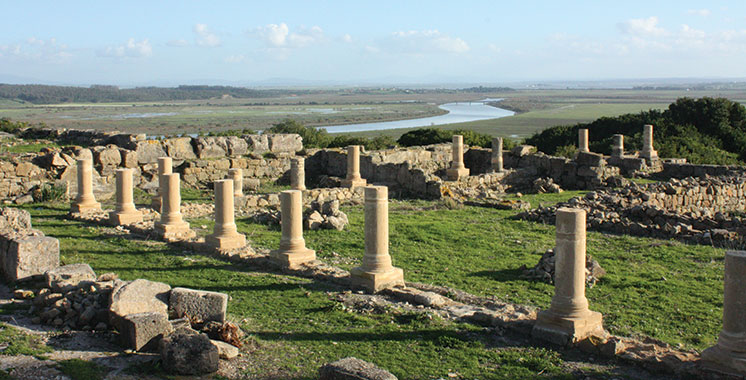
The ancient writer Pliny the Elder, the magazine says, placed the Garden of the Hesperides at Lixus, the setting for the legend of Hercules and the golden apples. Lixus became part of the Kingdom of Mauretania under King Juba II (25 BC to AD 23) and his son Ptolemy, and Rome annexed Mauretania under Claudius, making Lixus a Roman colony. The site had the largest garum basins, for making fish sauce, in the western Mediterranean, per the same article.
Archaeology magazine says less than 10 percent of the roughly 150 acre site has been excavated. What you can see includes the fish-salting and garum facilities, the Roman amphitheatre, which the article calls the only known Roman amphitheatre in Morocco, and a large bath complex with a floor mosaic of the god Oceanus. A new on-site museum shows finds from the Phoenician period to a 14th century mosque. The article suggests starting self-guided visits at the southern edge, at the fish-salting factory, and climbing to the summit. The mosaics from the houses of Helios and of Mars and Rhea are now in the Tetouan Archaeological Museum, which you can read about in our Tetouan guide. For another Roman site, see Volubilis.
Larache’s old town and coast
Blackgate describes a large circular plaza, formerly Plaza de España and now Place de la Libération, where cafés line a row of arches. The small medina keeps its Spanish character and is reached through an ornate entrance. The site also lists a church from the 1920s, Iglesia de Nuestra Señora del Pilar, and the Zoco de la Alcaiceria, which the Spanish added to the medina in the 17th century.
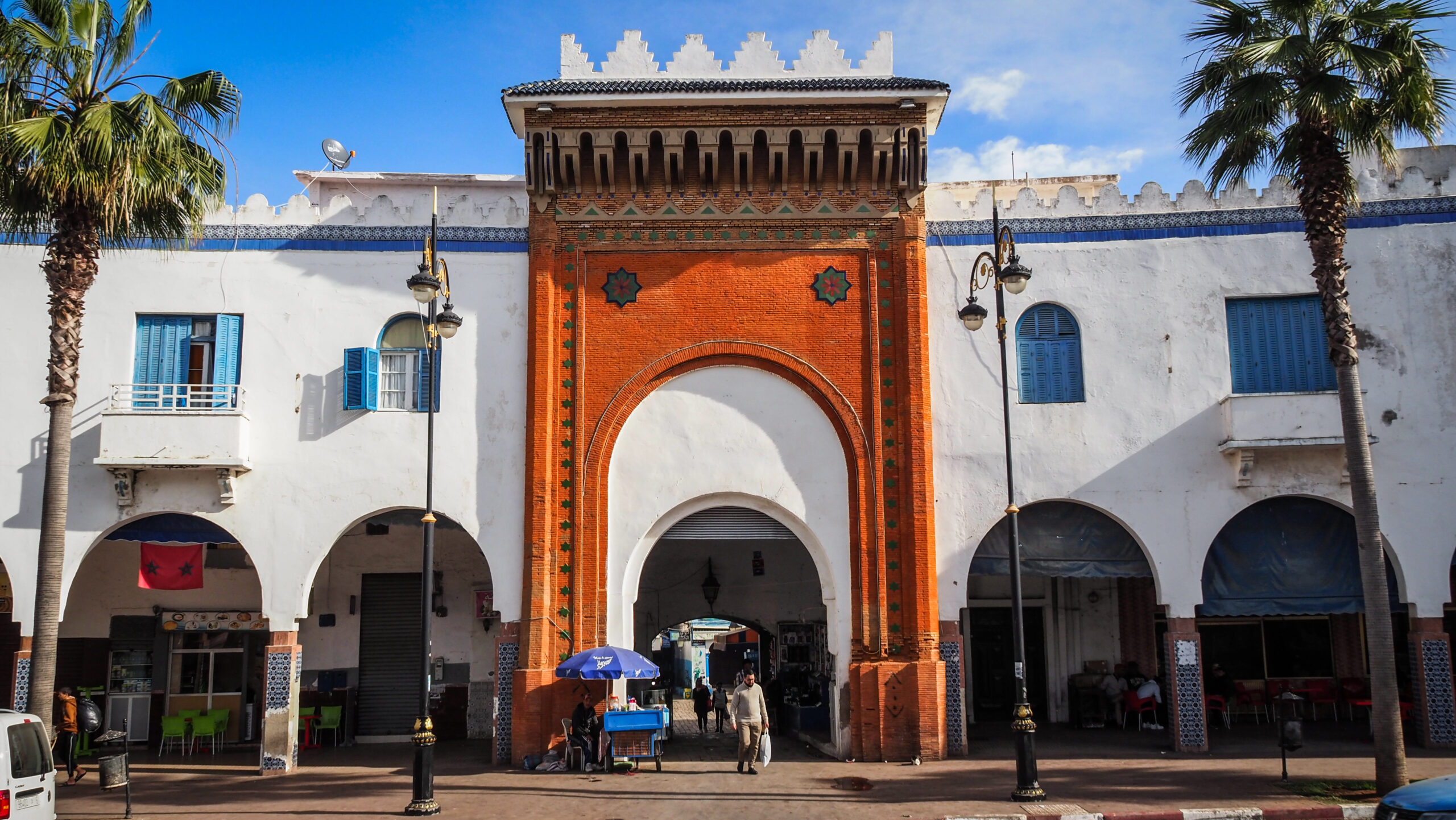
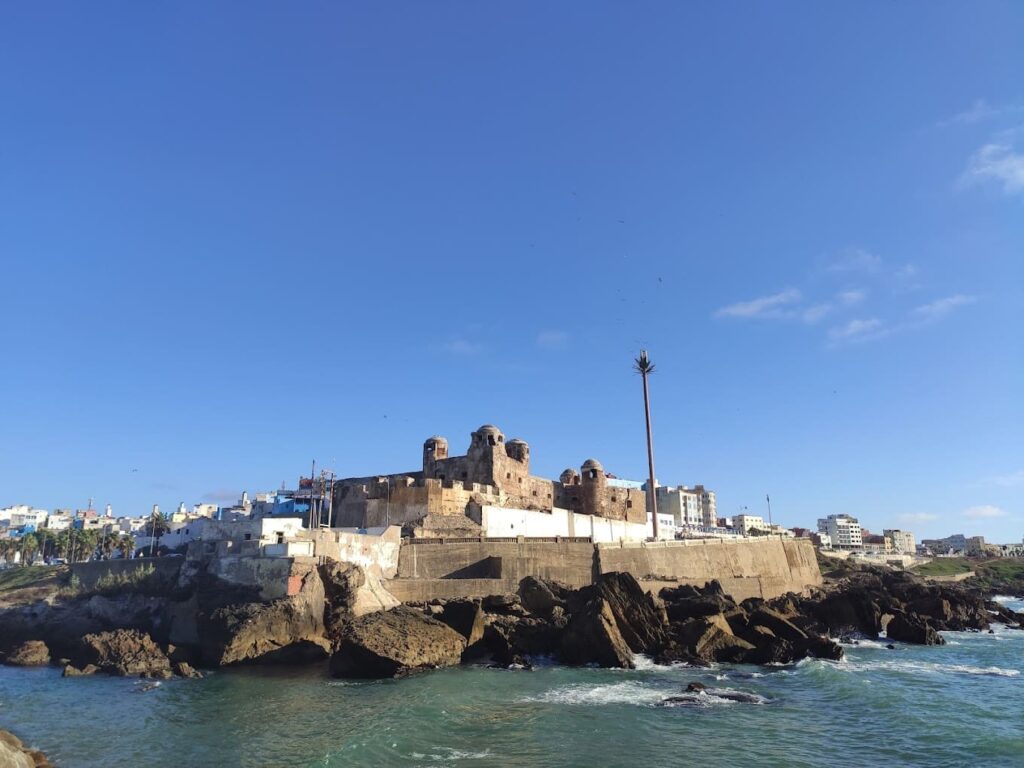
Wikipedia also lists Bab Behar, the old medina and its kasbah, and notes that the French writer Jean Genet lived in Larache and is buried in the Spanish cemetery, as is the novelist Juan Goytisolo. Blackgate describes the 17th century fort overlooking the harbour entrance as a triangular fort with a sloping wall and three towers, but says it is run down and not always comfortable, so ask locally before you climb it.
Archaeology magazine recommends the harbourside Café Chentouf for grilled and fried seafood, and mentions street vendors selling kalinti, a spiced chickpea-flour tart. Blackgate says Larache is known for seafood and also serves paella. Plan more meals with our Moroccan food guide.
Getting to Larache and where to go next
We run a day trip from Tangier to Larache and Lixus. You can also combine northern stops with the Asilah day trip, the Tetouan day trip or the Chefchaouen day trip, and read why Chefchaouen is blue.
For a longer route, see the 3 day tour from Tangier to Casablanca, the 6 day tour from Tangier to Marrakech or the 12 day Morocco tour from Tangier. Continue to Rabat. For logistics, read airport transfers in Morocco and train vs bus vs rental car, and see the 7 days in Morocco route.
Larache Morocco FAQ
Where is Larache?
On Morocco’s northwest Atlantic coast, where the Loukkos River meets the sea, about 80 km southwest of Tangier per Wikipedia.
What is Lixus?
An ancient Phoenician and Roman city on a plateau above the Loukkos River, a few miles from Larache. Archaeology magazine dates the earliest traces to the 8th century BC.
Is there a Roman amphitheatre in Morocco?
Yes, at Lixus. Archaeology magazine calls it the only known Roman amphitheatre in the country.
Is Larache worth a day trip from Tangier?
Blackgate suggests it works well as a day trip because the town is small enough to see in one day, with Lixus as the main reason to go.
Who is buried in Larache?
Wikipedia says Jean Genet and Juan Goytisolo are buried in the Spanish cemetery.
What was the Spanish connection to Larache?
Spain took the town in 1610, and occupied it again from 1911 to 1956, per Wikipedia.
Want Larache and Lixus on your northern Morocco route? Message us your dates and we will plan it with you.
Message us on WhatsAppNavigate Morocco is a team from the Sahara desert who work as a family. We will be glad to help you plan your Larache visit and the rest of your route, from the Atlantic coast to the dunes.
More Navigate Morocco guides: Things to do in Tangier, Asilah Morocco, Tetouan Morocco, Volubilis Morocco.