
Most British travellers know Morocco as a sunny escape less than four hours from home. Few know that Morocco and Britain have been friends for over 400 years, longer than Britain has been a united kingdom.
In the 1580s, Queen Elizabeth I was isolated. The Pope had excommunicated her, and Catholic Spain was preparing to invade. She needed allies, and she found one in an unexpected place: Ahmad al-Mansur, the Sultan of Morocco. For more than two decades the two monarchs wrote letters, swapped gifts and traded English cloth and firearms for Moroccan sugar and saltpetre, the key ingredient of gunpowder. Elizabeth wrote of “the great friendship and cooperation that exists between our Crowns.”
That friendship left a trail you can still follow today, from a mysterious portrait in Birmingham to the old English quarter of Tangier and Winston Churchill’s favourite hotel in Marrakech. This guide tells the story of Morocco and Britain history, then shows you where to find it on a trip.
1600: A Moroccan Ambassador at the Court of Elizabeth I
Trade between the two kingdoms became official in 1585, when Elizabeth chartered the Barbary Company to handle all English commerce with Morocco. English ships sailed to Moroccan ports with wool and weapons, and came home with sugar, ostrich feathers and saltpetre. Spain and Portugal protested, and the Pope disapproved, but the trade went on.
In August 1600, the relationship reached its peak. A Moroccan ambassador, Abd el-Ouahed ben Messaoud, landed at Dover and rode to London with his delegation. He met Queen Elizabeth on 19 August and again in September, and stayed in England for about six months. Londoners crowded the streets to see the Moroccan visitors.
His mission was bold. Sultan al-Mansur proposed a joint attack on Spain, only twelve years after the Spanish Armada. Elizabeth declined the military plan, but agreed to deepen the commercial ties. Both rulers died within months of each other in 1603, and the grand alliance died with them.
The ambassador left one lasting souvenir: his portrait, painted in London around 1600. It is a rare early portrait of a Muslim diplomat in England. Some scholars believe he helped inspire Shakespeare’s Othello, the “noble Moor” of Venice, which was first performed only a few years later. Others think the link is unproven, but the timing is hard to ignore.
Where to see it: before you fly, visit the portrait at the Barber Institute of Fine Arts at the University of Birmingham. In Morocco, Marrakech holds the legacy of Sultan al-Mansur himself. He built the El Badi Palace, whose ruins you can walk today, and he is buried in the Saadian Tombs, one of the most beautiful sites in the city.
English Tangier: When Tangier Was British (1661 to 1684)
For 23 years, Tangier belonged to England. In 1661 King Charles II married the Portuguese princess Catherine of Braganza, and Tangier, then a Portuguese town, came as part of her dowry, along with Bombay.
The English had big plans. They began building a huge stone breakwater, called the Mole, to turn Tangier into a naval base at the mouth of the Mediterranean, the role Gibraltar would later play. The diarist Samuel Pepys sat on the King’s Tangier Committee and wrote about the colony in his famous diary.
But Tangier was expensive to defend. Sultan Moulay Ismail, one of Morocco’s most powerful rulers, put the town under heavy pressure, and Parliament refused to keep paying. In 1684 the English blew up the Mole and the fortifications and sailed away. Moulay Ismail took back the city, and Morocco and Britain soon returned to trading and signing treaties.
Where to see it today: Tangier is the natural first stop for British travellers, a short ferry ride from Gibraltar or southern Spain.
- Walk up to the Kasbah, the old fortress quarter that the English garrison once guarded, and visit the Kasbah Museum in the former sultan’s palace.
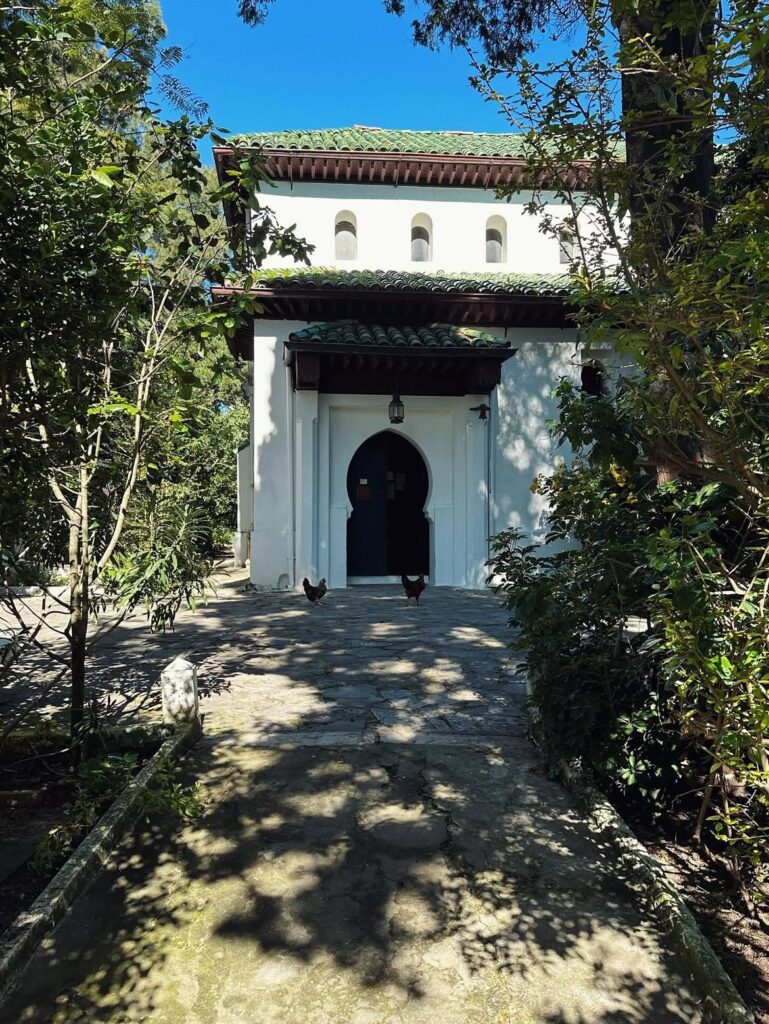
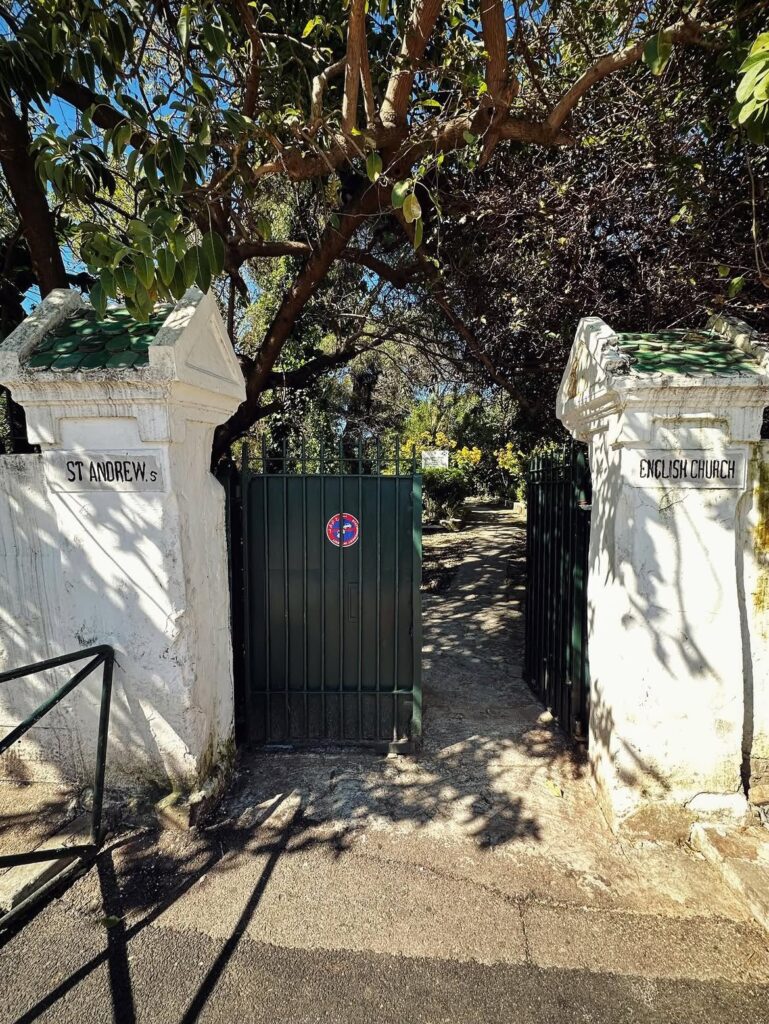
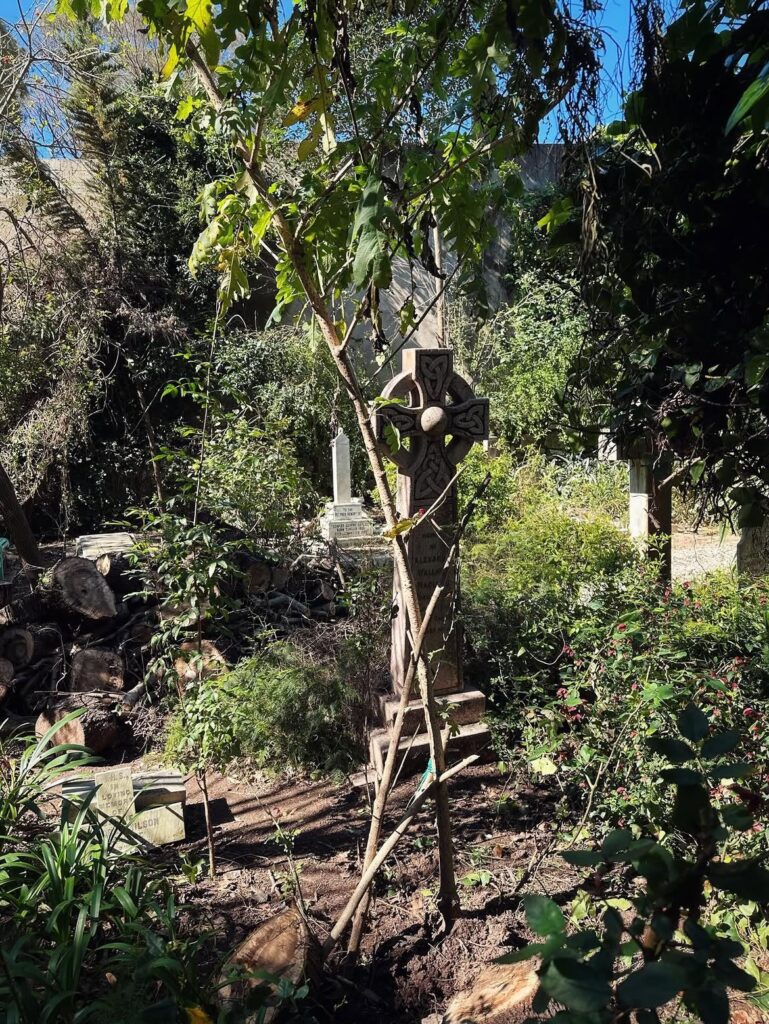
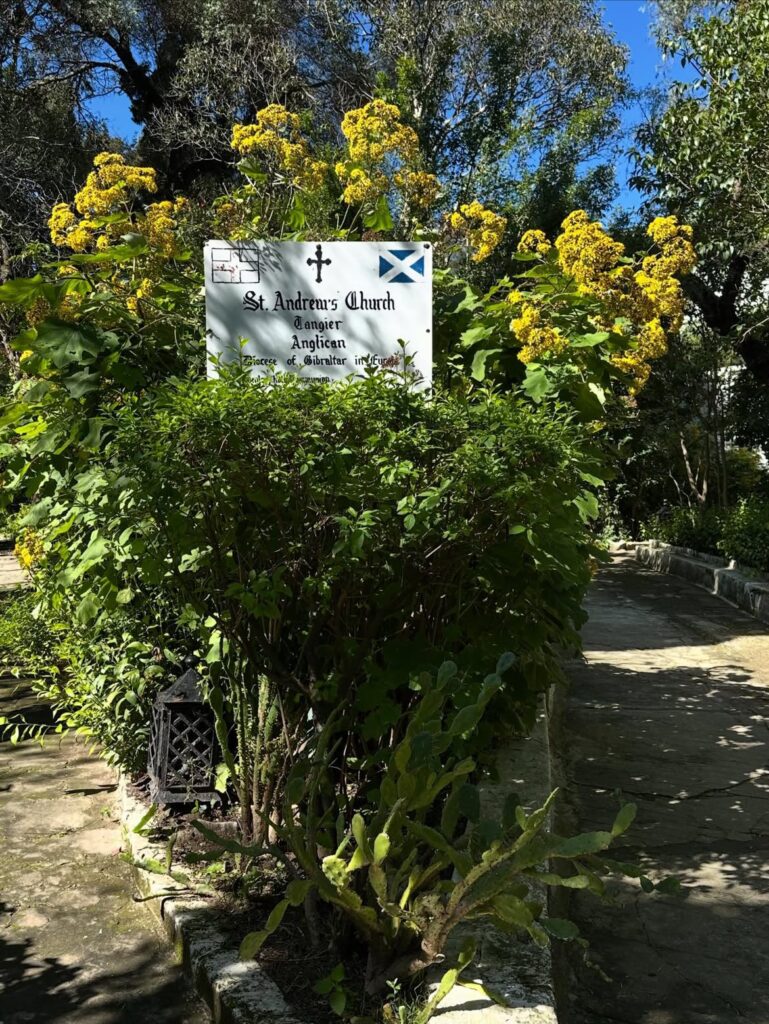
- Visit St Andrew’s Church, an Anglican church completed in 1894 on land given to the British community by Sultan Hassan I. Its bell tower is shaped like a minaret. The graveyard holds British diplomats, soldiers and writers, including the journalist Walter Harris.
- Stand on the Terrasse des Paresseux viewpoint and look across the Strait to Spain and Gibraltar, the view that made Tangier so valuable to every naval power.
- End with mint tea at Café Hafa, open since 1921 on the cliffs above the sea.
Inside St Andrew’s Church, Tangier
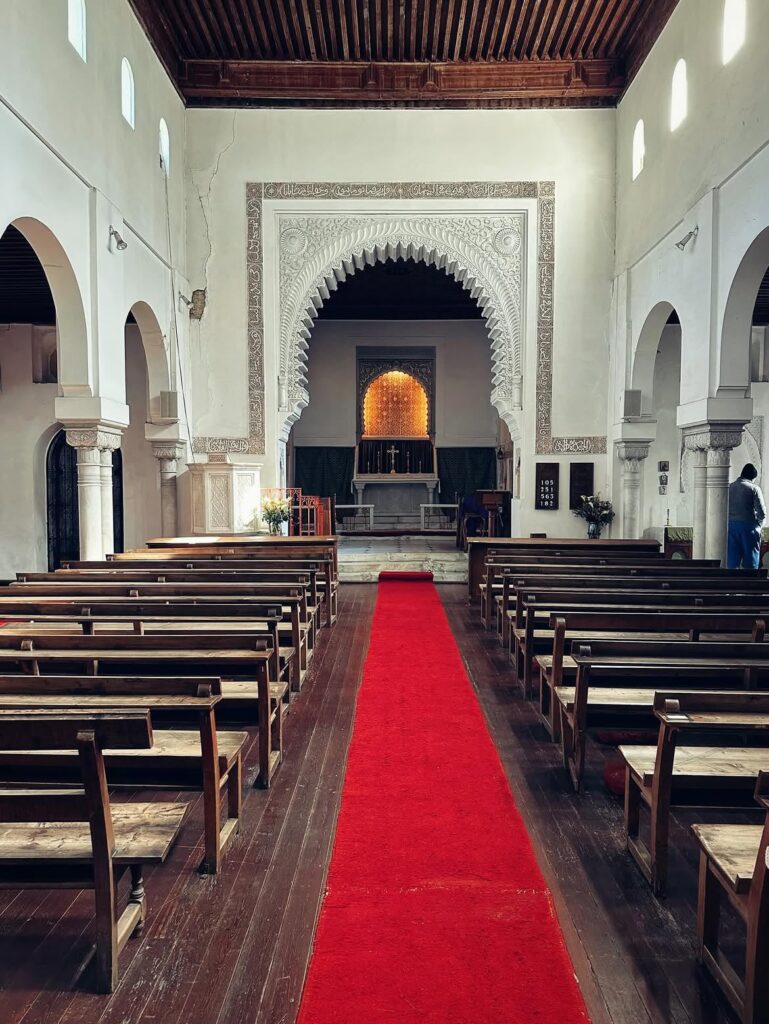
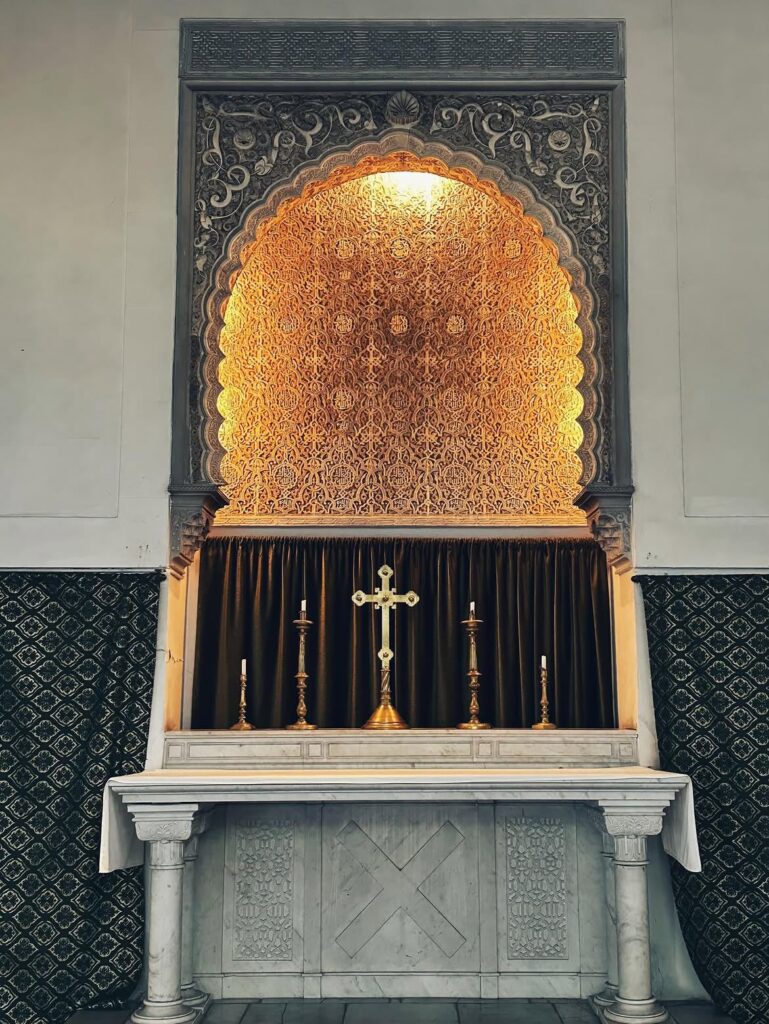
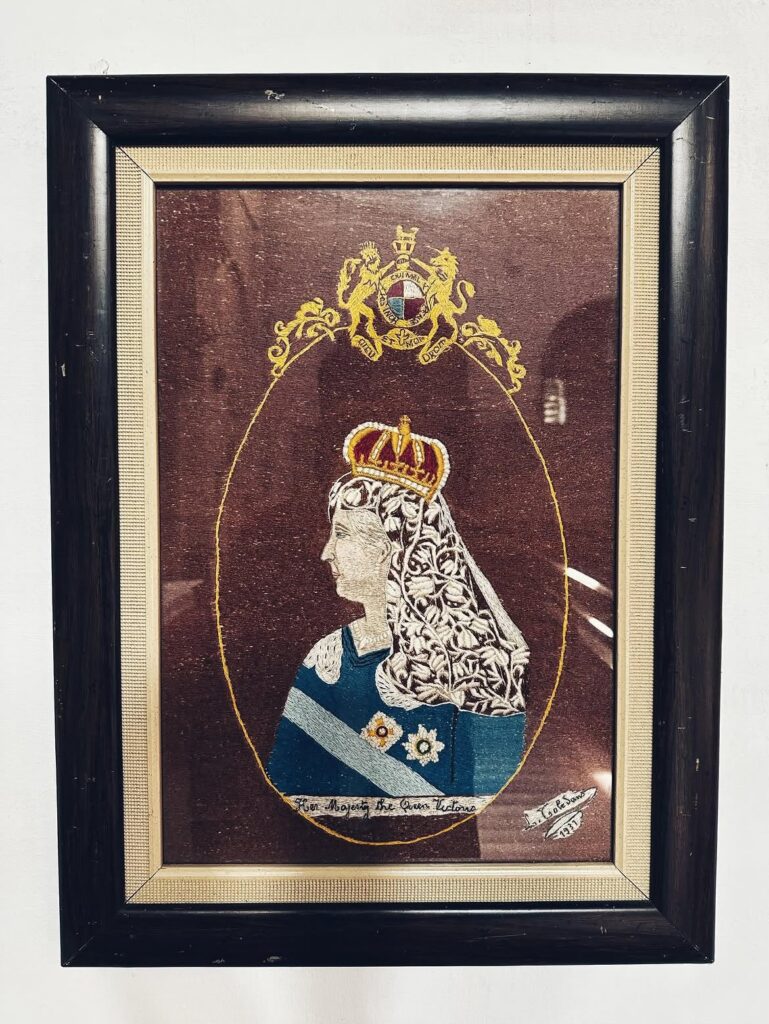
St Andrew’s is the most British place in Morocco, and one of the most Moroccan churches anywhere. Inside, horseshoe arches and carved plaster frame the altar, and a portrait of Queen Victoria hangs on the wall. Outside, a shady garden graveyard tells the story of the British community that lived in Tangier for generations.
Churchill in Marrakech: La Mamounia and the Light of the Atlas
No Briton loved Morocco more than Winston Churchill. He first stayed at La Mamounia hotel in Marrakech in 1935, only a few years after it opened. He wrote to his wife Clementine: “This is a wonderful place, and the hotel is one of the best I have ever used.”
Churchill came for the winter sun and the light, which he loved to paint. From the hotel gardens and balconies he could see the palm groves and the snow on the High Atlas Mountains, a view he painted again and again.
In January 1943, in the middle of the Second World War, he brought President Roosevelt to Marrakech after the Casablanca Conference to share that view. From the roof of Villa Taylor, Churchill painted the Koutoubia minaret with the Atlas behind it. It was the only picture he painted during the whole war. After the war he returned to Marrakech for long winter stays, painting and working on his memoirs.
Today La Mamounia has a bar named after him, and his name is still part of the hotel’s legend.
Where to see it today:
- La Mamounia: even if you are not staying, you can book afternoon tea, lunch or a drink at the Churchill Bar to see the gardens he painted. Smart dress is expected.
- The Koutoubia Mosque: the minaret from Churchill’s wartime painting, a short walk from Jemaa el-Fna square. Go at sunset, when the stone glows pink and the Atlas turns gold.
- The Menara Gardens: a 12th-century olive grove and pool with the Atlas as a backdrop, one of the classic painters’ views of Marrakech.
Read the American side of this story in our guide to Morocco and the USA, America’s oldest friend.
Morocco and Britain Today: The Easiest Long-Haul Feeling on a Short-Haul Flight
The old friendship is still active. After Brexit, the UK and Morocco signed a new Association Agreement in 2019 so that trade could continue without disruption. Morocco is now one of the most popular holiday destinations for British travellers outside Europe.
For a UK traveller, Morocco is about as easy as an exotic trip gets:
- No visa needed. British citizens can visit for up to 90 days for tourism. Your passport must be valid for at least 3 months after the date you arrive. Make sure it gets stamped on arrival.
- Short flights. Marrakech is around three and a half to four hours from London, with direct flights from many UK airports, including Manchester, Bristol, Birmingham and Edinburgh. Agadir, Fes and Tangier also have direct or seasonal flights from the UK, so check current routes when you plan.
- Hardly any jet lag. Morocco keeps GMT+1 for most of the year, so it is one hour ahead of the UK in winter and on the same time in summer. During Ramadan, Morocco moves its clocks back an hour.
- Money. The Moroccan dirham is a closed currency, so you normally get it on arrival from airport exchange desks or cash machines. Cards are accepted in hotels and bigger shops, but carry cash for the souks.
- Plugs and driving. Bring a European two-pin adaptor. Traffic drives on the right.
The best time for most British visitors is spring (March to May) and autumn (late September to November), when the cities are warm but not hot. Winter is ideal for Marrakech sunshine and the Sahara, which is mild by day and cold at night.
Morocco and Britain: The Royal Route, an 8-Day Itinerary for British Travellers
This route follows the Anglo-Moroccan story from Tangier to Marrakech, through the imperial cities of the sultans who dealt with Elizabeth I and Charles II, with a night in the Sahara on the way. It works best with a private driver-guide.
Day 1: Arrive in Tangier. Fly in, or cross from Gibraltar or Tarifa by ferry. Explore the Kasbah, St Andrew’s Church and the Grand Socco, and watch the sun set over the Strait from Café Hafa.
Day 2: Tangier to Chefchaouen. About two and a half hours into the Rif Mountains. Wander the blue-washed lanes of Chefchaouen, one of the most photographed towns in Morocco.
Day 3: Chefchaouen to Fes, via Meknes. Stop in Meknes, the imperial capital of Moulay Ismail, the sultan who drove the English out of Tangier in 1684. See the Bab Mansour gate, his mausoleum and the vast royal granaries. Continue to Fes for the night.
Day 4: Fes. Get lost with a local guide in Fes el-Bali, the largest car-free medieval city in the world. See the Chouara tanneries, the Al-Attarine Madrasa and the Al-Qarawiyyin, founded in 859 and often described as the oldest existing university in the world.
Days 5 and 6: Fes to the Sahara. Cross the Middle Atlas cedar forests, where wild Barbary macaques live, and drive down to the Merzouga dunes. Ride a camel at sunset and sleep in a desert camp under the stars.
Day 7: Sahara to Marrakech. A long but stunning drive past the Todra Gorge, the Dades Valley and Ait Ben Haddou, then over the High Atlas to Marrakech. If you have time, split it into two days with a night in the Dades Valley.
Day 8: Marrakech, the city of al-Mansur and Churchill. Visit the El Badi Palace and the Saadian Tombs of Sultan al-Mansur, Elizabeth I’s ally. Watch the sun set behind the Koutoubia minaret that Churchill painted, then raise a glass at La Mamounia’s Churchill Bar.
Book it your way: Navigate Morocco can tailor this route as a private tour. Good starting points are our 7-day desert tour from Tangier to Marrakech, the 6-day tour from Tangier to Marrakech, the 12-day Morocco tour from Tangier and the day trip from Tangier to Chefchaouen.
Morocco and Britain: Frequently Asked Questions
How old are relations between Morocco and Britain?
Regular trade and diplomacy go back to the 1580s, when Elizabeth I and Sultan Ahmad al-Mansur formed an alliance against Spain. That makes the relationship more than 400 years old.
Who was the Moroccan ambassador to Elizabeth I?
Abd el-Ouahed ben Messaoud, who arrived in England in August 1600 and stayed about six months. His portrait hangs in the Barber Institute of Fine Arts in Birmingham.
Was Tangier ever British?
Yes. Tangier was an English possession from 1661 to 1684, after it came to Charles II as part of Catherine of Braganza’s dowry.
Do British citizens need a visa for Morocco?
No. You can stay up to 90 days as a tourist. Your passport must be valid for at least 3 months after you arrive.
How long is the flight from the UK to Morocco?
About three and a half to four hours from London to Marrakech, a little longer from Scotland and northern England.
Where did Churchill stay in Marrakech?
At La Mamounia hotel, which he first visited in 1935 and returned to after the war. In 1943 he also stayed at Villa Taylor with President Roosevelt.
Follow the Morocco and Britain Royal Route With a Local Guide
Morocco and Britain have shared ambassadors, a city, a wartime summit and a great deal of tea. At Navigate Morocco, our local guides can build a private tour around the Royal Route, from the Kasbah of Tangier to the dunes of the Sahara and Churchill’s Marrakech. Contact us to plan your trip.
More guides: Planning a trip from the UK? See our 7 days in Morocco itinerary, the best time to visit Morocco and the Marrakech to the Sahara drive.