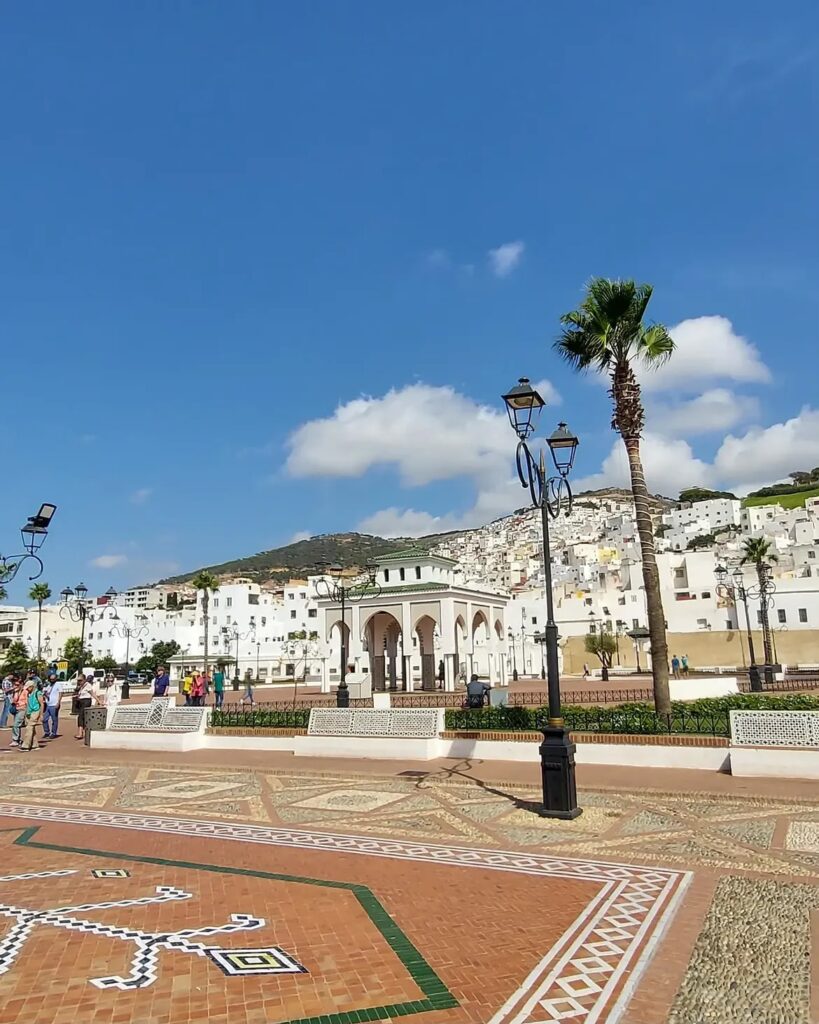
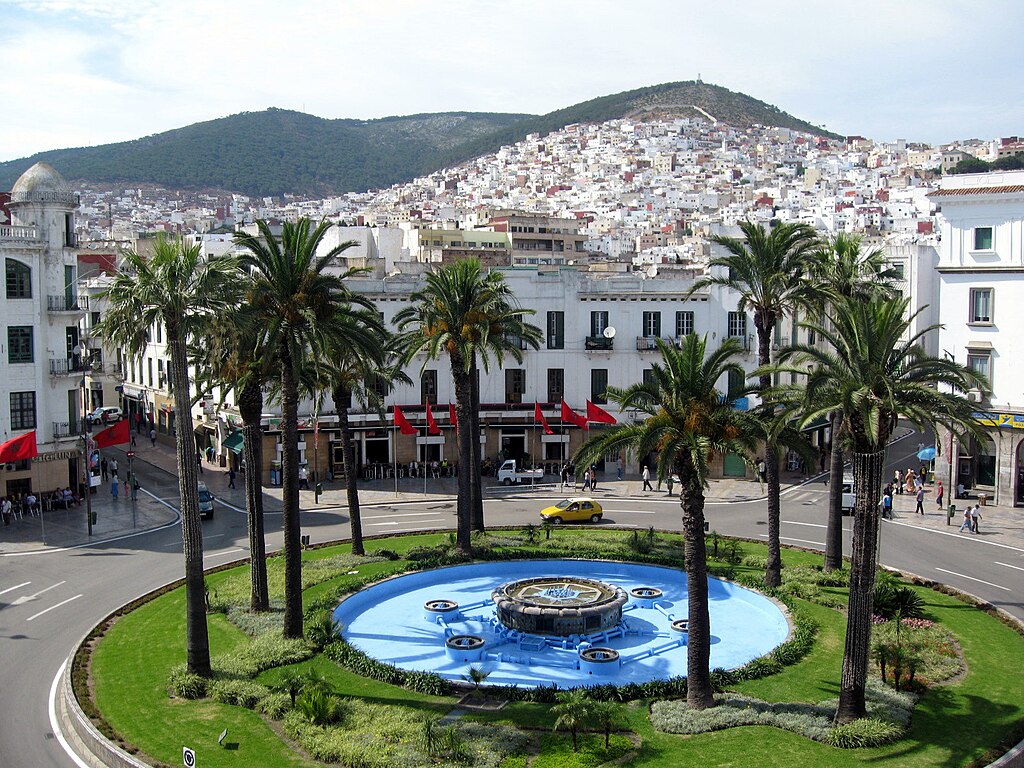
Tetouan Morocco is a whitewashed city in the Rif mountains, with a UNESCO World Heritage medina, a Spanish quarter and a royal palace on its main square. This Tetouan guide covers what to see, the history behind the Andalusian and Spanish influence, and how it fits with Tangier and Chefchaouen, so you can decide whether to give it a day. It is a good stop on a northern route that continues to the blue city of Chefchaouen.
Tetouan Morocco at a glance
Wikipedia’s history of Tétouan describes the site as an old Berber settlement, Tamuda, with early settlement dating to the 3rd century BC, later a Phoenician trading post and a Roman colony. The Marinids built a casbah and mosque in 1286. The modern city grew after Muslim refugees from Granada rebuilt it in the late 15th century, and Wikipedia notes that sources disagree on the exact refounding date, giving 1483–1484 in one manuscript and 24 May 1493 in another. Tétouan Province had 611,928 people in 2024, per Wikipedia.
Tetouan sits between the Mediterranean and the Rif mountains. It is a short drive from the beach towns of Martil (10 km) and Cabo Negro (13 km), according to the travel site Revigorate.
The UNESCO medina
The medina has been a UNESCO World Heritage Site since 1997, according to Wikipedia, and has three forts, seven gates and large outer walls. A world heritage guide quotes UNESCO as calling it the most complete medina in Morocco, with a clear Andalusian influence on its art and architecture. Revigorate adds that it is one of the country’s smaller medinas, and that its souks are cheaper and less crowded than those of Marrakech or Fes. If you have visited the big ones, see our Fes guide for the contrast.
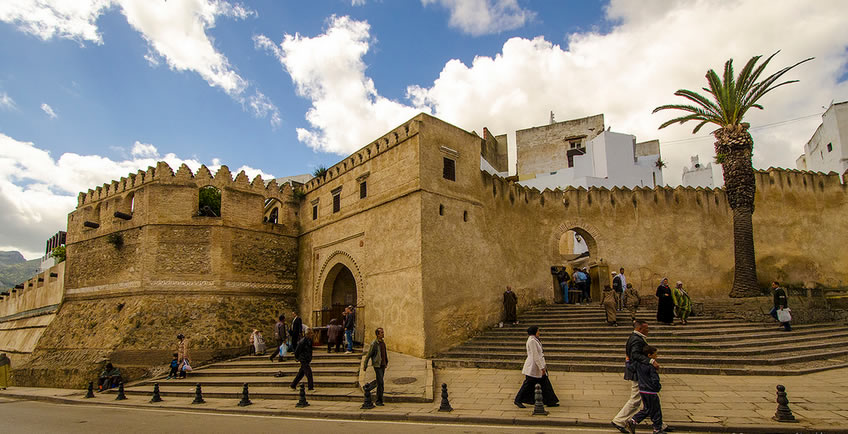
Revigorate lists Bab Al Okla, a 16th century gate into the medina, the Ethnographic Museum in a 19th century fortress (allow about an hour), Dar El Oddi, a restored 1920s family riad museum with a 25 MAD entrance fee, and Madrasa Loukach, an 18th century religious school. Wikipedia also names the Meshwar palace and the Pasha mosque among the notable buildings. The tanneries are small and near the Royal Palace, per Revigorate. Prices and opening hours change, so confirm them on the day.
The Royal Palace and the Feddan
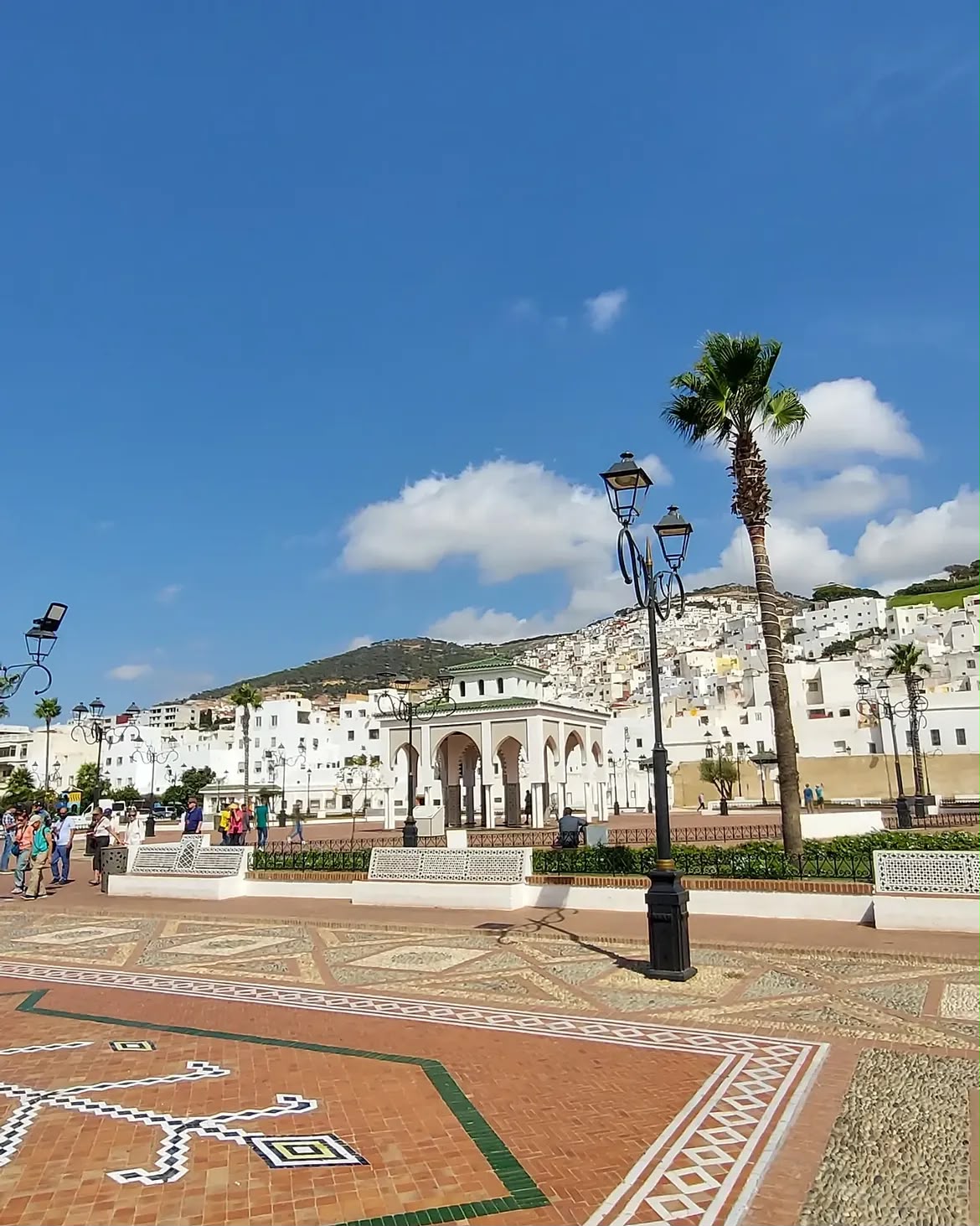
The Royal Palace of Tétouan stands on Hassan II Square, traditionally called the Feddan. Wikipedia says the oldest building dates to about 1740, when it was the local government palace. In 1913 it became the seat of the Khalifa, and the Spanish High Commissioner’s residence was on the same compound. After Morocco’s independence the complex became a royal palace. It is not open to the public, but the front is worth seeing.
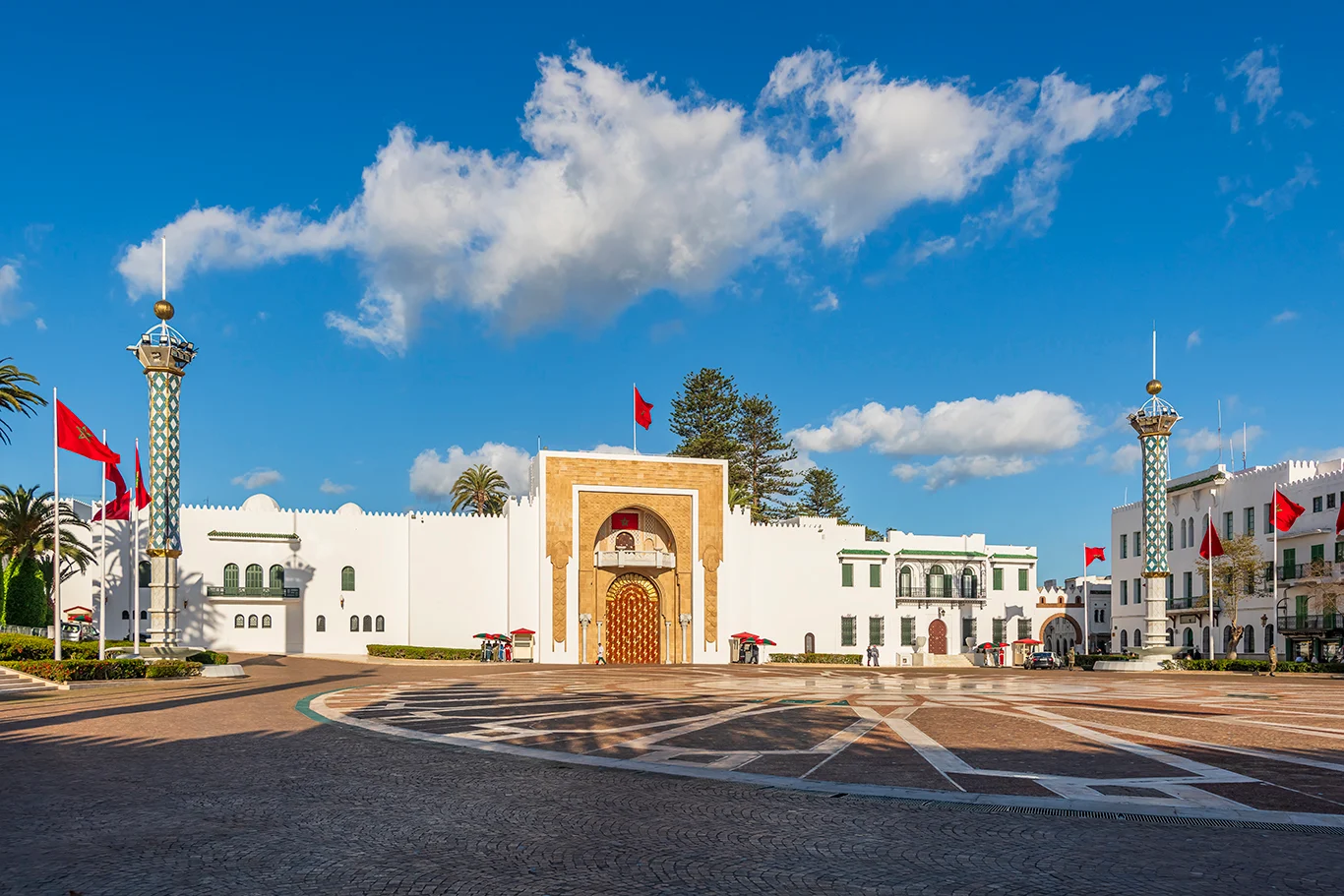
Wikipedia adds that the square was remodeled in 1988, when a wall and a monumental gate were added. The same page says the former Spanish consulate building dates to 1861–1864 and the neighbouring Franciscan church to 1866. Spain occupied Tetouan on 4 February 1860 and left in May 1862, per Wikipedia’s history page.
The Spanish quarter
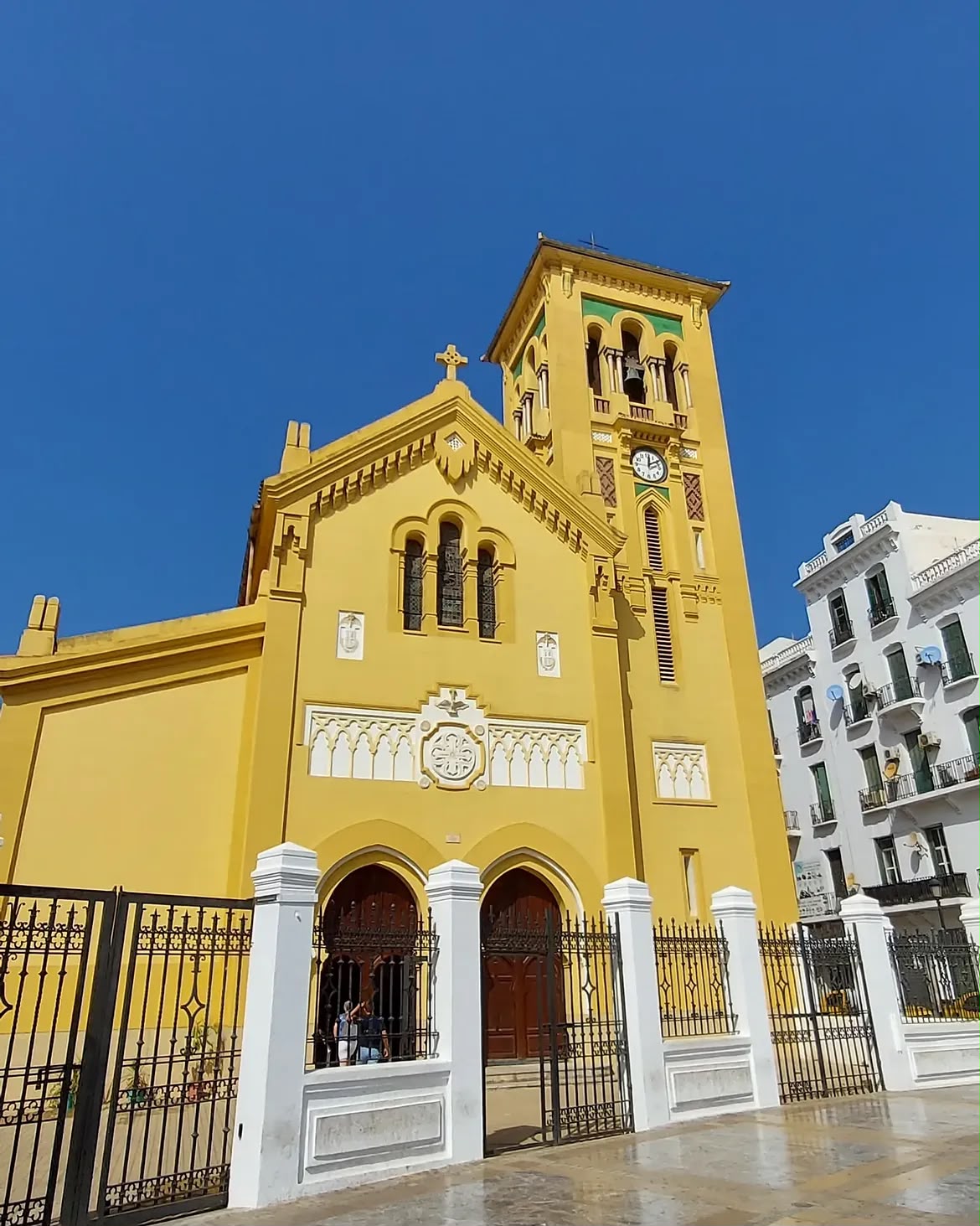
From 1913 until 1956 Tetouan was the capital of the Spanish protectorate in northern Morocco, and the city still has a planned European-style quarter beside the medina, known in Spanish as the Ensanche. Its most visible landmark is the yellow church of Nuestra Señora de las Victorias. One travel site, Get No Filter, describes it as a mix of Moorish influences and Spanish colonial architecture, and says visitors can usually see the exterior freely, though we found no confirmed opening times.
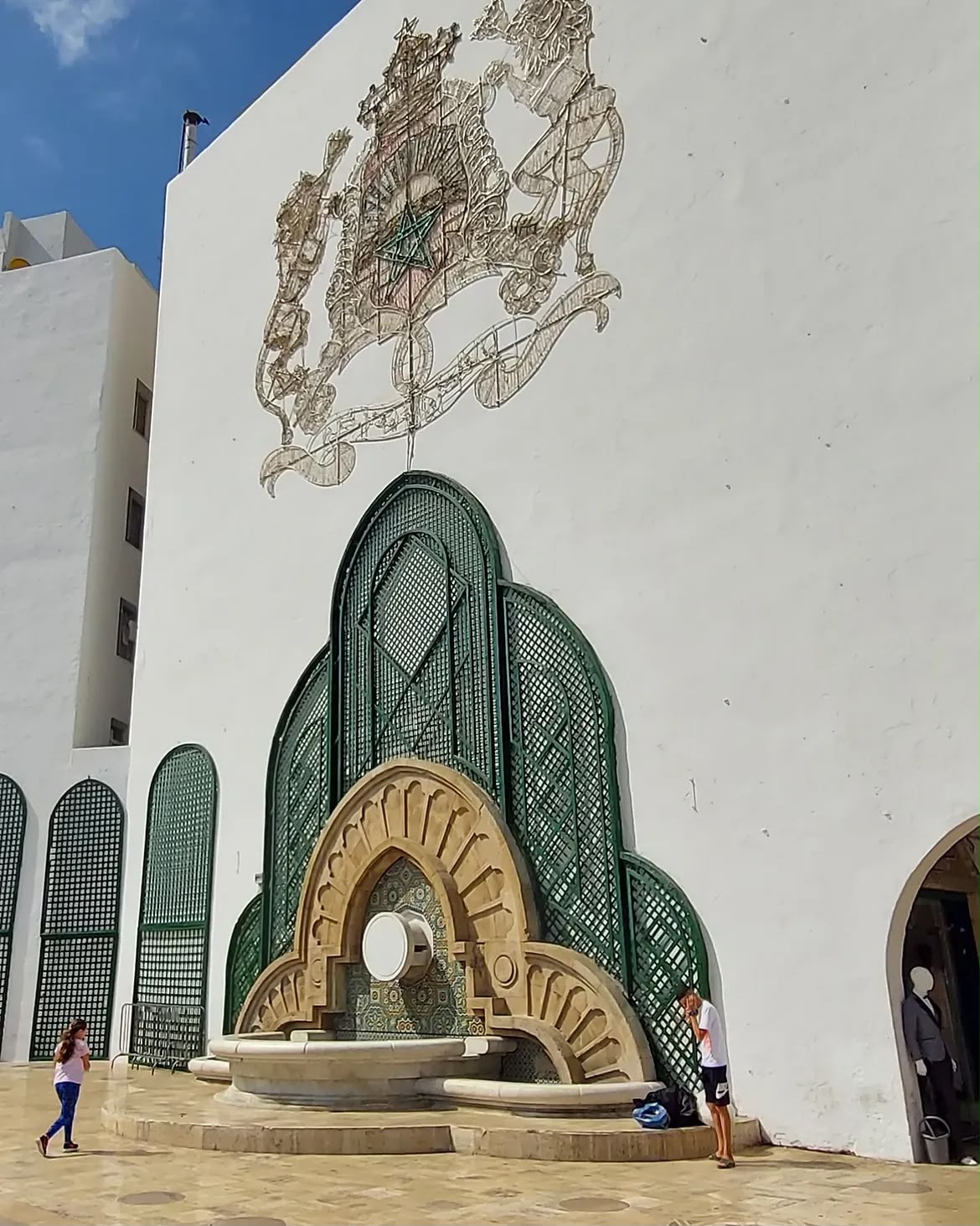
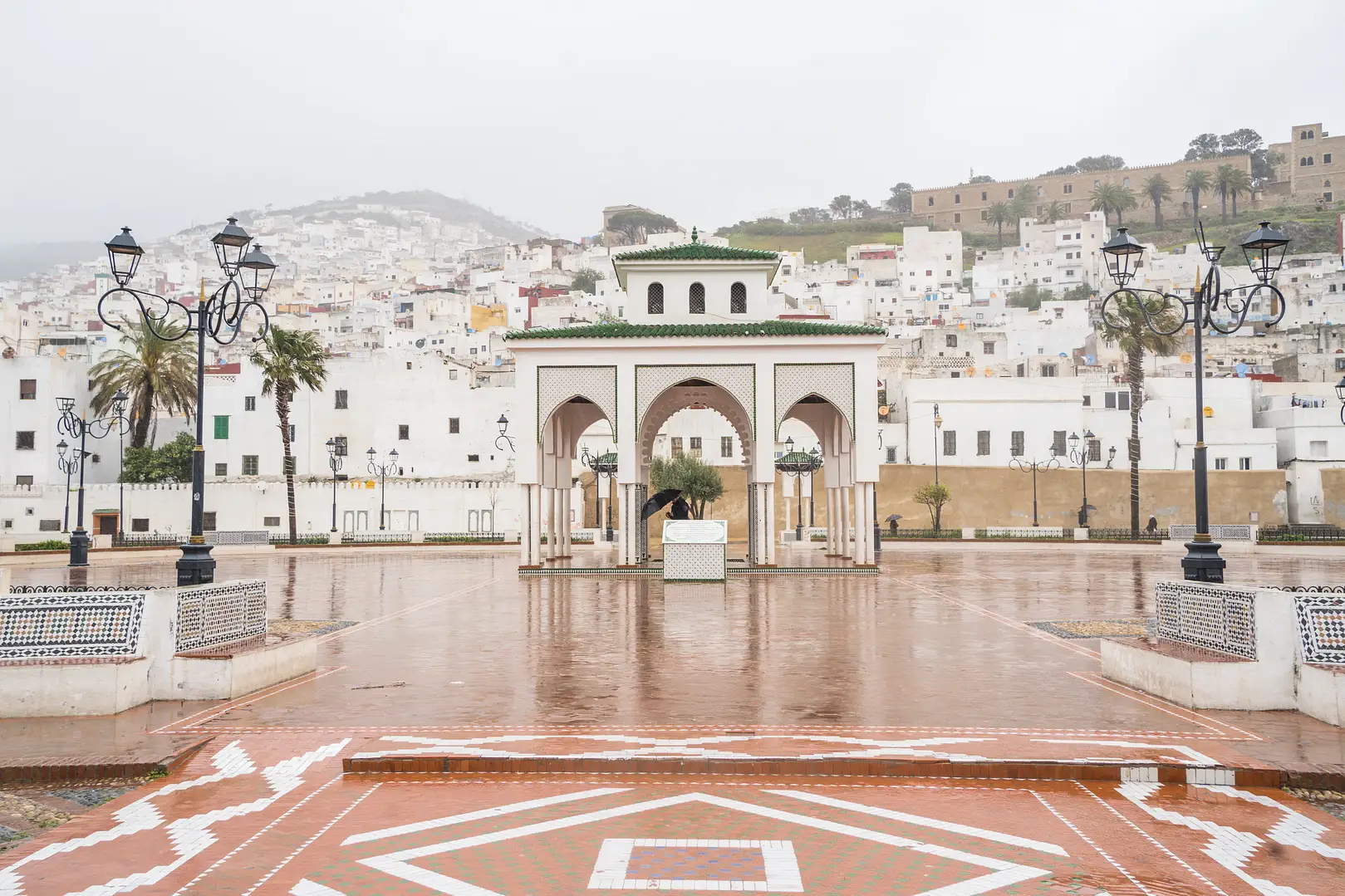
Squares and fountains across the city show the same blend of Moroccan and Spanish-era design, from green-tiled fountains under the Moroccan coat of arms to pavilions with white and green arches.
Revigorate also lists the Archaeological Museum in the new town, with Roman mosaics, prehistoric tools and coins, the Museum of Modern Art in a former train station, and the Riyad Al Ochak garden built in 1929. For the Andalusian thread across Morocco, read our guide to the Andalusian heritage between Morocco and Spain (in Spanish) and, in Portuguese, Marrocos para brasileiros.
Getting to Tetouan and where to go next
Revigorate gives about 1 h 30 by car from Tangier and about 1.5 hours by road from Chefchaouen. We run a day trip from Tangier to Tetouan and a day trip from Tangier to Chefchaouen. Before or after, read our things to do in Tangier guide, and see the day trips to Asilah and Larache and Lixus.
For a longer route, look at the 3 day tour from Tangier to Casablanca, the 6 day tour from Tangier to Marrakech or the 12 day Morocco tour from Tangier. Continue to Rabat or the Hassan II Mosque in Casablanca. For logistics, see airport transfers in Morocco and train vs bus vs rental car. Plan meals with the Moroccan food guide, and combining Europe with Morocco? See the Spain, Portugal and Morocco itinerary.
Tetouan Morocco FAQ
Is Tetouan worth visiting?
It suits travelers who want a quieter medina and a view of Morocco’s Andalusian and Spanish past. Revigorate calls its medina one of the smallest and its souks cheaper and less crowded than Marrakech or Fes.
Is Tetouan a UNESCO World Heritage Site?
Yes. Per Wikipedia, the medina has been listed since 1997.
How far is Tetouan from Tangier?
About 1 h 30 by car according to Revigorate. Check traffic on the day.
What is the Spanish quarter in Tetouan?
The Ensanche, a European-style district beside the medina from the Spanish protectorate, when Tetouan was the capital from 1913 to 1956 per Wikipedia.
Can you visit the Royal Palace of Tetouan?
No. Wikipedia says the palace is not open to the public, but you can see its front on Hassan II Square.
When is the best time to visit Tetouan?
Revigorate suggests April to June or September to November.
Want Tetouan on your northern Morocco route? Message us your dates and we will plan it with you.
Message us on WhatsAppNavigate Morocco is a team from the Sahara desert who work as a family. We will be glad to help you plan your Tetouan visit and the rest of your route, from the Rif mountains to the dunes.
More Navigate Morocco guides: Things to do in Tangier, Why is Chefchaouen blue, Fes Morocco, Morocco honeymoon, Asilah Morocco, Larache Morocco, Sefrou Morocco.