Accessible travel in Morocco is possible, but it takes honest planning. The old medinas were built centuries before anyone thought about wheelchairs, and the desert is made of soft sand. At the same time, airports, the main train lines and the newer parts of the cities are getting easier every year. This guide explains what to expect, city by city, and how to plan a trip that works for travelers who use a wheelchair or have reduced mobility. It comes from our team of driver-guides, who have welcomed wheelchair users on our private tours several times.
Accessible travel in Morocco: is it possible?
The short answer is: partly. Morocco ratified the UN Convention on the Rights of Persons with Disabilities in 2009, and in 2016 it adopted Framework Law 97-13 on the rights of persons with disabilities, according to the World Bank disability data hub. Progress is real, but accessible travel in Morocco is still uneven. Modern buildings, big hotels and airports are usually manageable. The historic heart of most cities is not.
That is why the way you travel matters more than the destination. Accessible travel in Morocco works best with a private vehicle, flexible days and a driver who can help at every stop. You decide the pace, and the plan changes when a place is harder to reach than expected.
The medinas: the hardest part of accessible travel in Morocco
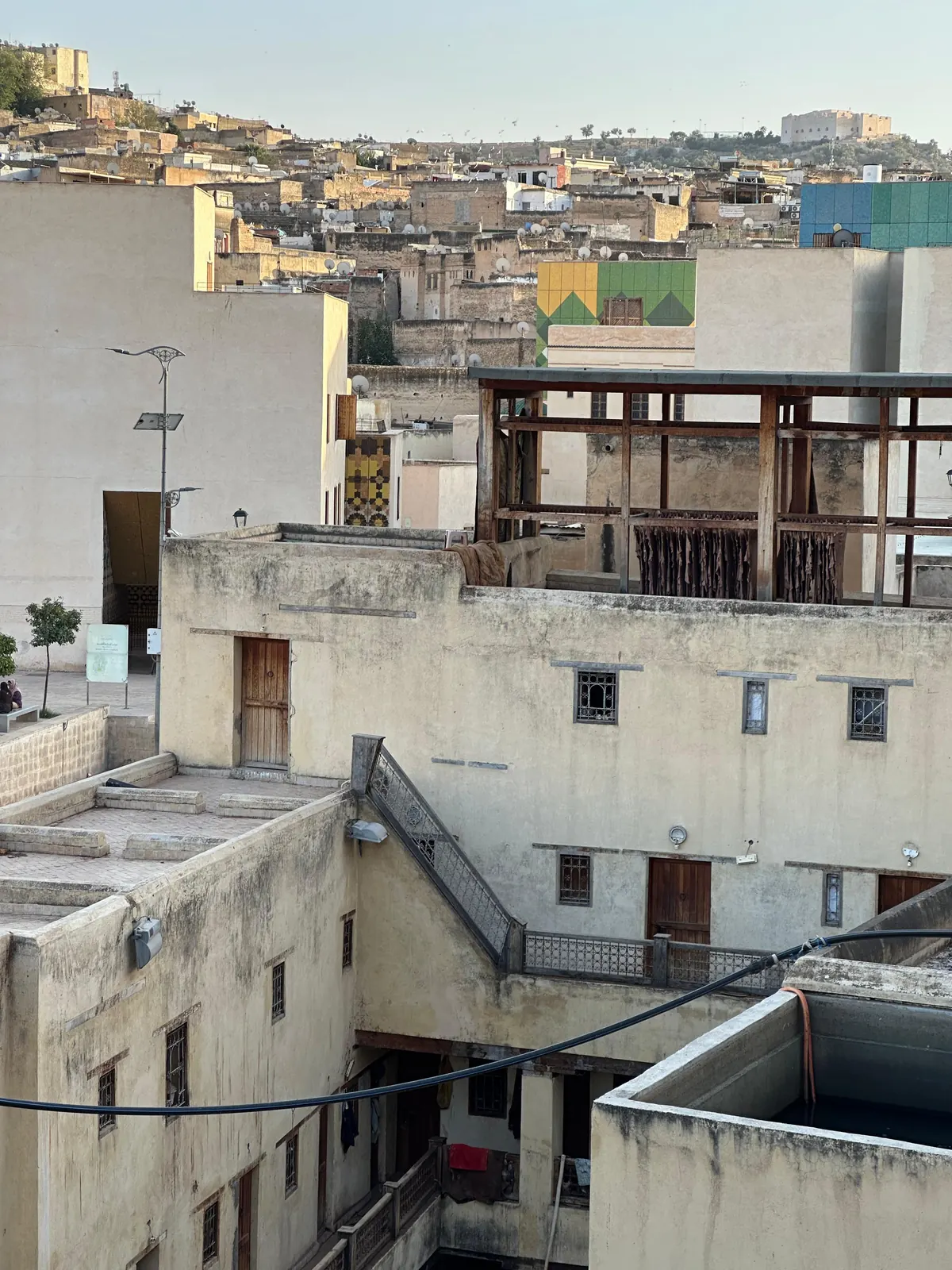
The medinas are the old walled towns at the centre of Marrakech, Fes, Chefchaouen and other cities. Their streets are narrow and often uneven. You will meet cobbles, steps, steep slopes, open drains, crowds, carts and motorbikes. Many shops have a step at the door. In Fes and Chefchaouen the lanes climb up and down the hillside, which makes them the hardest. Marrakech is flatter, but its alleys are busy and bumpy.
This does not mean you should skip them. It means you choose the right sections, the right time of day and the right help. Early mornings are calmer. A companion or guide who can push and steer makes a big difference. Big squares like Jemaa el Fna are open and flat, so they are easier to enjoy than the narrow souks around them.
Accessible travel in Morocco, city by city
Marrakech
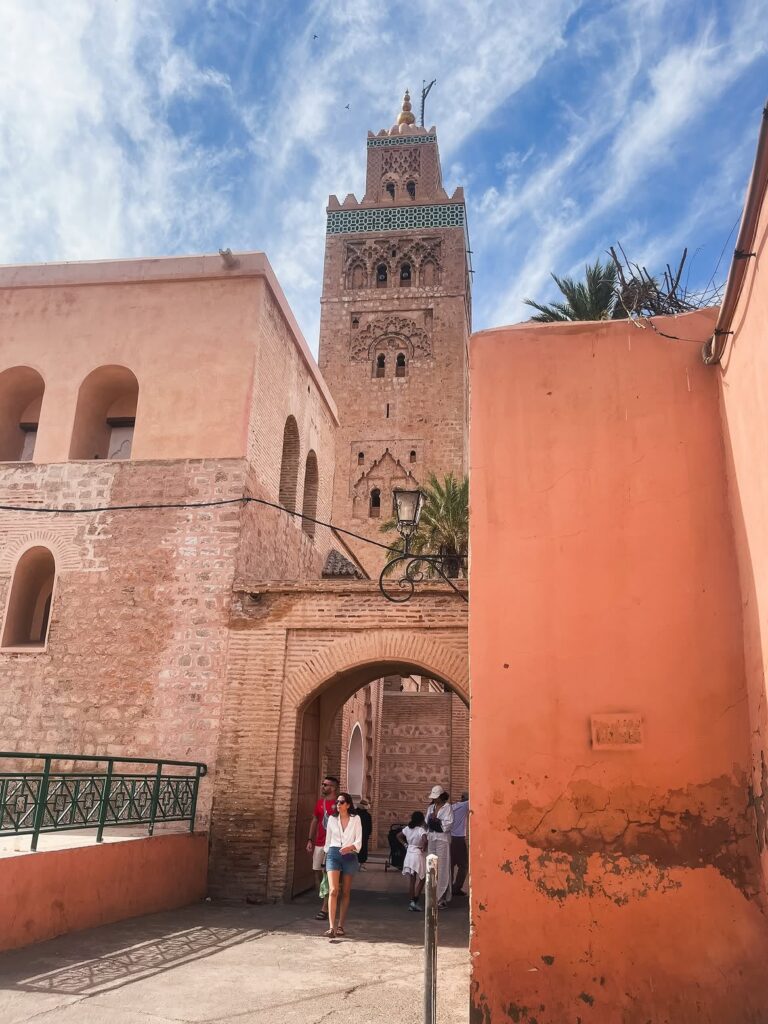
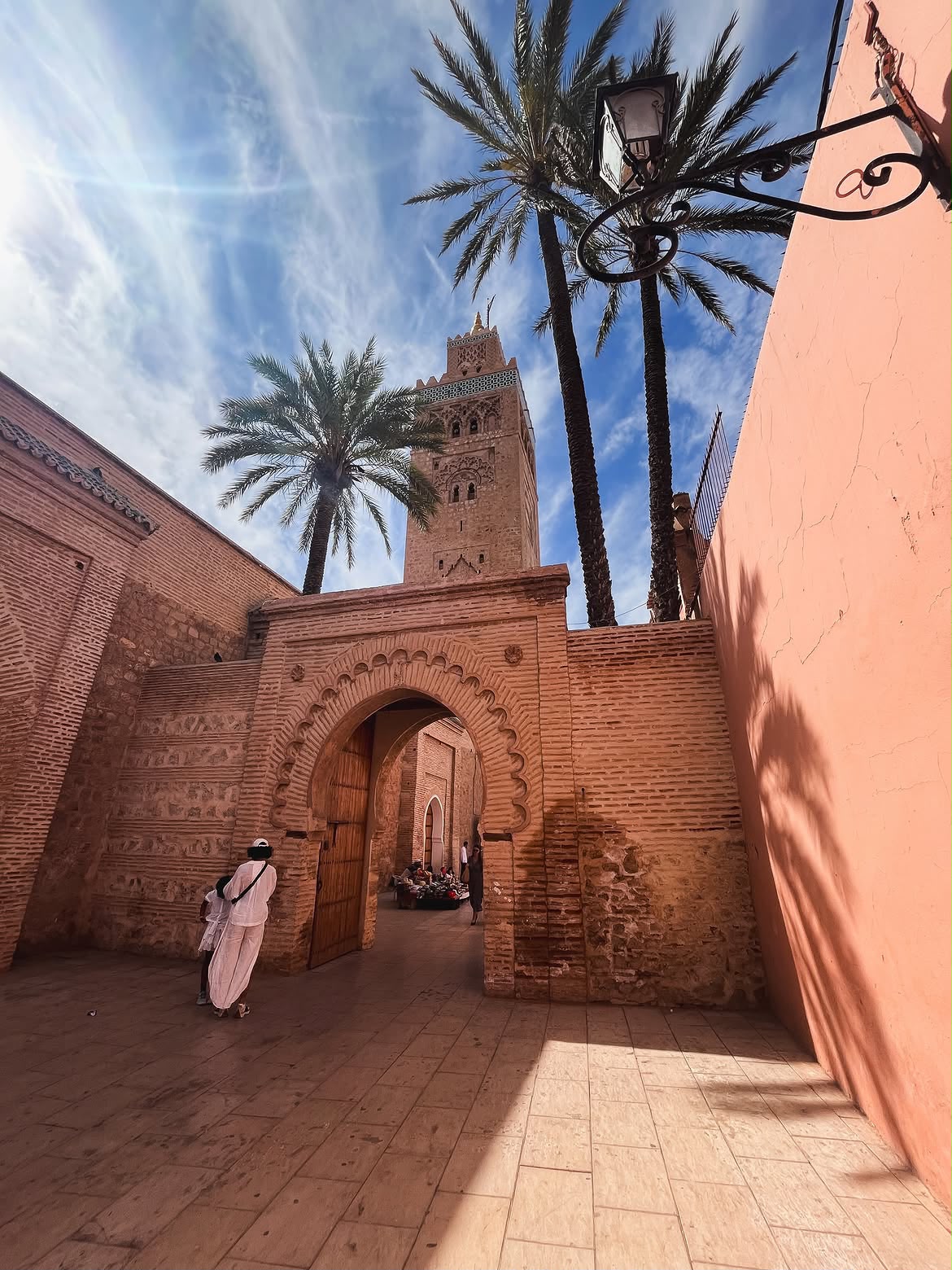
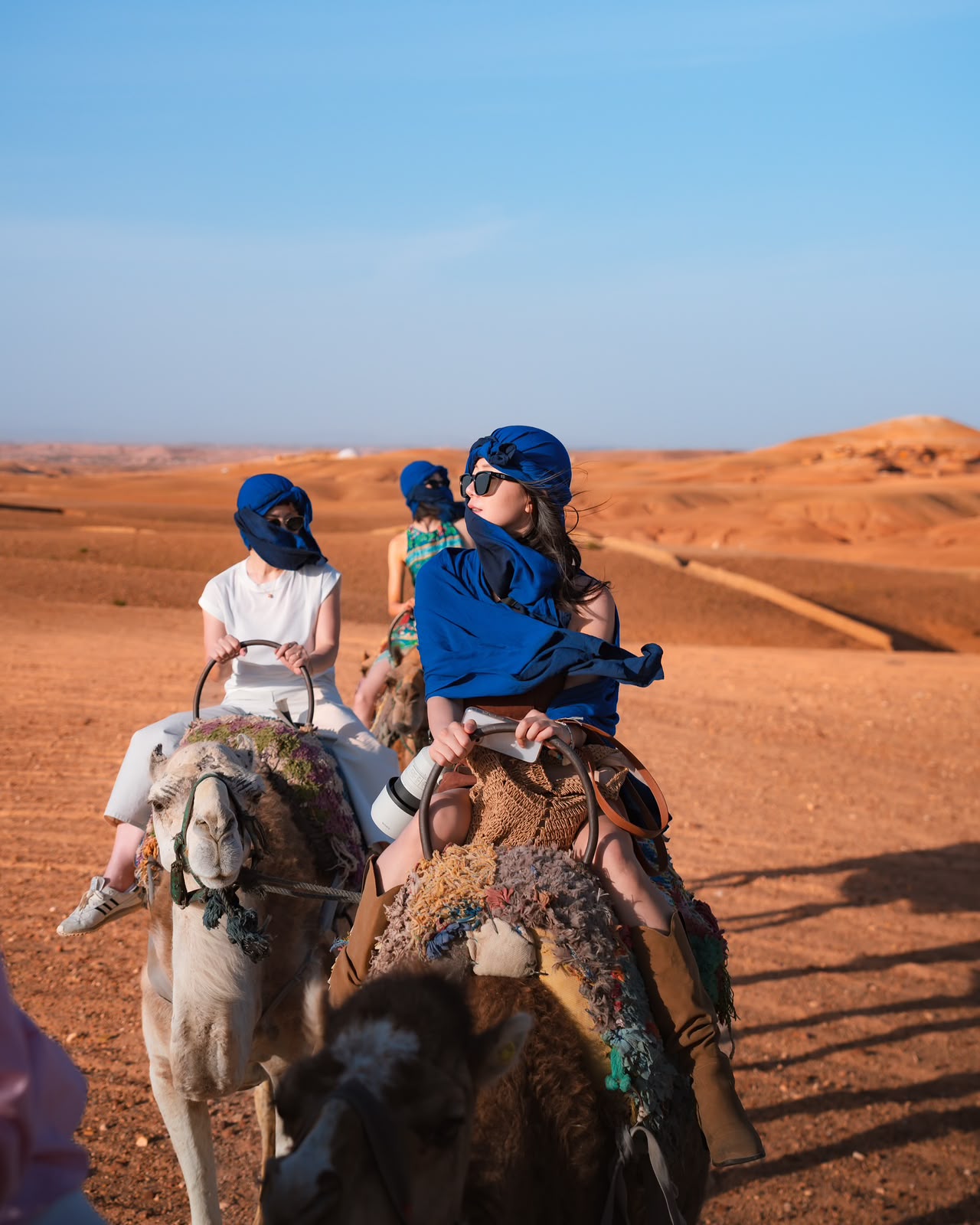
Marrakech is the easiest place to start accessible travel in Morocco. The newer district of Gueliz has wide avenues and modern hotels, and the city is mostly flat. Inside the medina, keep to the main lanes and the big open spaces. For a day out of town, the stony Agafay Desert is close to the city and much easier to reach than the Sahara.
Casablanca and Rabat
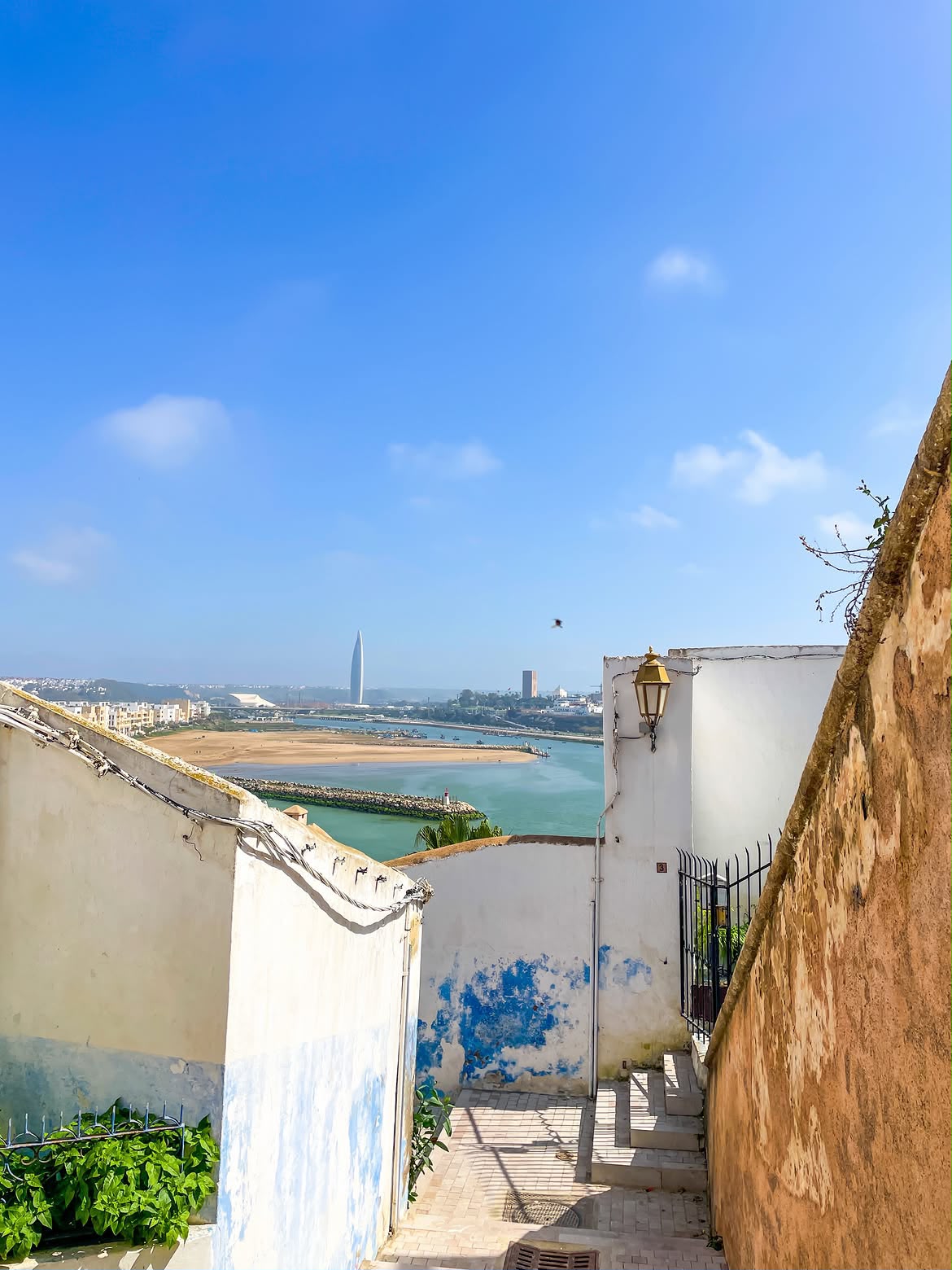
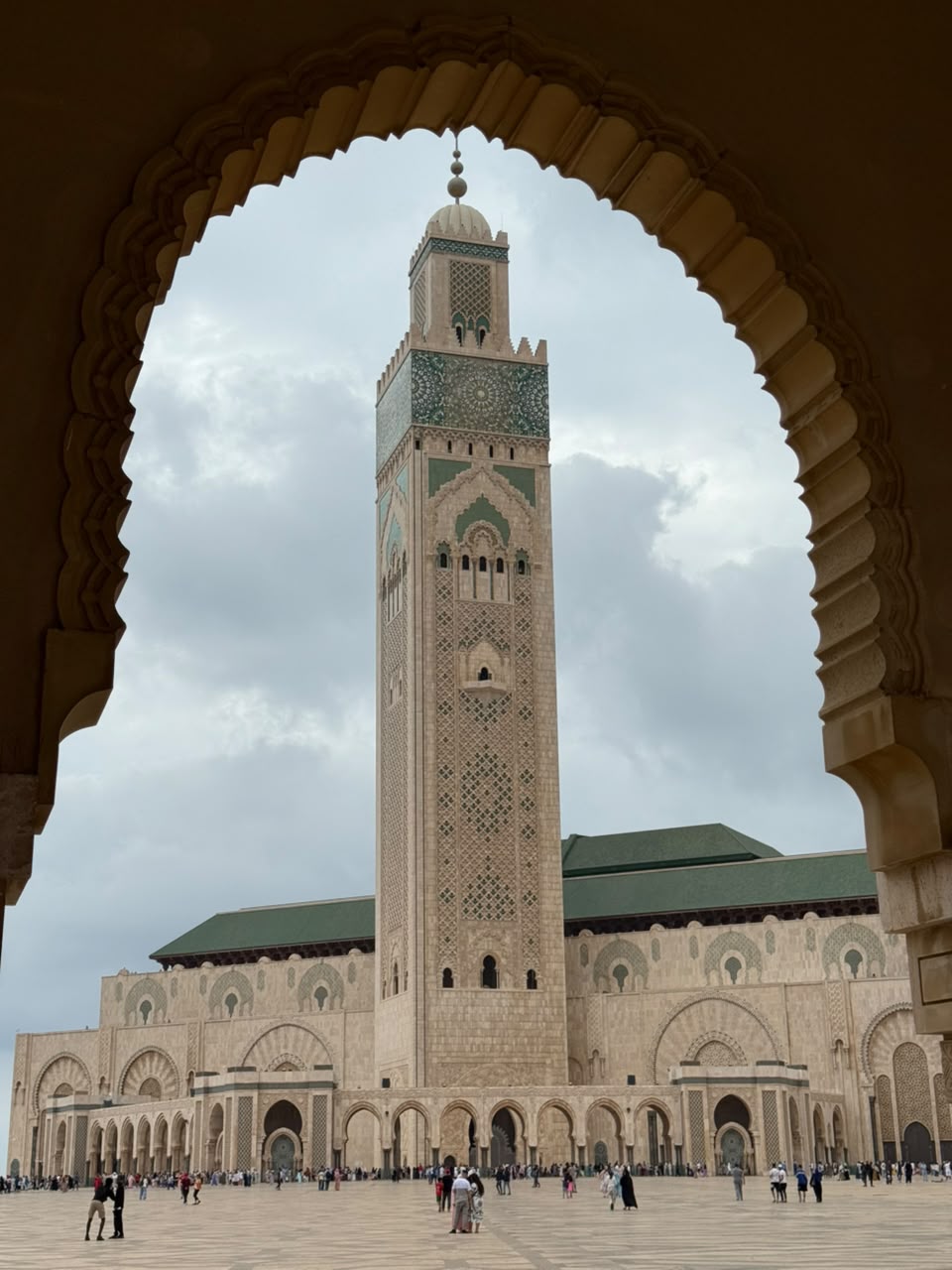
These are the most modern cities in Morocco. Long seafront promenades, newer buildings and the tram make them good choices for travelers with reduced mobility. The Hassan II Mosque sits on a huge open plaza by the ocean. In Rabat, the wide avenues of the new town are easier than the old kasbah streets.
Fes and Chefchaouen
These are the most challenging. The medina of Fes is a steep maze, and Chefchaouen is built on a mountainside. Many visitors with reduced mobility enjoy them from viewpoints reached by car, and visit only short, flatter sections on foot or by wheelchair.
Essaouira
The medina of Essaouira is small and mostly flat, and the seafront is open. It is one of the more relaxed old towns for a slower visit.

Flights and trains for accessible travel in Morocco
For accessible travel in Morocco, arriving by air is usually the smoothest part if you plan ahead. Royal Air Maroc asks passengers to request assistance at least 48 hours before departure, online, by phone or at check-in. Staff can take you from check-in to the aircraft, and from the aircraft to your pick-up point on arrival. The airline carries up to two mobility aids free of charge if they are properly packed. For an electric wheelchair, you must give the battery type, its power in watt-hours and the size and weight of the chair before you fly. If you fly with another airline, check its own rules.
The national rail company ONCF runs a free station assistance service for passengers with reduced mobility. According to Le360, you book it 24 hours ahead by calling the ONCF customer line on 2255, and arrive at the station at least 30 minutes before departure. Read our comparison of train vs bus vs rental car in Morocco, and see how to get from the airport.
Getting around: the key to accessible travel in Morocco
Public buses and shared taxis are hard to use with a wheelchair, which is the biggest barrier to accessible travel in Morocco. A private vehicle solves most of these problems. On our tours, you travel in a private vehicle with your own driver. The driver helps you get in and out, folds and stores the wheelchair, and stops the car as close as possible to each visit. There is no rush to catch a timetable, and breaks happen whenever you need them.
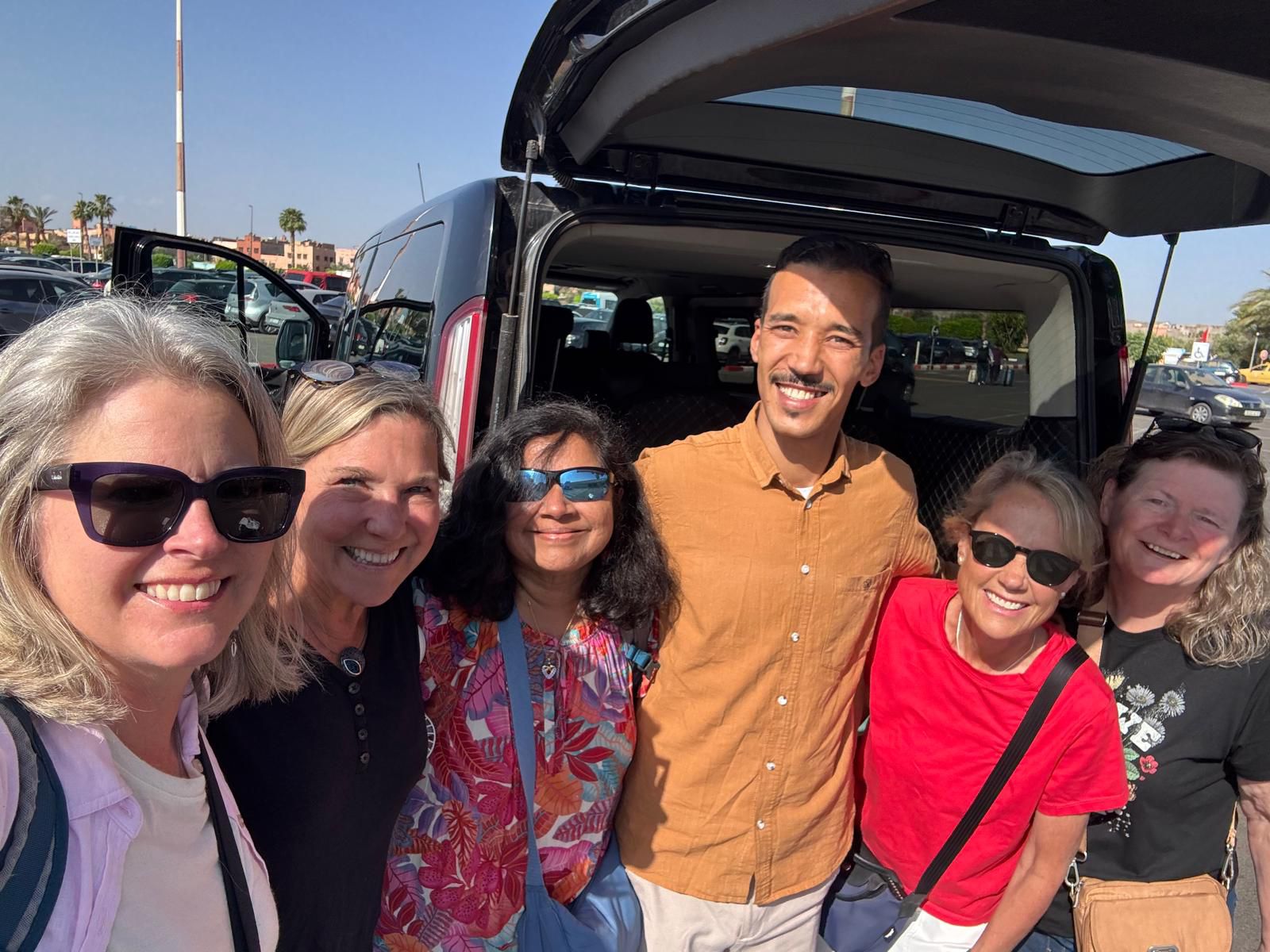
Tell us about your needs when you plan the trip. For example, share the size and weight of your wheelchair, whether it folds, and how much help you need with transfers. That way the day is built around you from the start.
Can you visit the Sahara with reduced mobility?
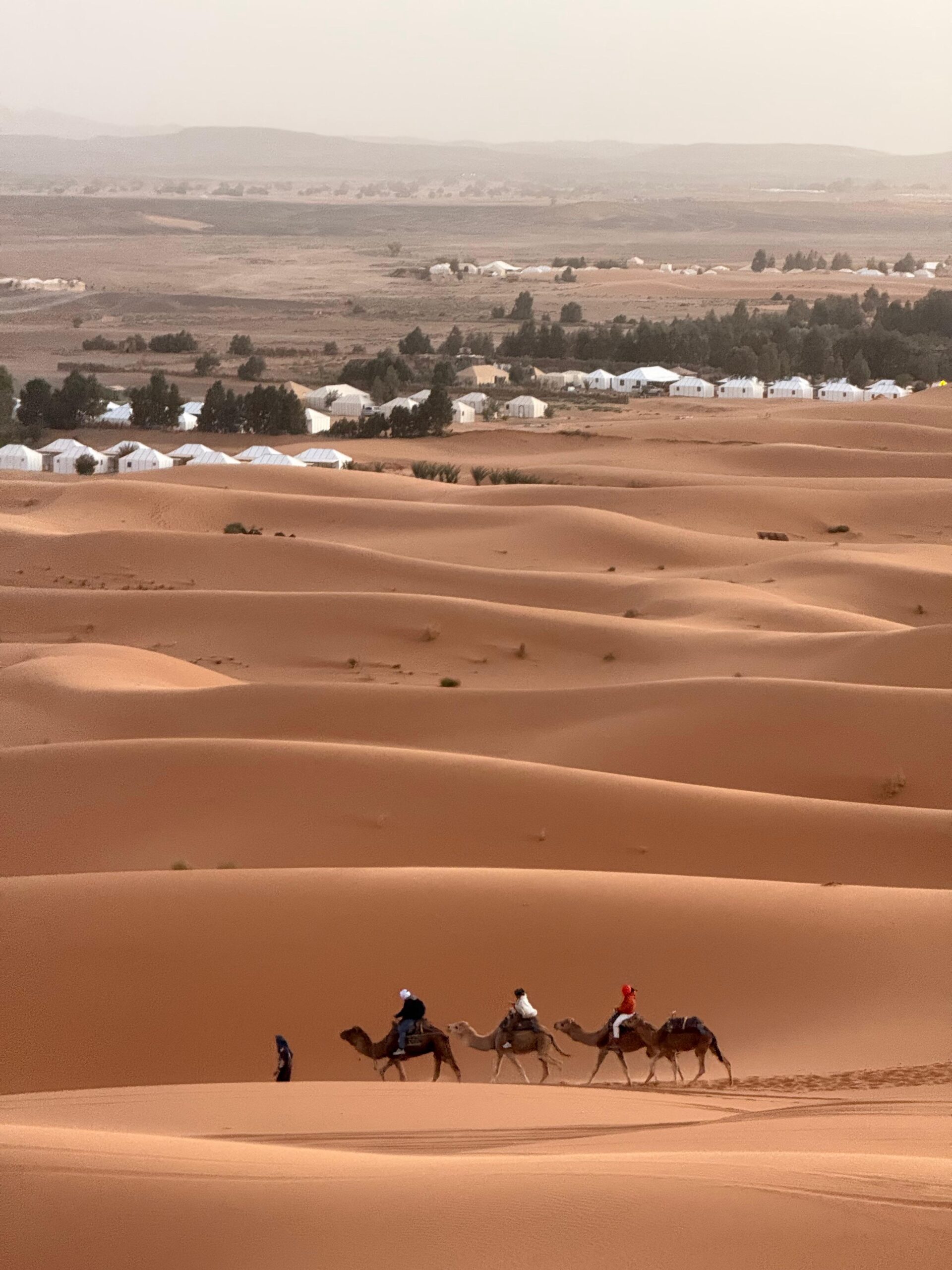
Yes, but it needs the right expectations. The roads to Merzouga and Zagora are paved, so the long drive itself is comfortable in a private vehicle. The dunes are another story. Wheelchairs cannot roll on soft sand, and riding a camel means climbing on and holding on as the animal stands up. Many desert camps also sit inside the dunes, away from the road.
Before you book a desert night, ask exactly how you would reach the camp, where the tents are, and whether there are steps to the bathroom. You can still enjoy the Sahara from the edge of the dunes, where the views at sunset are just as beautiful. Read our guide to a night in a Sahara desert camp and our comparison of Agafay Desert vs Merzouga.
Accessible travel in Morocco: riads or hotels?
Riads are traditional houses built around a central courtyard. They are beautiful, but most have stairs, narrow doors and rooms on upper floors, and many are reached on foot through the medina. Large modern hotels are more likely to have lifts, wider doors and step-free entrances. If you want a riad, ask for a ground-floor room and ask how far the door is from where a car can stop. Always confirm the details with the property before you book. Read more in riad vs hotel in Morocco.
Tips for travelers with vision or hearing impairments
Busy medinas are loud and crowded, and traffic rules are loosely followed, so a sighted companion helps a lot in the old towns. For hearing impairments, write down key addresses in Arabic or French, and keep a phone with translation apps ready. Your driver-guide can also act as your link with hotels, shops and restaurants along the way.
Planning tips for accessible travel in Morocco
- Travel in spring or autumn. March to May and September to November bring milder heat. See the best time to visit Morocco.
- Plan fewer stops per day. Distances are long, and a slower pace leaves room for rest.
- Bring spare parts. Inner tubes, a puncture kit and small tools are hard to find for your exact chair.
- Carry medication in your hand luggage, with a copy of your prescriptions.
- Get good travel insurance that covers your mobility equipment.
- Keep some cash for small shops and tips. Read about cash in Morocco and tipping in Morocco.
Plan your accessible trip with Navigate Morocco
We are a family team of driver-guides, and we have welcomed travelers who use a wheelchair on our private tours several times. For accessible travel in Morocco, every trip we run is private, with a driver who helps you at each step. The route can start or end in any city, and we plan the pace around you. Popular choices include a day trip to Essaouira, a sunset evening in the Agafay Desert or a custom tour of the imperial cities. See how booking works and our FAQ.
FAQ: accessible travel in Morocco
Is accessible travel in Morocco realistic for wheelchair users?
Partly. Airports, big hotels and modern city areas are usually manageable. Old medinas and desert dunes are difficult. A private vehicle and good help make the trip much easier.
How do I get assistance at the airport in Morocco?
Ask your airline when you book. Royal Air Maroc asks for requests at least 48 hours before departure.
Can I take the train in Morocco with a wheelchair?
ONCF offers free station assistance. Book it 24 hours ahead on 2255 and arrive 30 minutes before departure.
Which city is best for accessible travel in Morocco?
Casablanca and Rabat are the most modern. Marrakech is flat and a good base, as long as you choose your medina routes carefully.
Can Navigate Morocco help with a wheelchair?
Yes. Our tours are private, and your driver helps you get in and out of the vehicle and handles the wheelchair. Tell us your needs and we will plan the trip around them.
Planning an accessible trip to Morocco? Tell us your dates and your needs, and we will build a private trip at your pace.
Message us on WhatsApp