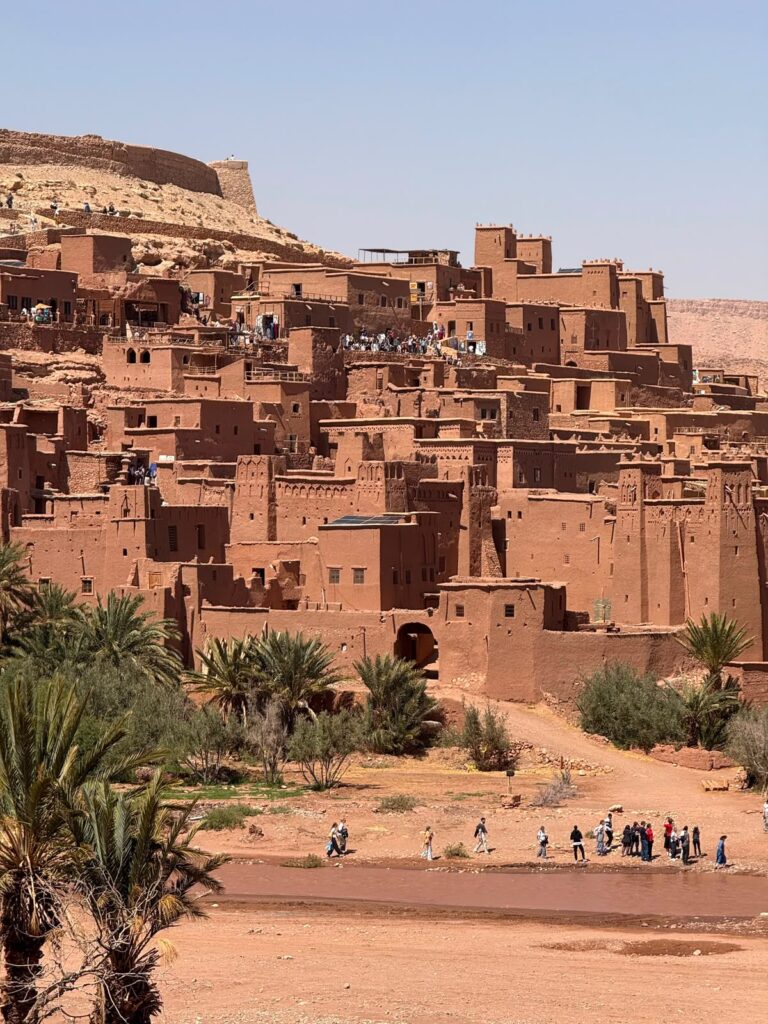
What is a kasbah? If you drive south from Marrakech, you will soon see them: tall earthen towers the colour of the land, standing over palm groves and dry rivers. A kasbah in Morocco is a fortified building made of earth, once home to powerful families and a shelter on the old caravan routes. This guide explains what a kasbah is, how it differs from a ksar, how these buildings are made, and which ones are worth your time. Our team drives these roads on every trip to the Sahara.
What is a kasbah in Morocco?
The word kasbah comes from the Arabic qasaba, which means fortress, according to Wikipedia. Across North Africa it usually means a citadel or a fortified quarter of a city. In the cities, a kasbah often held the garrison, the palace of the ruler, a mosque and a hammam.
In the south, the meaning is more personal. Here a kasbah in Morocco is often a fortified family residence, called tighremt in the Amazigh language. It was built by a powerful family to protect its people, its harvest and its animals. Many stand in the oases and valleys between the High Atlas and the Sahara, along the old trade routes.
Kasbah vs ksar: what is the difference?
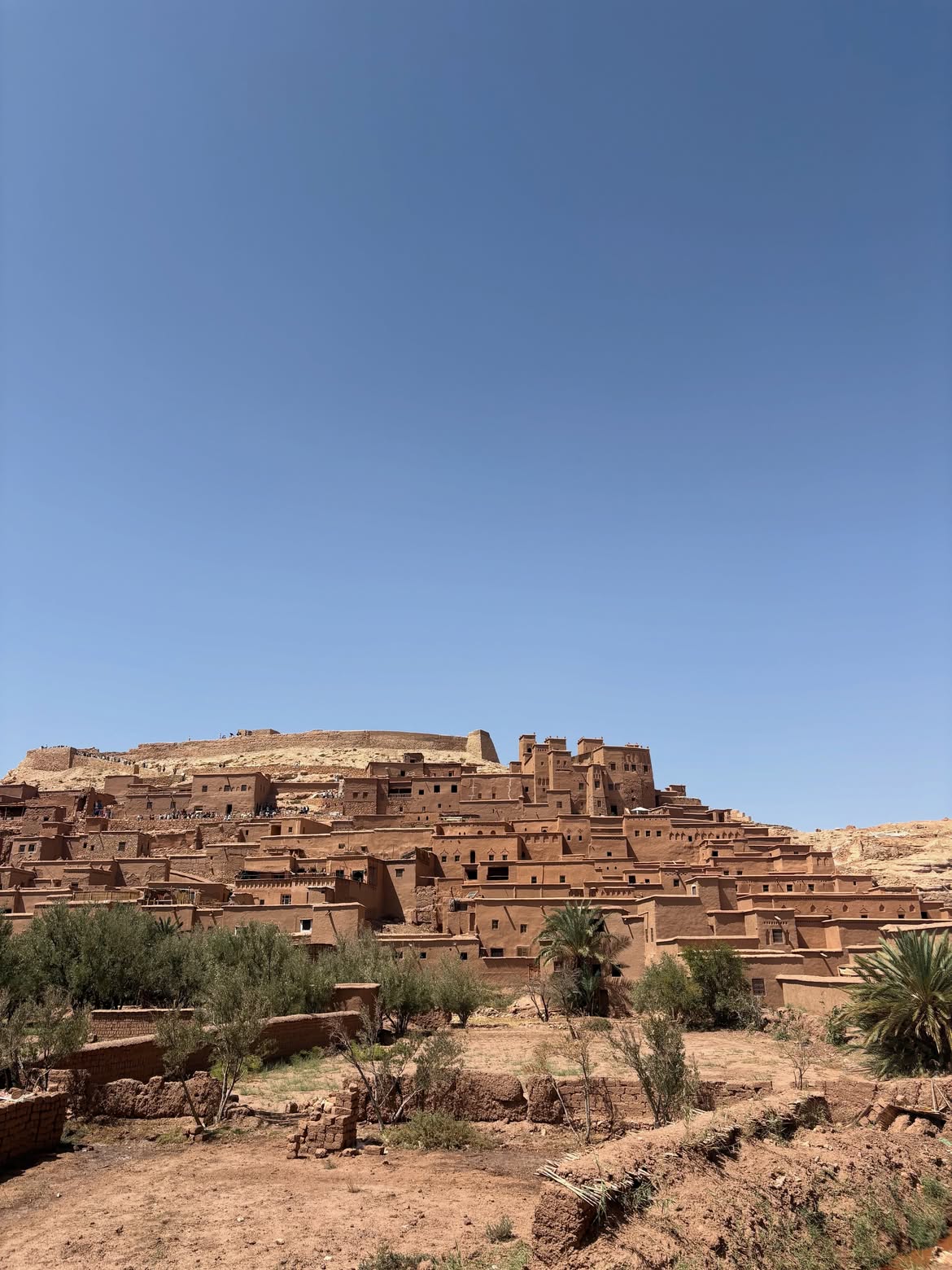
The two words are often mixed up, even by travelers who have seen both. A ksar is a fortified village. UNESCO describes it as a traditional pre-Saharan habitat: a group of houses inside high walls, with shared spaces such as a mosque, a public square and cemeteries. A kasbah is a single fortified building, more like a castle, usually owned by one family or one leader.
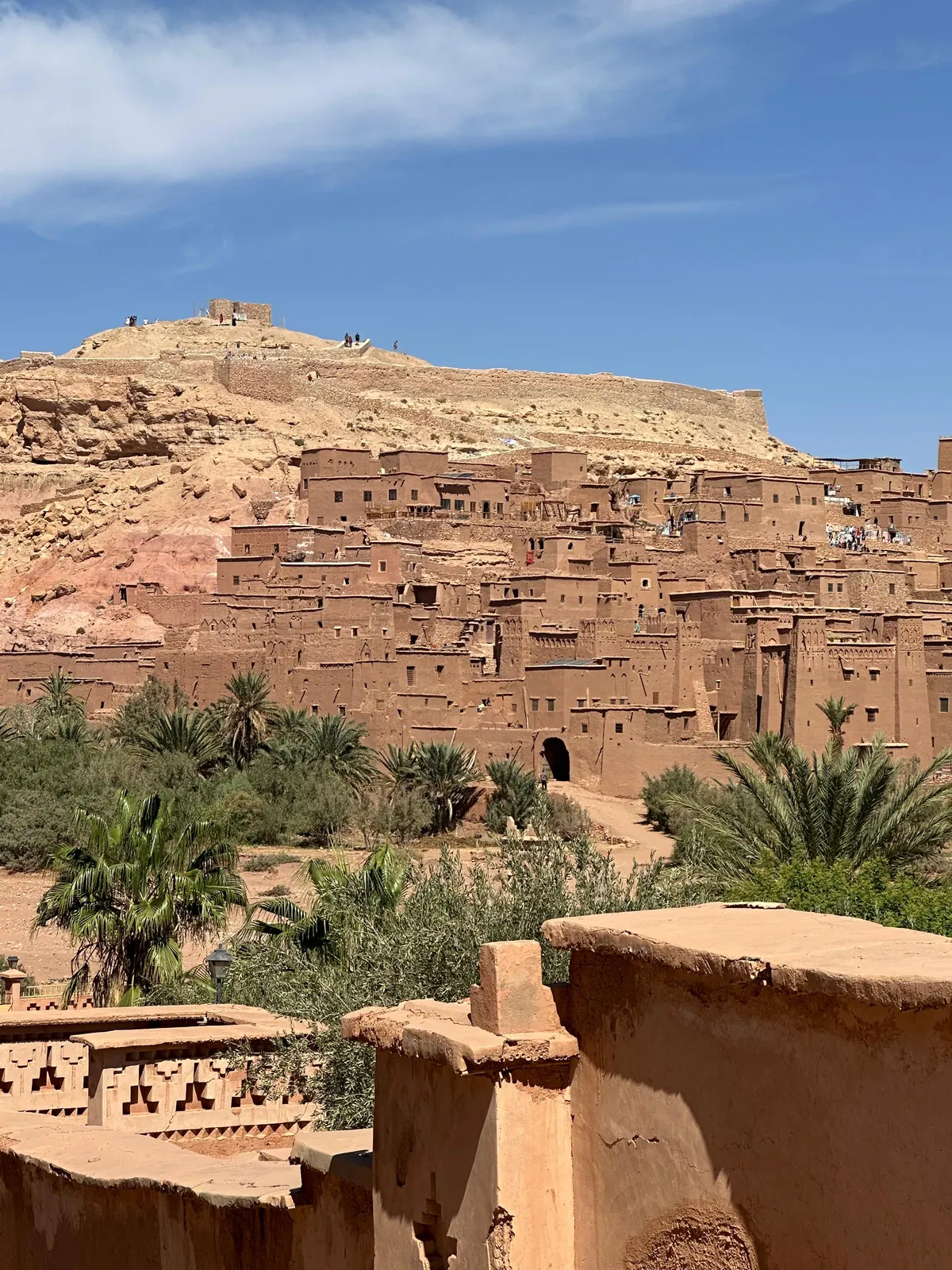
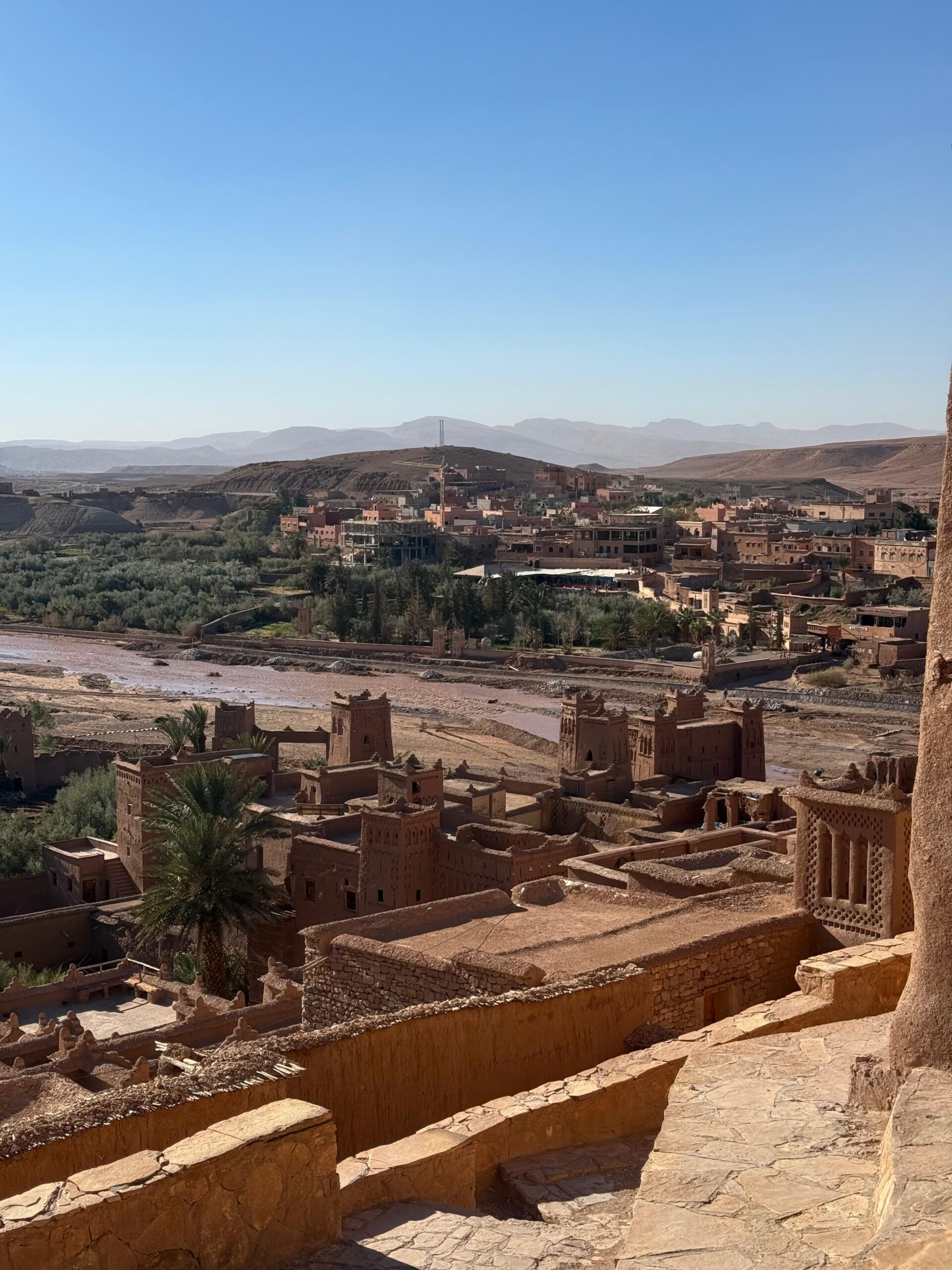
The best example is Ait Ben Haddou. It is a ksar, a whole village behind walls, and inside it stand several kasbahs. So when people say the kasbah of Ait Ben Haddou, they really mean the ksar, with its kasbahs inside.
How a kasbah in Morocco is built
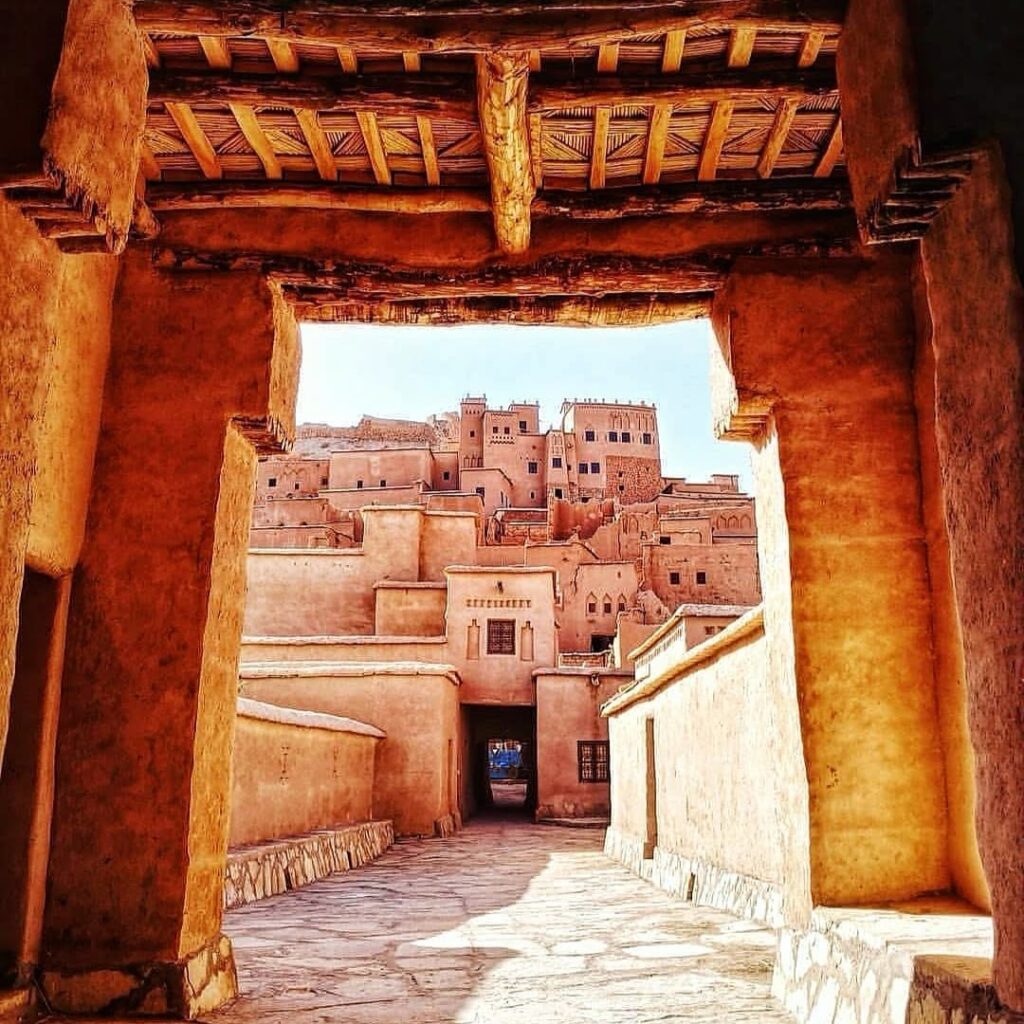
A kasbah in Morocco is built from the land around it. The walls are made of rammed earth, mudbrick and adobe, with wood for beams, doors and windows. At Ait Ben Haddou, Wikipedia notes that taller buildings use rammed earth up to the first floor and lighter adobe above it. Inside, many rooms have ceilings of reeds laid over wooden beams. The corner towers are often decorated with geometric patterns cut into the clay.
Earth keeps the rooms cool in summer and warm on winter nights. The weakness is water. Heavy rain slowly washes the walls away, so a kasbah needs care every year. Many old kasbahs were left empty and are now melting back into the ground. The September 2023 earthquake also damaged several of them.
The most famous kasbah in Morocco, and other great ones
Ait Ben Haddou
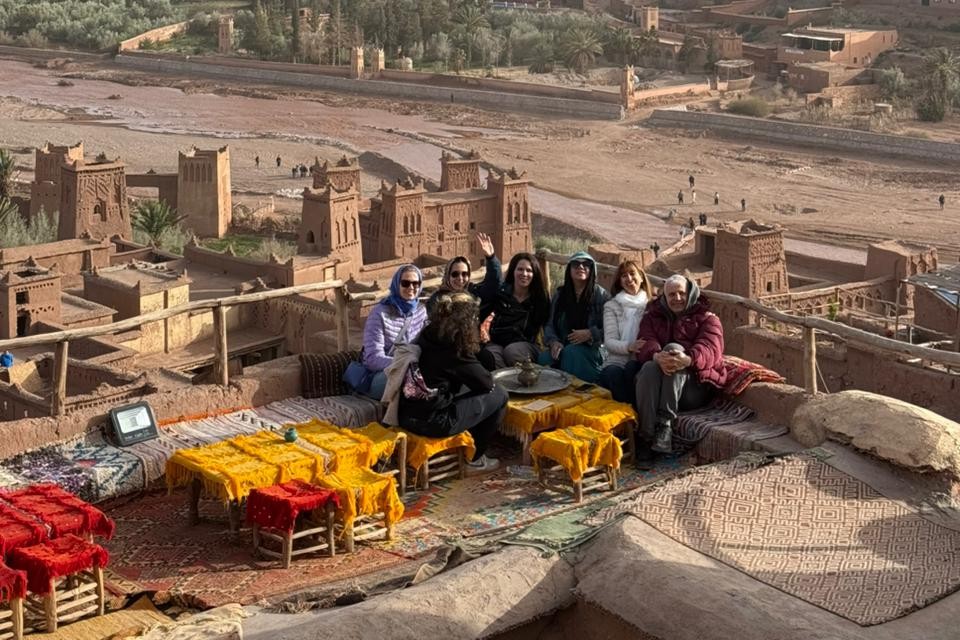
The most famous earthen village in the country sits on a hill above the Ounila River, between Marrakech and Ouarzazate. It became a UNESCO World Heritage Site in 1987. The site lay on a trans-Saharan trade route between the desert and Marrakech, and UNESCO says its oldest standing buildings date from no earlier than the 17th century. Film fans know it from Lawrence of Arabia, Gladiator, Kingdom of Heaven and Game of Thrones. Read our full guide to Ait Ben Haddou and the story of Ait Ben Haddou in film.
Kasbah Taourirt in Ouarzazate
In the centre of Ouarzazate, Kasbah Taourirt was expanded by the Glaoui family in the 19th century, at a point where several river valleys meet on the old Saharan trade routes. A section restored in the 1990s with UNESCO help is open to visitors, with towers decorated in geometric motifs and rooms with reed ceilings. Parts of it still house local families.
Kasbah of Telouet
High in the Atlas, at about 1,800 metres, the Kasbah of Telouet was the seat of the Glaoui family. Building started in 1860 and took about five years, with craftsmen brought from across Morocco. Today most of it is in ruins, but a restored reception area on the upper floor is open to visitors. It sits on the old caravan route between the Sahara and Marrakech.
Kasbah Amridil in Skoura
In the palm oasis of Skoura, east of Ouarzazate, Kasbah Amridil belongs to the Nasiri family. The ksar around it dates from the 17th century, and the kasbah itself from the 19th. It is so iconic that it appeared on the Moroccan 50 dirham banknote.
Kasbah of the Udayas in Rabat
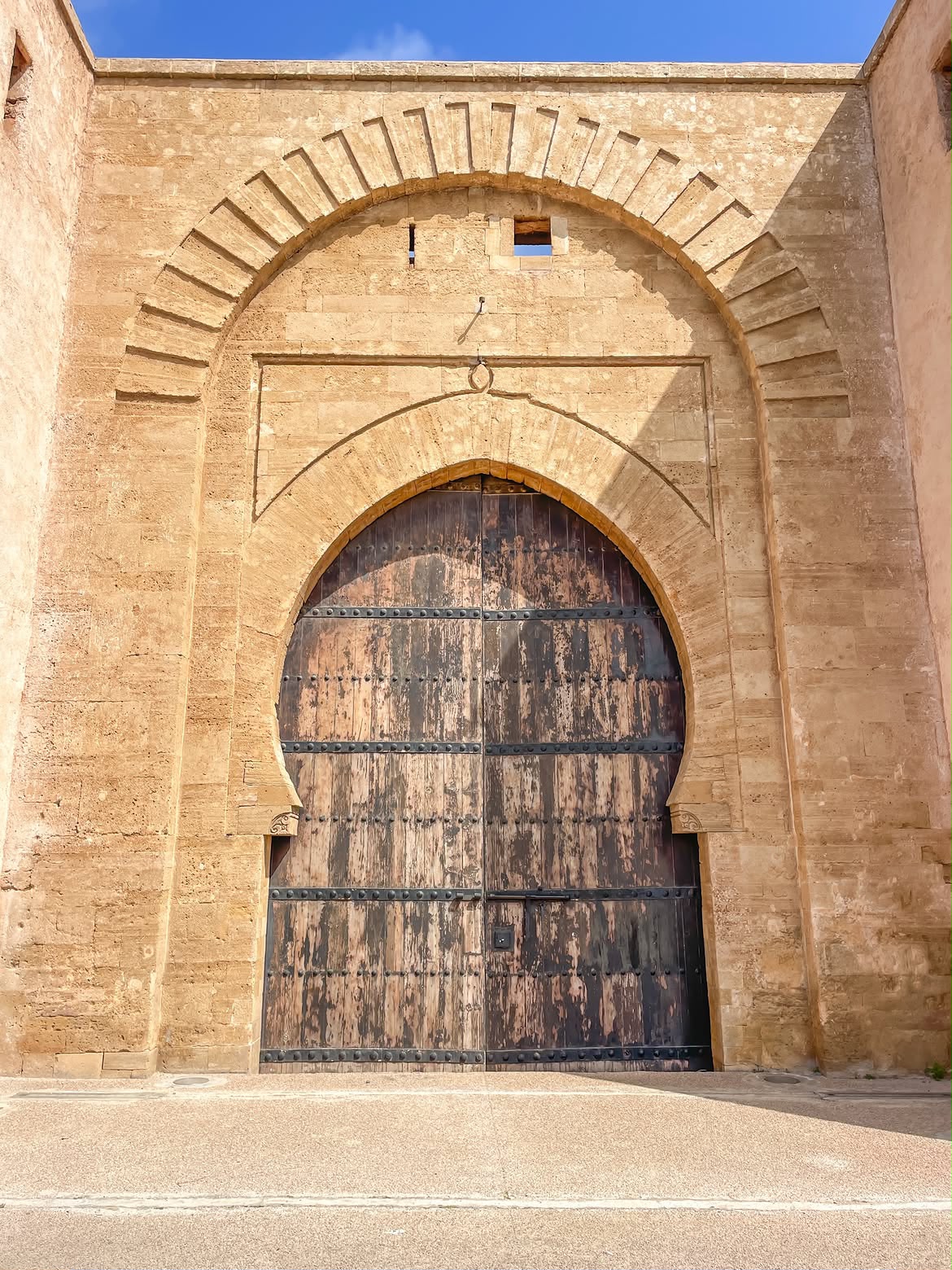
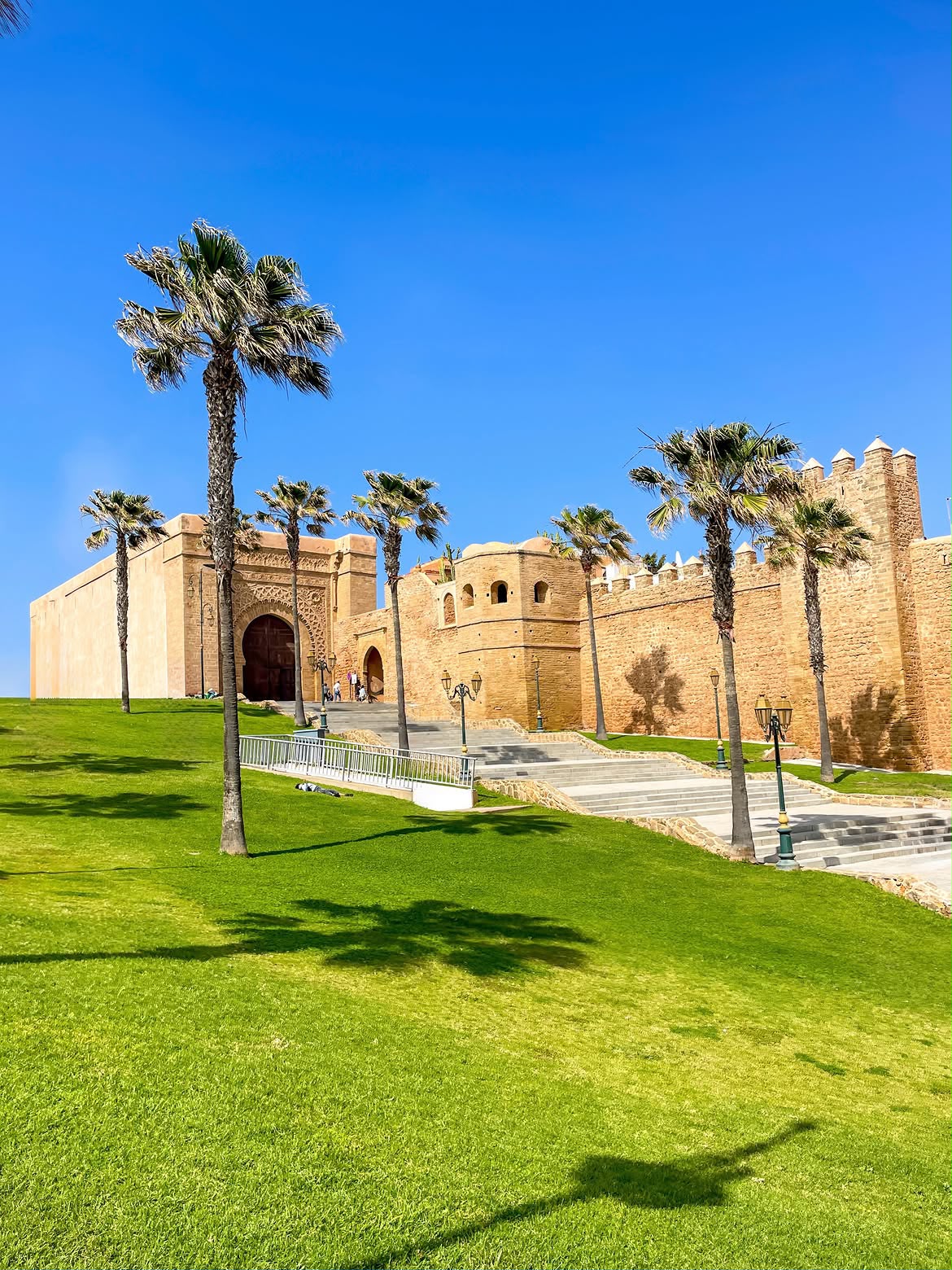
Not every kasbah in Morocco is made of earth. In Rabat, the Kasbah of the Udayas stands on a hill at the mouth of the Bou Regreg river. The Almohad caliph Abd al-Mumin built it around 1150. Its great gate, Bab Udaya, was added between 1195 and 1199 and is one of the finest gates in Moroccan architecture. Since 2012 it has been part of the Rabat UNESCO World Heritage Site.
The Road of a Thousand Kasbahs
East of Ouarzazate, the road through Skoura, the Dades Valley and on towards the Todra Gorge is known as the Road of a Thousand Kasbahs. Some are restored hotels, many are family homes, and many more are slowly returning to the earth. Every kasbah in Morocco on this road has its own story. It is one of the most beautiful drives on the way to the Sahara.
The Glaoui, lords of the kasbah in Morocco
Many of the great southern kasbahs are linked to one family, the Glaoui. Their kasbahs guarded the caravan routes between Marrakech and the Sahara. Thami El Glaoui became Pasha of Marrakech and allied with the French during the protectorate. After Morocco’s independence in 1956, the family fell from power, and its wealth and palaces were confiscated in 1957. Their empty kasbahs at Telouet and Ouarzazate still tell that story today.
Sleeping in a kasbah in Morocco
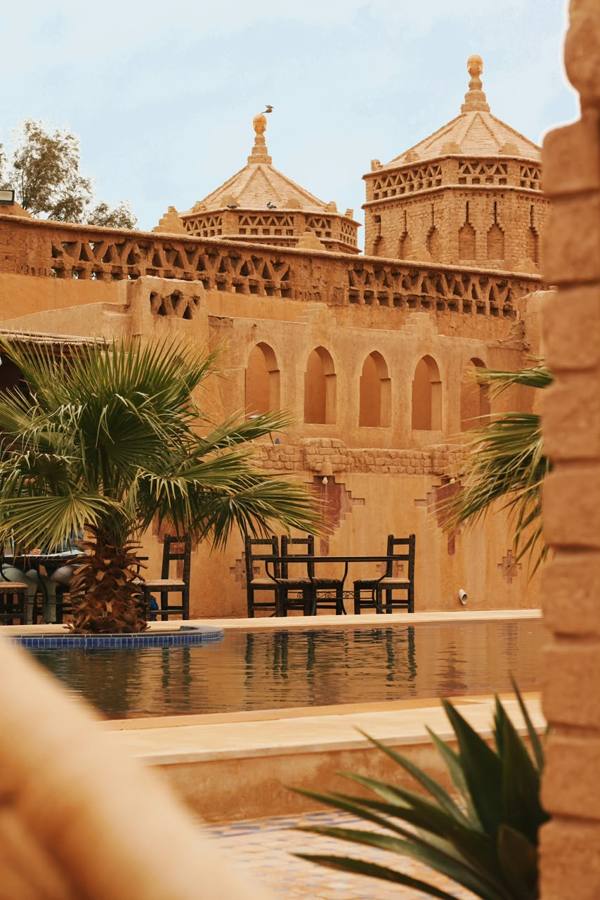
Some old kasbahs, and many new ones built in the traditional style, now welcome guests as hotels. A night in a kasbah hotel means thick earthen walls, rooftop terraces and views over palm groves or mountains. Sleeping in a kasbah in Morocco is a great way to break the long drive from Marrakech to the desert. Compare the options in our guide to riad vs hotel in Morocco.
Tips for visiting a kasbah in Morocco
- Bring cash. Entry fees are small, but often cash only. See cash in Morocco.
- Go early or late. The light on the earthen walls is softest in the morning and before sunset.
- Respect the homes. Many kasbahs and ksour are still lived in. Ask before taking photos of people.
- Wear good shoes. Steps, ramps and roof terraces are uneven.
- Follow closed areas. Some parts were damaged in the 2023 earthquake and are not safe to enter.
See a kasbah in Morocco with Navigate Morocco
We are a team from the Sahara, and the kasbah road is our road to work. Our day trip from Marrakech to Ait Ben Haddou and Ouarzazate is the easiest way to see the most famous ones. From Ouarzazate, try the Ait Ben Haddou and Atlas Film Studios day trip. Our desert tours also pass the kasbahs on the way to the dunes, including the 3 day Marrakech to Sahara tour and the 4 day Marrakech Sahara desert tour. Read what the drive from Marrakech to the Sahara is really like.
FAQ: the kasbah in Morocco
What does kasbah mean?
It comes from the Arabic word qasaba, which means fortress. In Morocco it means a citadel or a fortified residence.
What is the difference between a kasbah and a ksar?
A ksar is a fortified village with many families. A kasbah is a single fortified building, usually owned by one family.
What is the most famous kasbah in Morocco?
Ait Ben Haddou, a UNESCO World Heritage Site since 1987. Strictly speaking it is a ksar with several kasbahs inside.
What is a kasbah in Morocco made of?
Mostly rammed earth, mudbrick and adobe, with wood and reeds for beams, ceilings, doors and windows.
Can I sleep in a kasbah in Morocco?
Yes. Many kasbahs in the south, old and new, now work as hotels, especially around Ouarzazate, Skoura and the Dades Valley.
Want to see the kasbahs of southern Morocco with a local guide? Send us your dates and we will plan the route.
Message us on WhatsApp