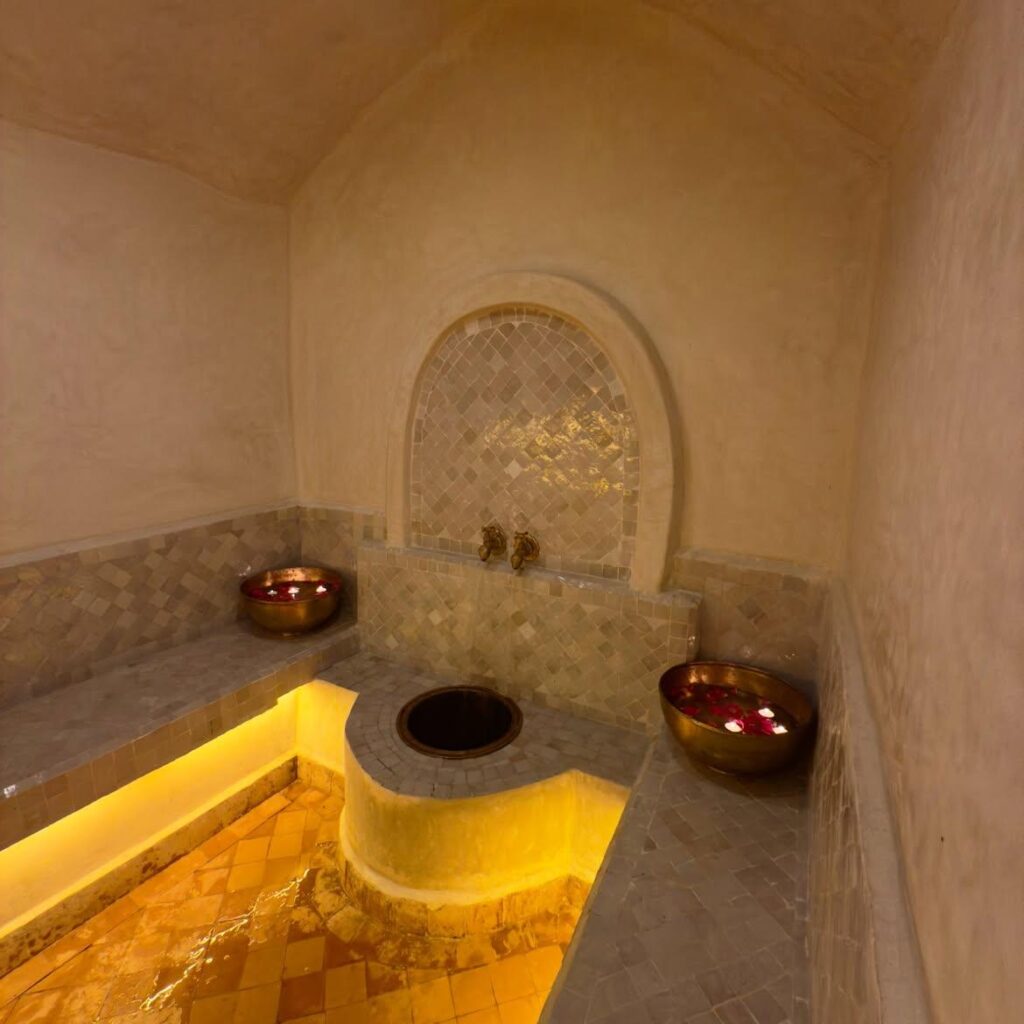
A Moroccan hammam is one of the best experiences of any trip to Morocco. It is a steam bath, a deep scrub and a social ritual all in one. For many Moroccans, the weekly visit to the neighbourhood hammam is as normal as going to the market. This guide explains what a Moroccan hammam is, what happens inside, what to bring, the local etiquette and how to choose between a public bath and a spa. After a few dusty days on the road to the Sahara, there is no better way to feel new again.
What is a Moroccan hammam?
A hammam is a public steam bath. According to Wikipedia, hammams descend from the Roman baths, and Moroccan hammams keep the old layout of a cool room, a warm room and a hot room. The ruins of the oldest known Islamic hammam in Morocco, from the late 8th century, lie at Volubilis.
In the medinas, a Moroccan hammam is often built next to a mosque, so worshippers can wash before prayer. The entrances are discreet and the walls have no windows, because what happens inside is private. Many neighbourhood hammams still serve local families every day, especially in the old towns of Fes and Marrakech.
What happens inside a Moroccan hammam
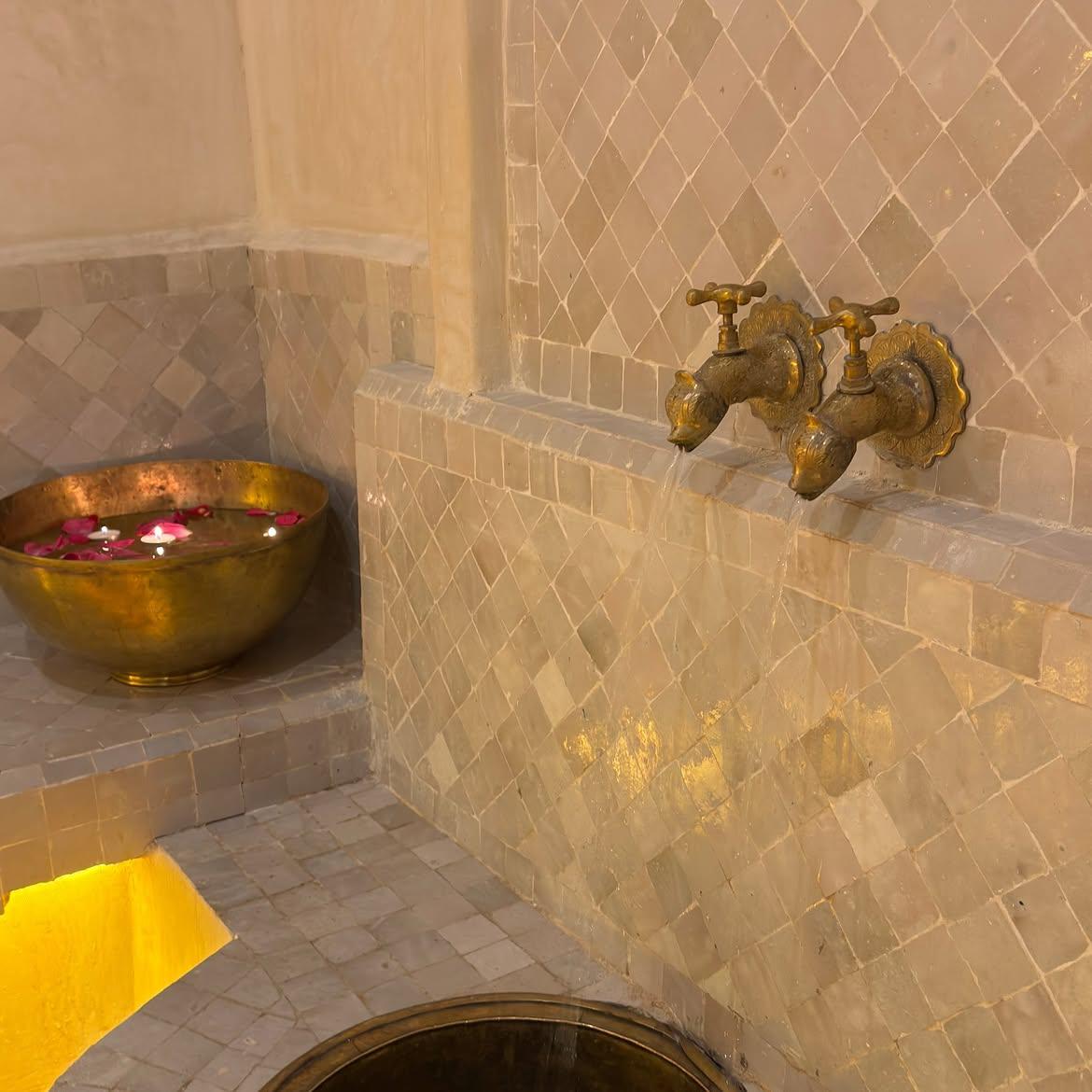
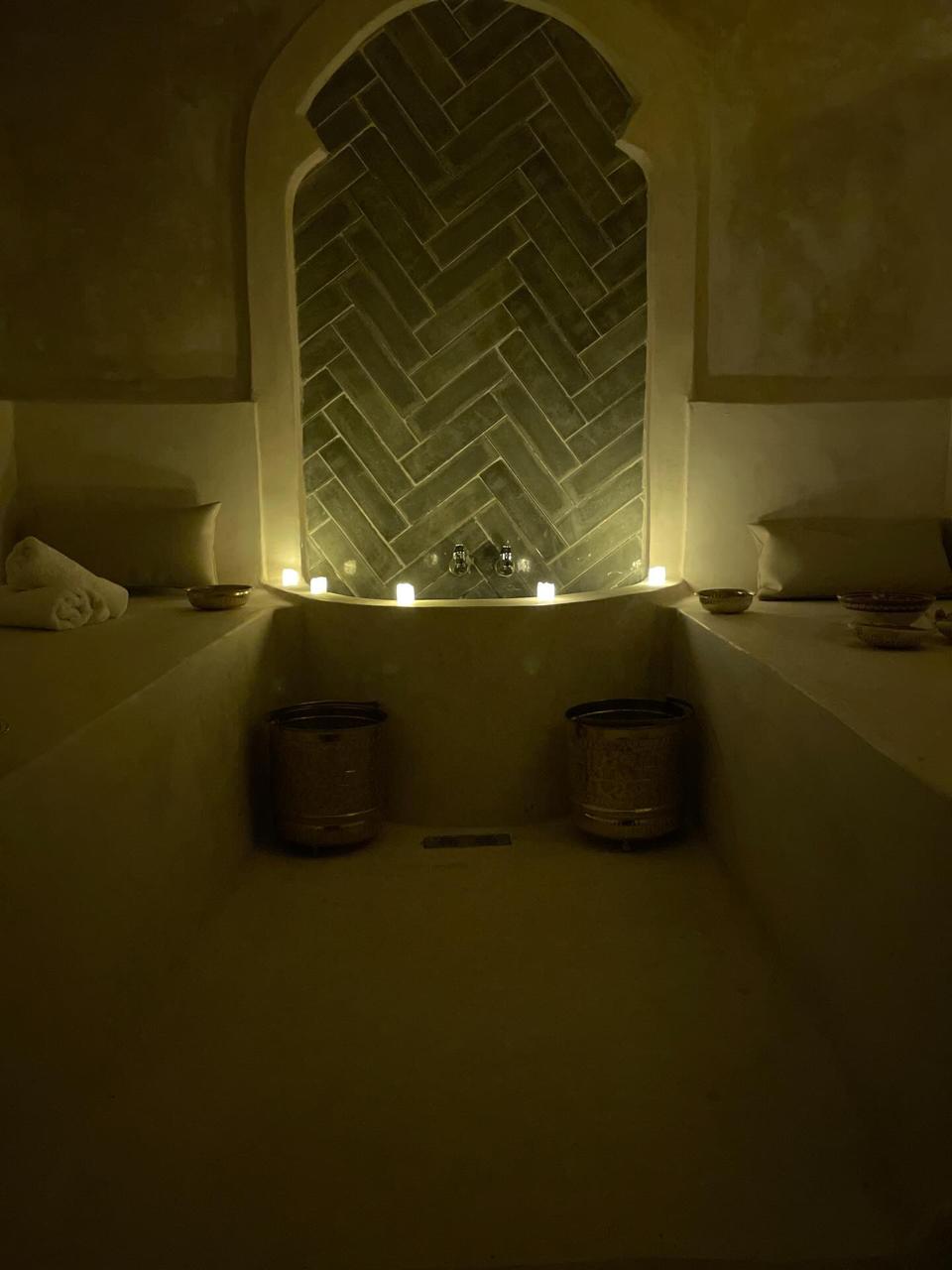
A visit follows a simple order. You undress in the changing room, then move through the cool, warm and hot rooms as your body gets used to the heat. Here are the usual steps:
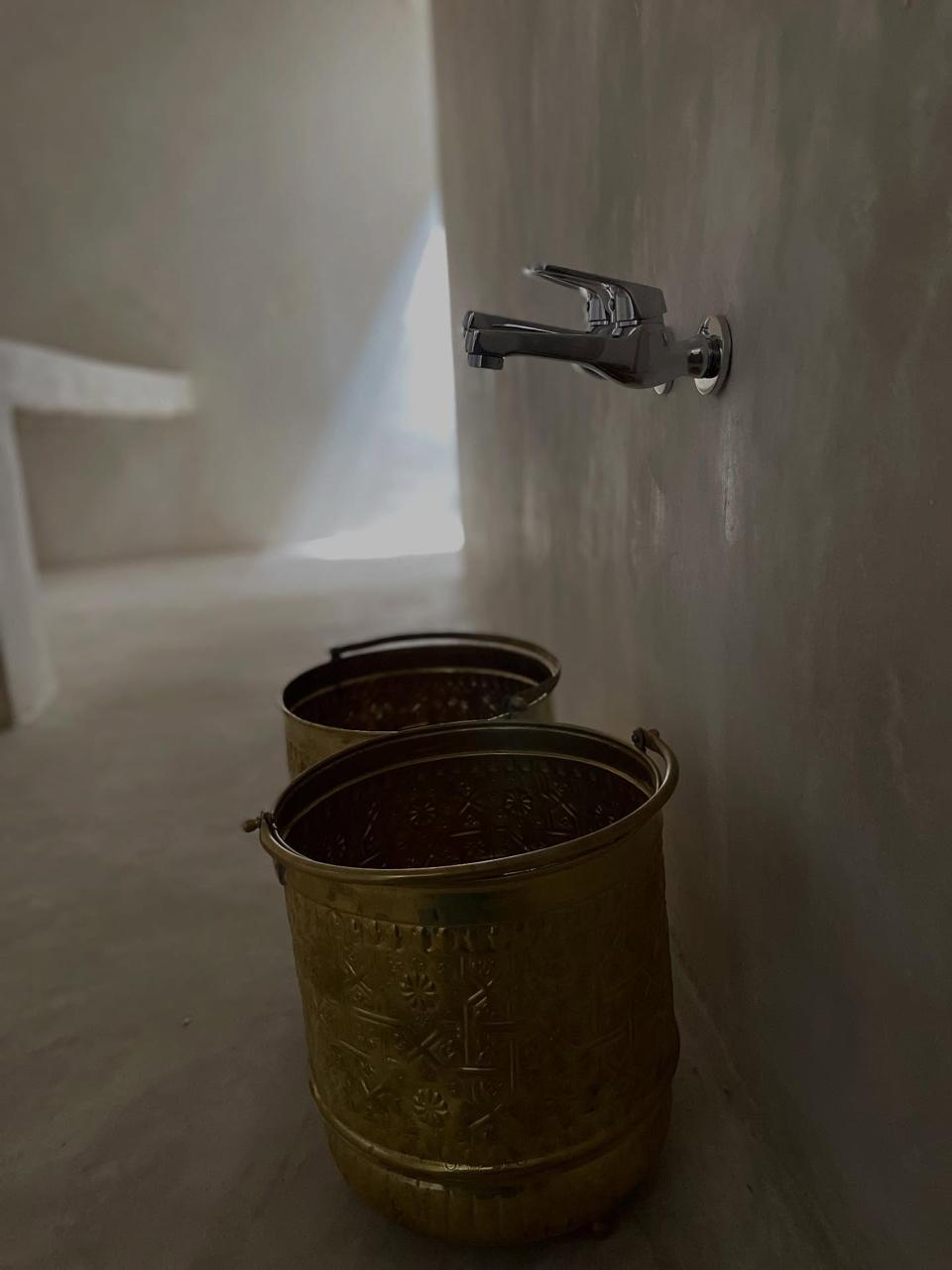
- Warm up. Fill a bucket with hot and cold water, sit on the warm floor and let the steam open your pores.
- Black soap. Spread savon beldi, a soft black olive soap, over your skin and leave it for a few minutes. Then rinse.
- The scrub. With the kessa glove, scrub the whole body in firm strokes. You will be surprised by how much dead skin comes off. An attendant can do it for you.
- Ghassoul clay. Mix the clay with warm water, spread it on your face, body or hair, and rinse after a few minutes.
- Final rinse. Wash your hair, rinse in cooler water and rest in the changing room before you dress.
Black soap, kessa and ghassoul: the Moroccan hammam essentials
Savon beldi is a thick black soap made from olives. It feels like a gel and prepares the skin for the scrub. The kessa is a rough glove that removes dead skin and leaves you smooth. Ghassoul, also spelled rhassoul, is a natural clay. Wikipedia explains that it is mined in the Middle Atlas, in the Moulouya valley, and is used in the hammam as a mask for the face, the body and the hair.
Many visitors also finish with a few drops of argan oil on the skin or hair. Read about the women behind it in our guide to Morocco’s argan oil cooperatives.
Public hammam or spa hammam?
The public Moroccan hammam
The neighbourhood hammam is the real local experience. It is simple, busy, social and inexpensive. You bring your own things, share the rooms with local people and follow the rhythm of the place. Some have separate sections for men and women, but most open to each at different hours of the day, so check the schedule before you go. An attendant can usually show newcomers what to do.
The spa hammam
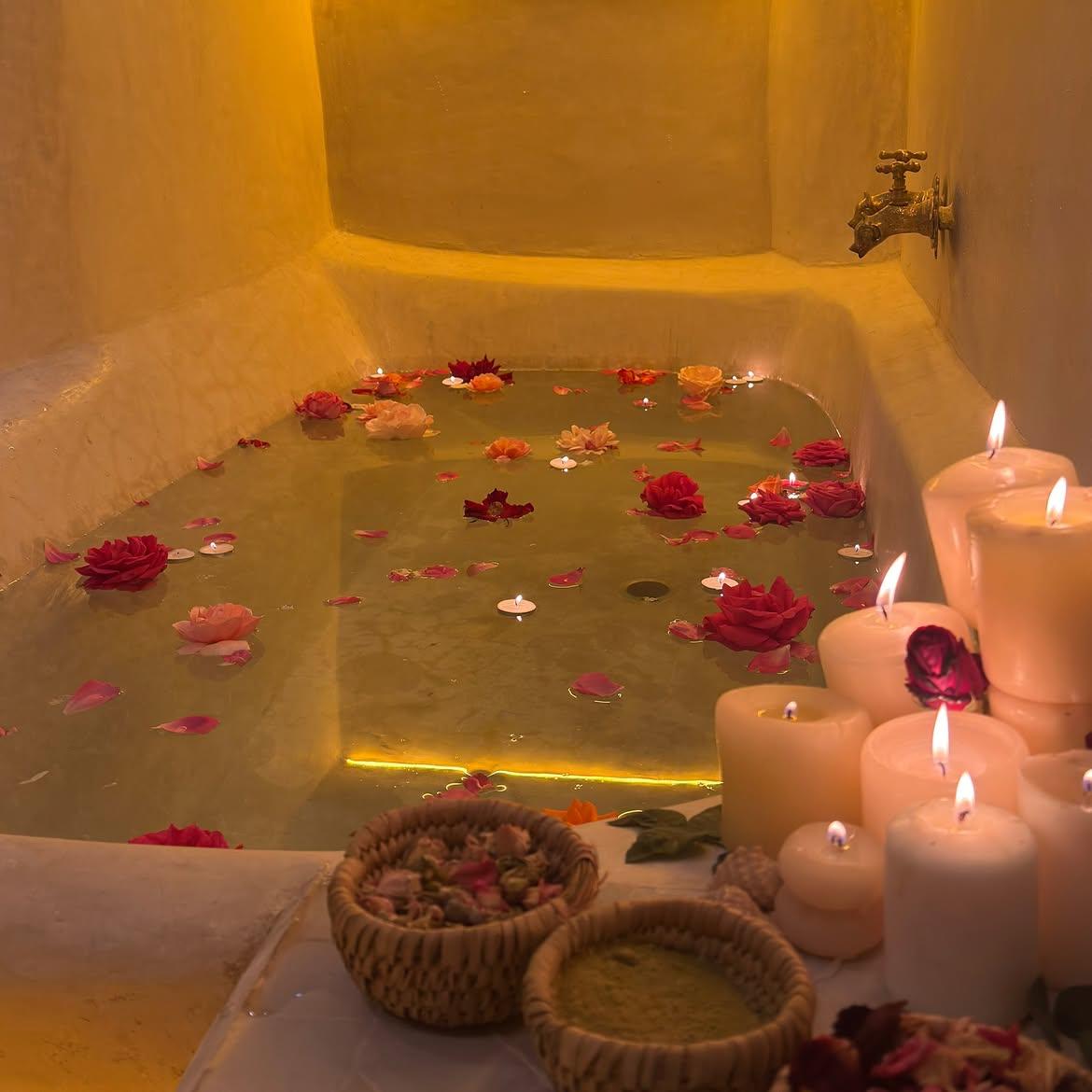
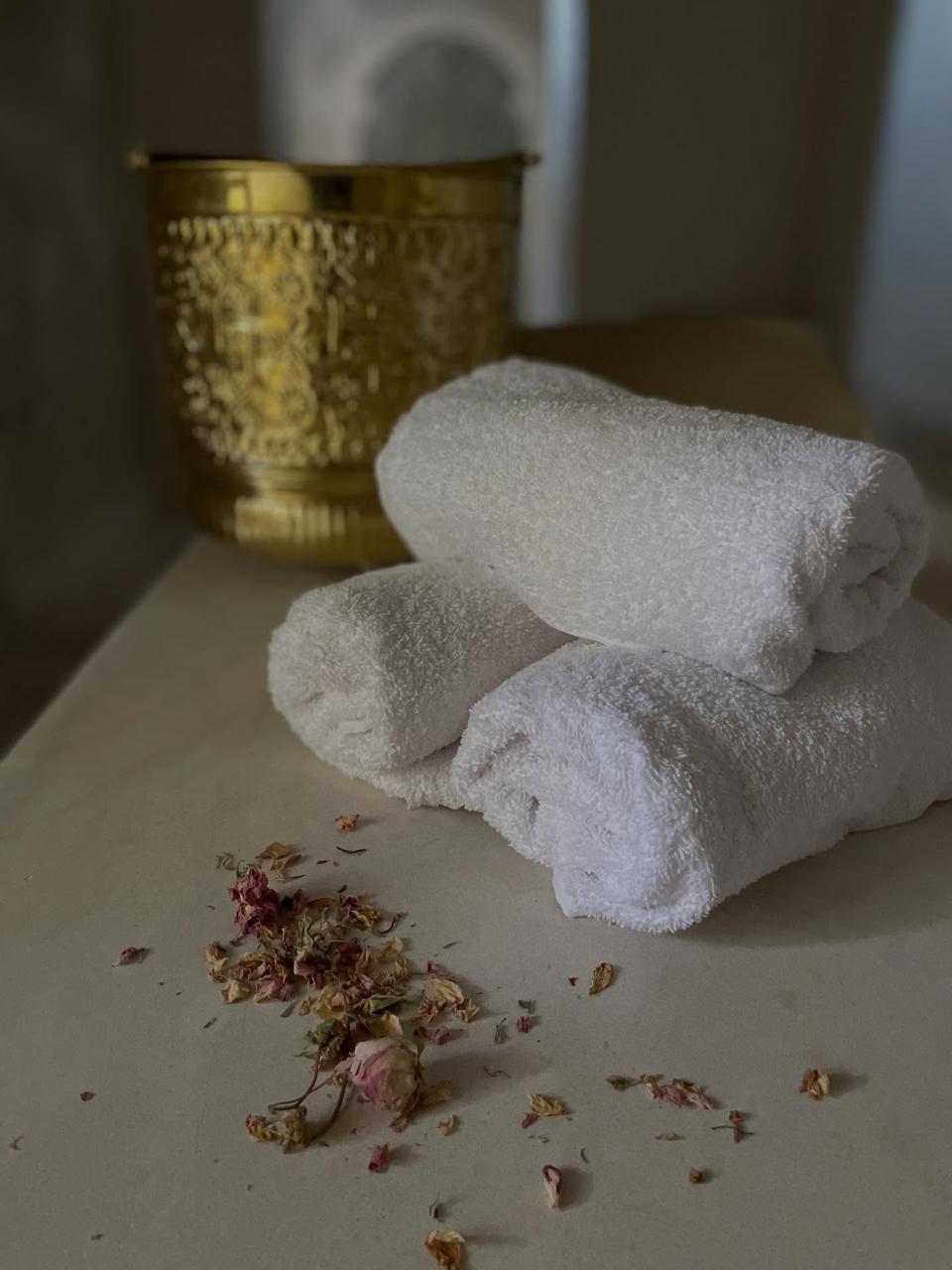
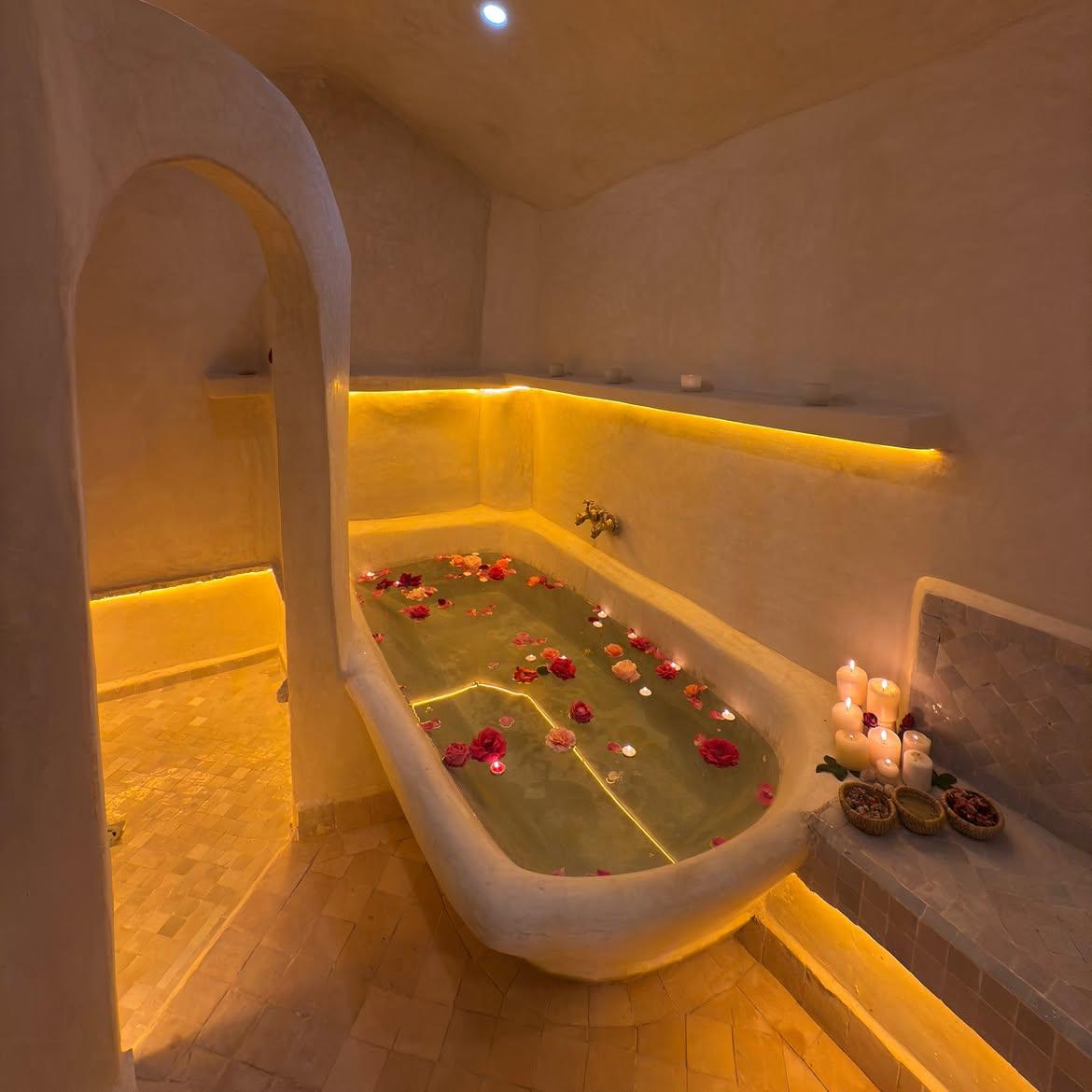
Spa hammams in riads and hotels are private, calm and comfortable. Everything is provided, from the soap to the towels, and treatments are done for you. Many add a massage after the scrub. It costs more, but it is a gentle start if you feel shy about a public bath.
What to bring to a public Moroccan hammam
- Black soap, a kessa glove and ghassoul clay, sold in the souks and small shops
- A towel and clean clothes to change into
- Flip flops for the wet floors
- Underwear or a swimsuit to wear inside, plus a dry pair for after
- Shampoo, a comb and a small bag to carry everything
- Some cash for entry and for the attendant. See cash in Morocco and tipping in Morocco.
Buckets and mats are often available inside. A Moroccan tradition is to eat an orange after the hammam to feel fresh again.
Moroccan hammam etiquette
A few simple rules will make you feel at home. Keep your underwear or swimsuit on; men are expected to stay covered too. Do not use more hot water than you need, and keep your rinse water away from your neighbours, since the floors slope towards a drain. Rinse your spot before you leave and return anything you borrowed. If you share a hammam with locals, a smile and a simple greeting go a long way. Our list of Darija phrases will help, and so will our guide to Moroccan etiquette.
Historic hammams in Morocco
Hammam Saffarin in Fes
On Place Seffarine in the medina of Fes, the Hammam Saffarin dates back to the 14th century and the Marinid dynasty. It was probably built for the coppersmiths who worked around the square. Recently restored, it still serves local families. Unusually for Fes, it has separate baths for men and women, so it can stay open to both all day.
The Mouassine hammam in Marrakech
In Marrakech, the Mouassine Mosque complex, built by the Saadian sultan Moulay Abdallah al-Ghalib between the 1560s and the 1570s, includes a public hammam next to the mosque. It is a perfect example of how the hammam sits at the heart of medina life.
When to fit a Moroccan hammam into your trip
The best moment is after the desert. Sand gets everywhere after camel rides and a night in the dunes, and the long drive back leaves you stiff. A Moroccan hammam the next day in Marrakech or Fes washes it all away. Read about a night in a Sahara desert camp and the drive from Marrakech to the Sahara. For a slower trip built around rest, see our wellness tours in Morocco.
Popular routes that end in a city with great hammams include our 4 day Marrakech Sahara desert tour and the 3 day desert tour from Marrakech to Fes. See more activities in Marrakech.
FAQ: the Moroccan hammam
What do you wear in a Moroccan hammam?
Underwear or a swimsuit. Most people keep their bottoms on, and men are expected to stay covered.
Are men and women together in a hammam?
No. Some hammams have separate sections, and most others welcome men and women at different hours.
How long does a Moroccan hammam take?
There is no fixed time. Most visitors take their time, and a spa visit is longer if you add a massage.
Can tourists go to a public hammam?
Yes, many visitors do. Check the hours for men and women, bring your things and ask the attendant to guide you.
What is black soap made of?
Savon beldi is a soft black soap made from olives. It is used before the scrub with the kessa glove.
Planning a trip to Morocco with time to relax? Send us your dates and we will plan your route.
Message us on WhatsApp