The historical sites in Morocco tell a story of more than two thousand years. There are Roman towns, medieval universities, royal capitals, earthen fortresses and a lost caravan city at the edge of the Sahara. For a student group, each stop is a lesson you can walk through. This guide lists eight historical sites in Morocco for student tours. It shows what students learn at each one and how to link them on a single route. It comes from our family team in Merzouga and Marrakech, who guide student and study abroad groups across the country.
Why historical sites in Morocco work so well for students
Most countries show one or two chapters of history. Morocco shows many of them on one road. Students can stand in a Roman forum in the morning and walk through a medieval medina in the afternoon. Morocco has nine UNESCO World Heritage Sites, according to the list of World Heritage Sites in Morocco. Six of them are on this list. The distances are short, so a week covers a lot without long flights.
History here is also alive. People still live, trade and pray inside the old walls, so students see how a historic city works today. For a wider view of the subjects a trip can cover, read our guide to educational tours in Morocco.
1. Fes el Bali: the medieval city and the oldest university
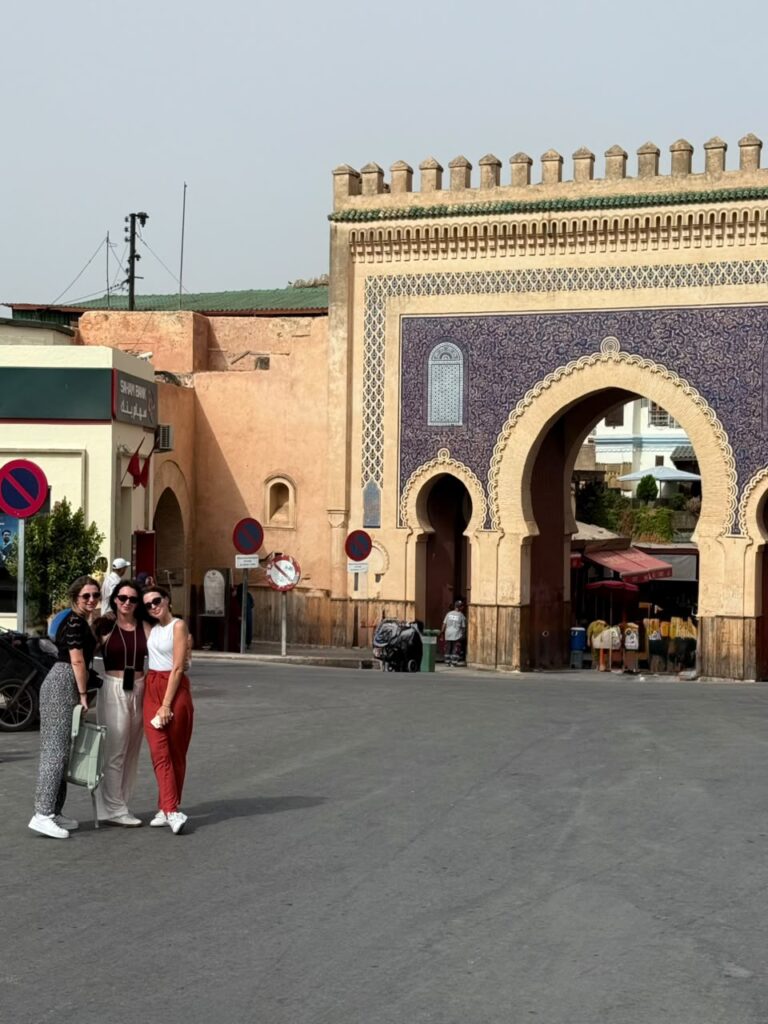
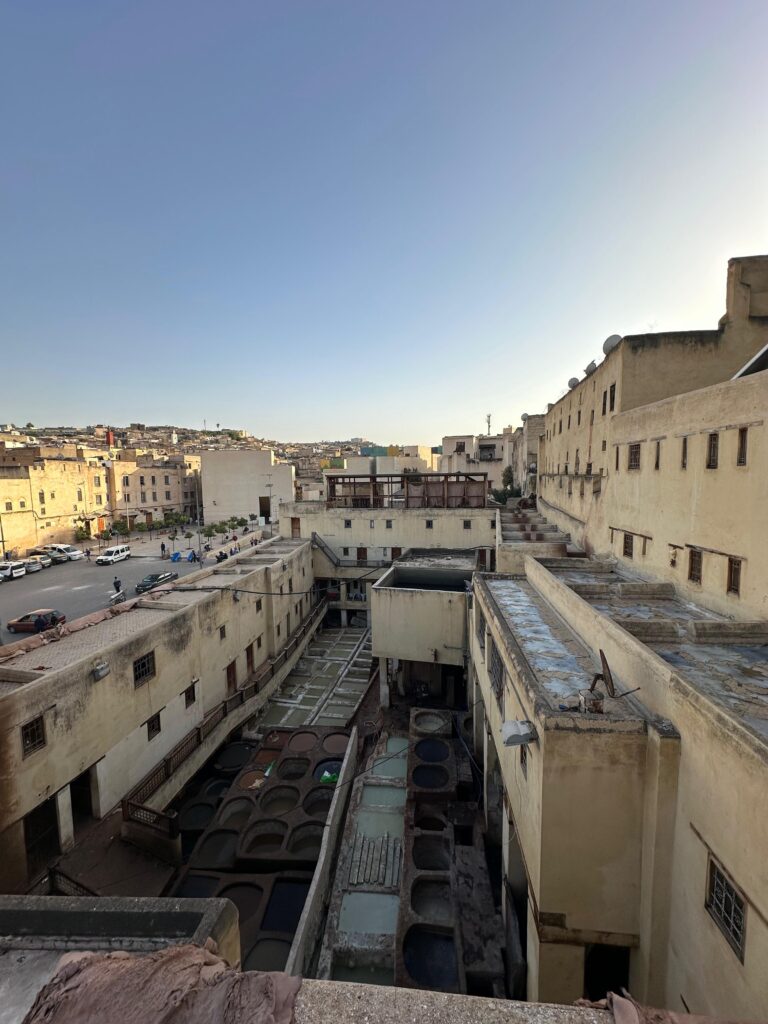
Fes was founded at the end of the 8th century by Idris I and his son Idris II. Its old medina, Fes el Bali, was the first Moroccan site on the UNESCO list, in 1981. Cars cannot enter its narrow lanes, so donkeys and handcarts still carry goods. It is the best place to show students how a medieval Islamic city was planned. Mosques, schools, markets and fountains sit side by side.
Inside the medina stands al Qarawiyyin, founded in 859 by Fatima al Fihri. Guinness World Records calls it the oldest existing and continually operating educational institution in the world. That fact always gets the attention of a student group. Nearby, the Chouara tannery still dyes leather in open stone vats. It is a lesson in crafts that have barely changed in centuries. Read our full guide to Fes, Morocco.
2. Volubilis: Roman ruins among the historical sites in Morocco
Volubilis surprises many students, because few expect Roman ruins in Morocco. It was the capital of the Roman province of Mauretania Tingitana. UNESCO listed it in 1997, according to World Heritage Site. Students walk among columns, a triumphal arch and the remains of houses. Some mosaic floors show the Labours of Hercules.
The site also links two chapters of history. Idris I lived at Volubilis before he founded Fes and the town of Moulay Idriss nearby. Students can compare a Roman town and an Islamic city in the same day. Read our guide to Volubilis and see the day trip from Fes to Volubilis and Moulay Idriss.
3. Meknes: historical sites in Morocco built by Moulay Ismail
Meknes became a capital in 1672, when Sultan Moulay Ismail chose it as his royal city. He ruled for 55 years, until 1727, and he built on a huge scale. The Heri es Souani granary and the Agdal water basin show how a sultan planned for food, water and sieges. The Historic City of Meknes joined the UNESCO list in 1996.
The most famous monument is Bab Mansour, a gate covered in green zellige tiles and carved stone. His son finished it in 1732. Meknes is calmer than Fes and Marrakech. It is a good place for students to sketch, take notes and ask questions. Read more in our guide to Meknes, Morocco.

4. Rabat: the Hassan Tower and the Kasbah of the Udayas
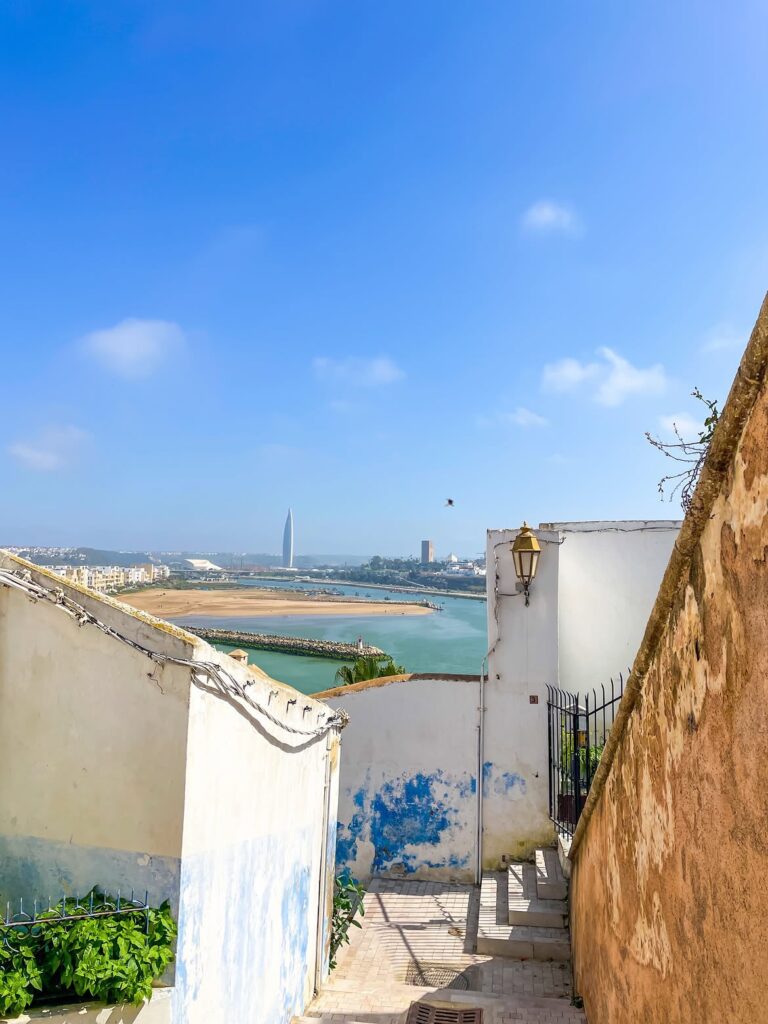
Rabat is the capital of Morocco today, and its historic city joined the UNESCO list in 2012. The Kasbah of the Udayas is the oldest part of the city. The Almohad caliph Abd al Mu’min built it in 1150 to 1151. Its white and blue lanes lead to a view over the ocean.
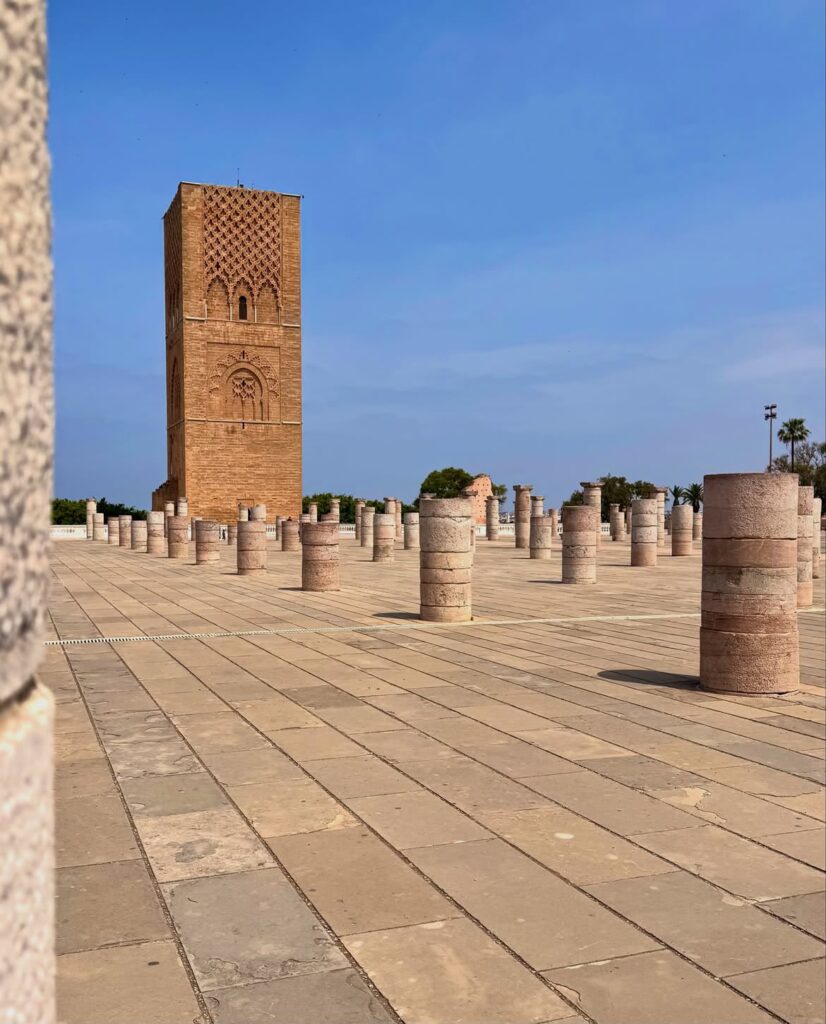
Across town stands the Hassan Tower, the unfinished minaret of an enormous mosque. The caliph Yaqub al Mansur planned it and reigned from 1184 to 1199. The work stopped when he died, and rows of stone columns still mark where the prayer hall would have stood. It is a powerful way to show students that some history is about plans that never came true. Facing the tower is the Mausoleum of Mohammed V. Read our full guide to Rabat, Morocco.
5. The Hassan II Mosque: modern history in Casablanca
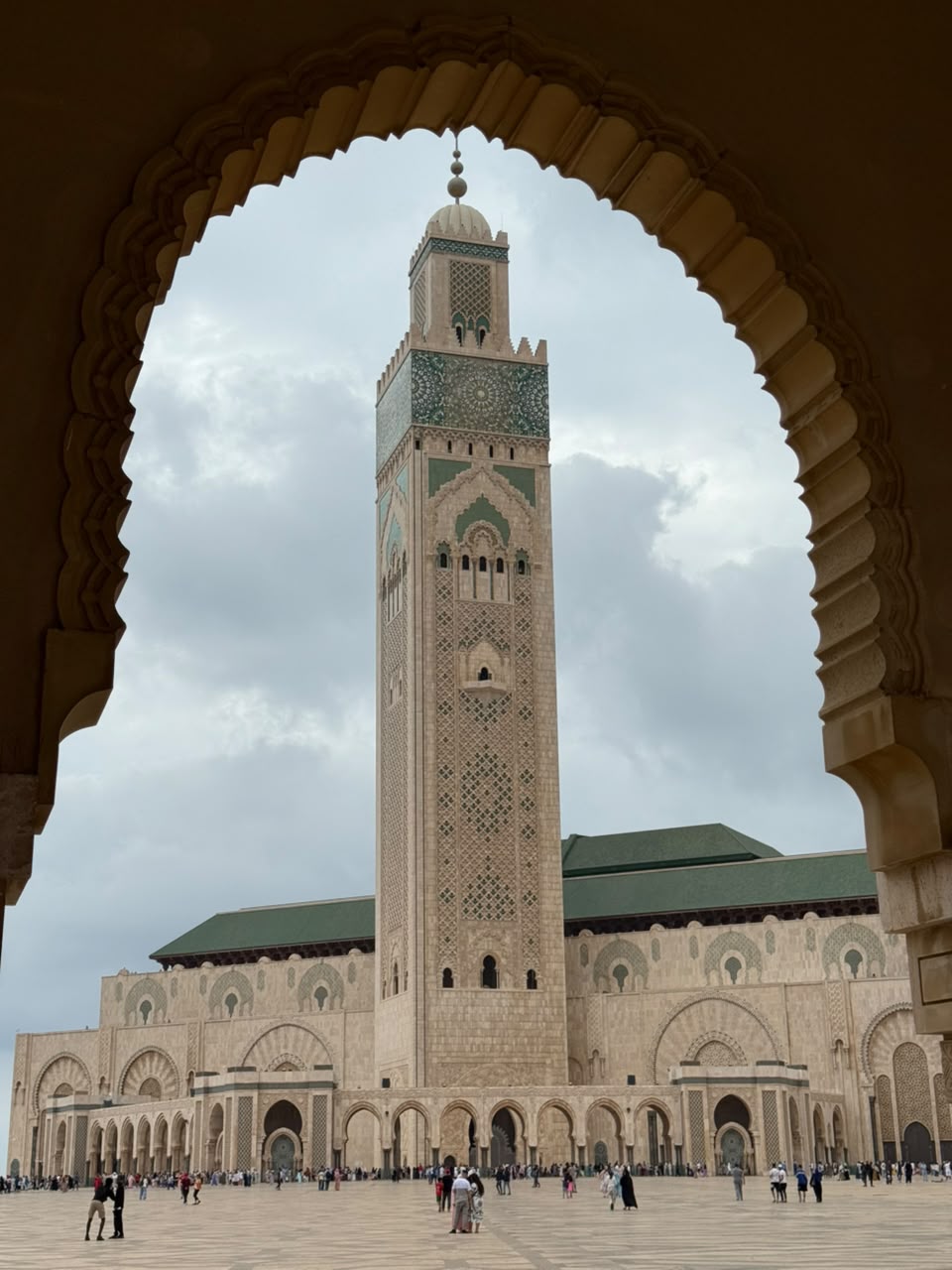
Not all historical sites in Morocco are old. The Hassan II Mosque opened in 1993. It stands on the Atlantic shore with a minaret of 210 m. It can hold 105,000 worshippers. Most mosques in Morocco are closed to non Muslim visitors. This one is open on guided tours, so students can see the inside of a mosque.
The tour is a good lesson in craft and in faith. Moroccan artisans made the carved wood, plaster and zellige by hand. Students should dress modestly, with shoulders and knees covered. Read our guide to the Hassan II Mosque for tour times and the dress code.
6. The Marrakech medina: the Red City and its monuments
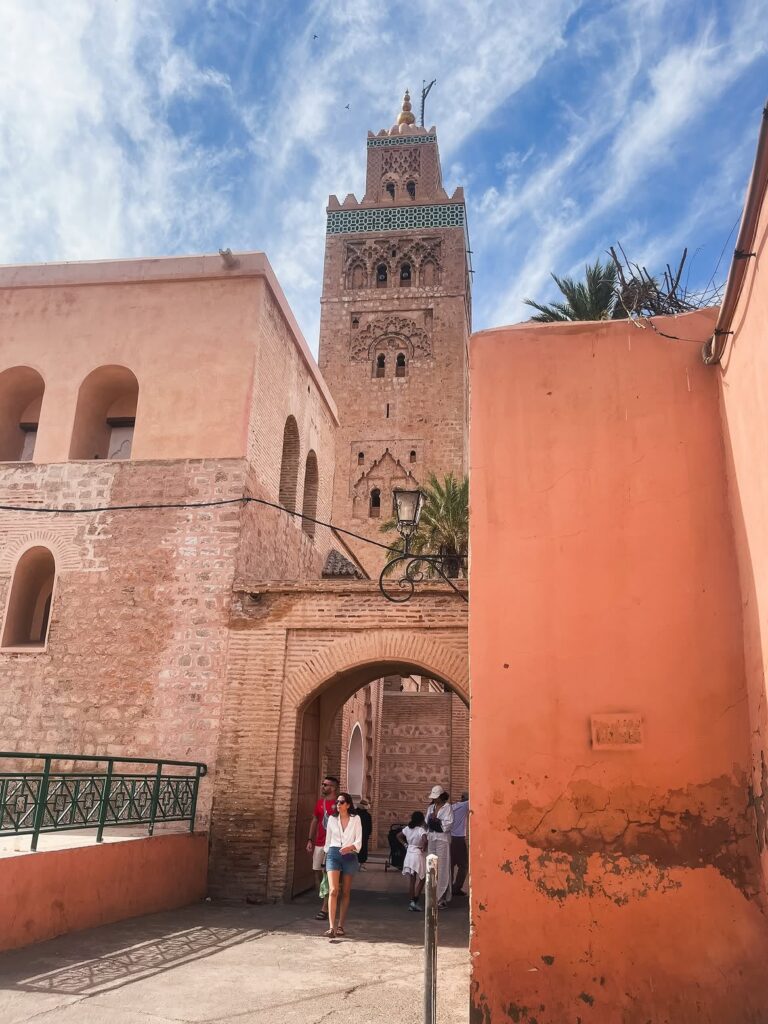
Marrakech was founded around 1070 by the Almoravids, Amazigh rulers from the Sahara. Its medina joined the UNESCO list in 1985. The Koutoubia Mosque is its main landmark, with a minaret that rises 77 m. Next to it, Jemaa el Fna square fills with musicians, storytellers and food stalls every evening.
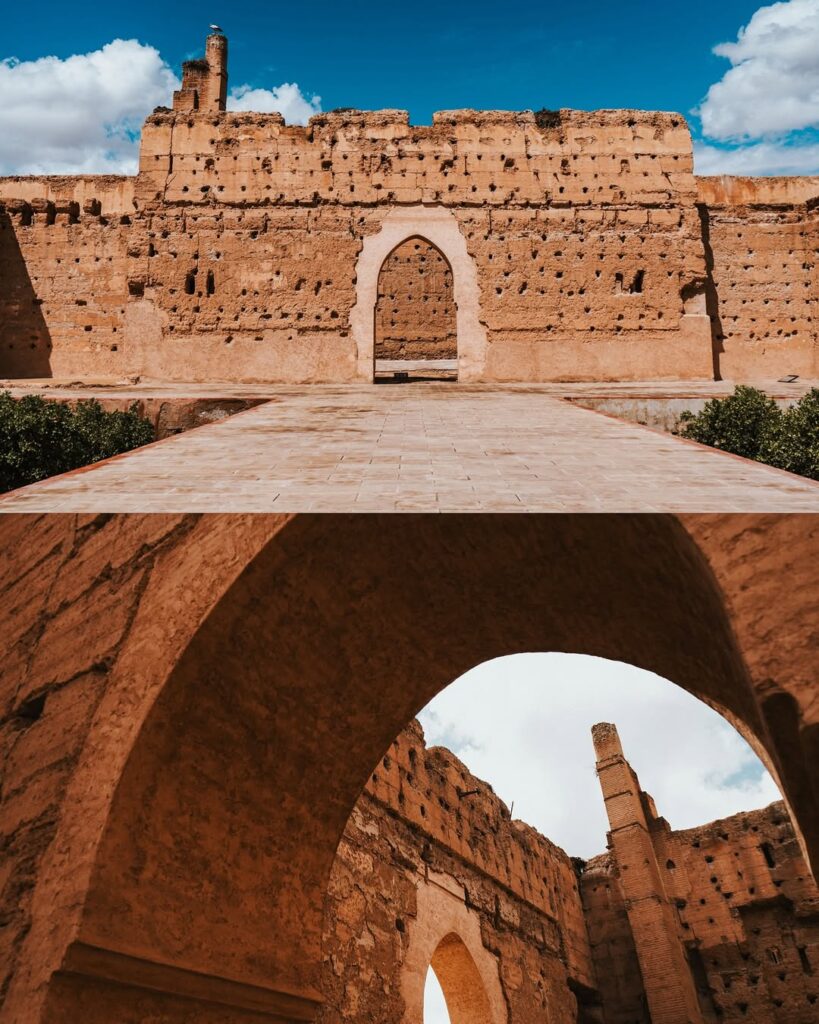
For a history lesson, visit the carved courtyard of the Ben Youssef Madrasa, a former Quran school. Then walk through the ruins of El Badi Palace. Together they show what learning and royal power looked like in the old city. All four royal capitals are covered in our guide to the imperial cities of Morocco.

7. Ait Ben Haddou: earthen walls among the historical sites in Morocco
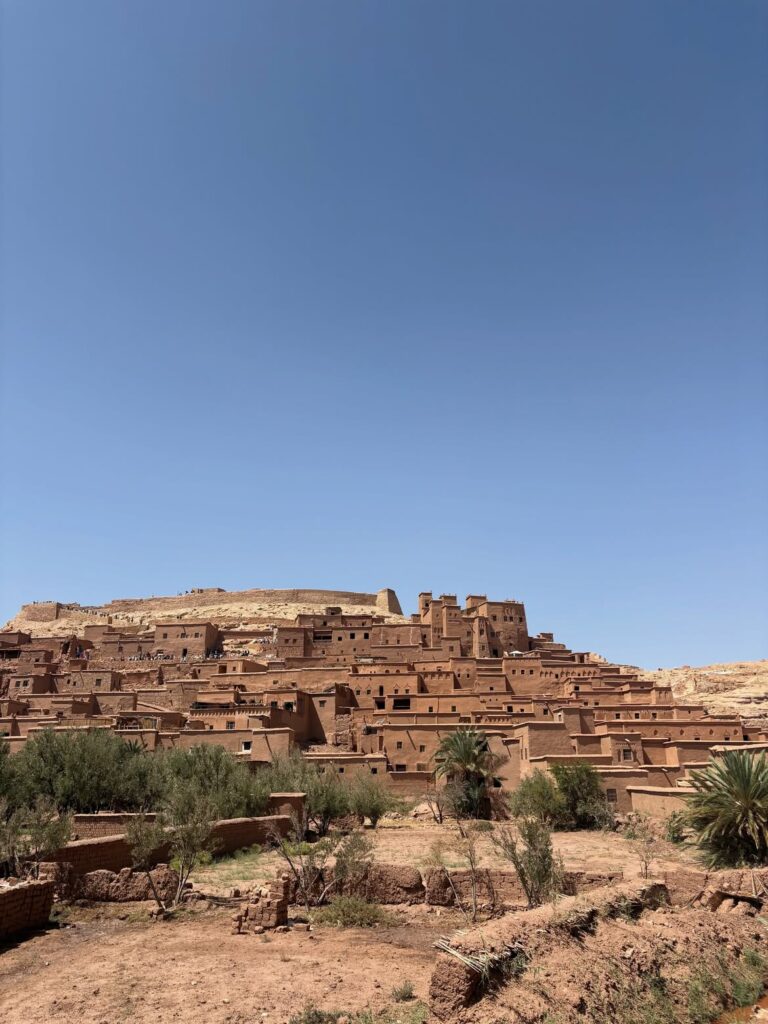
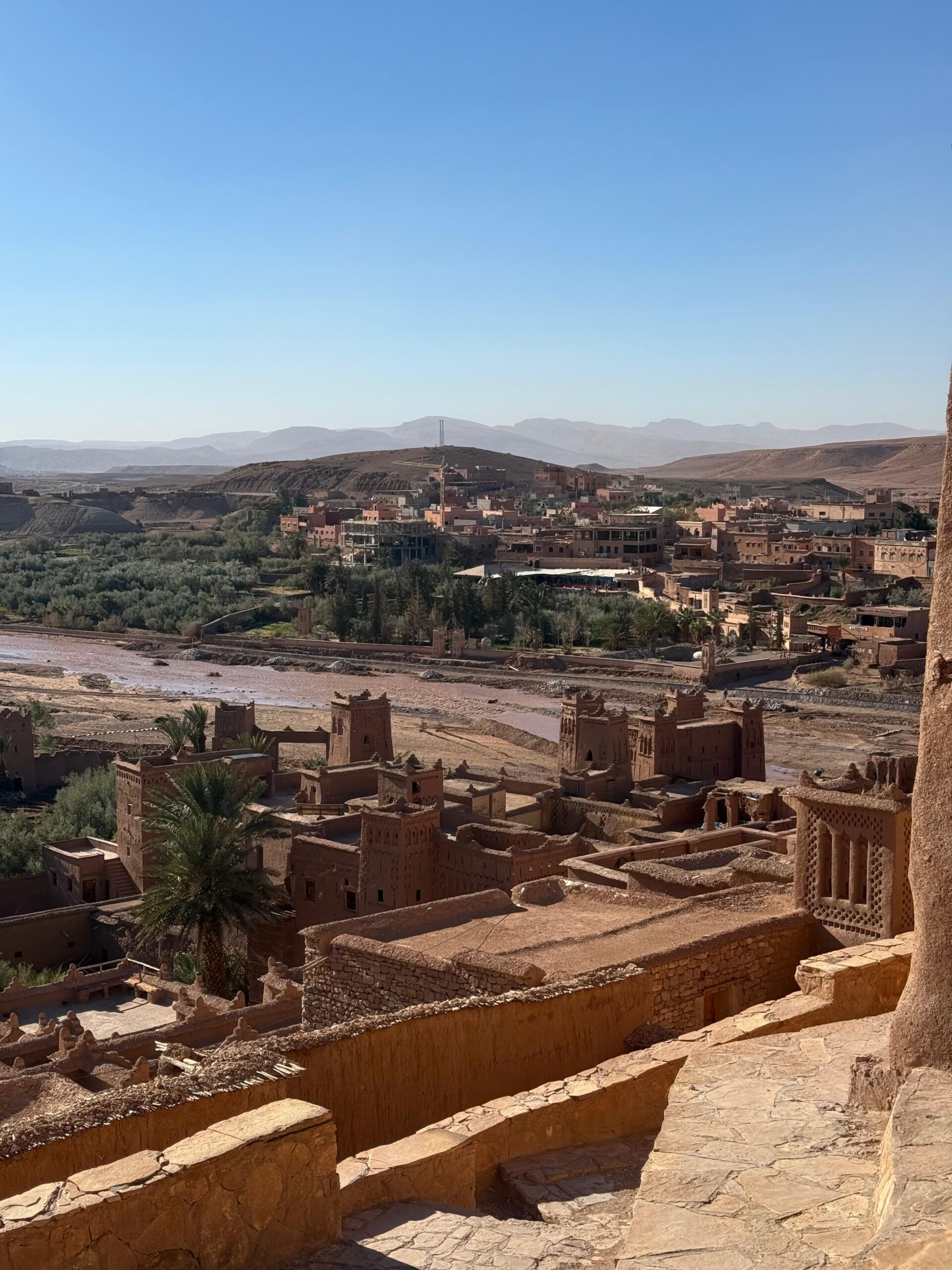
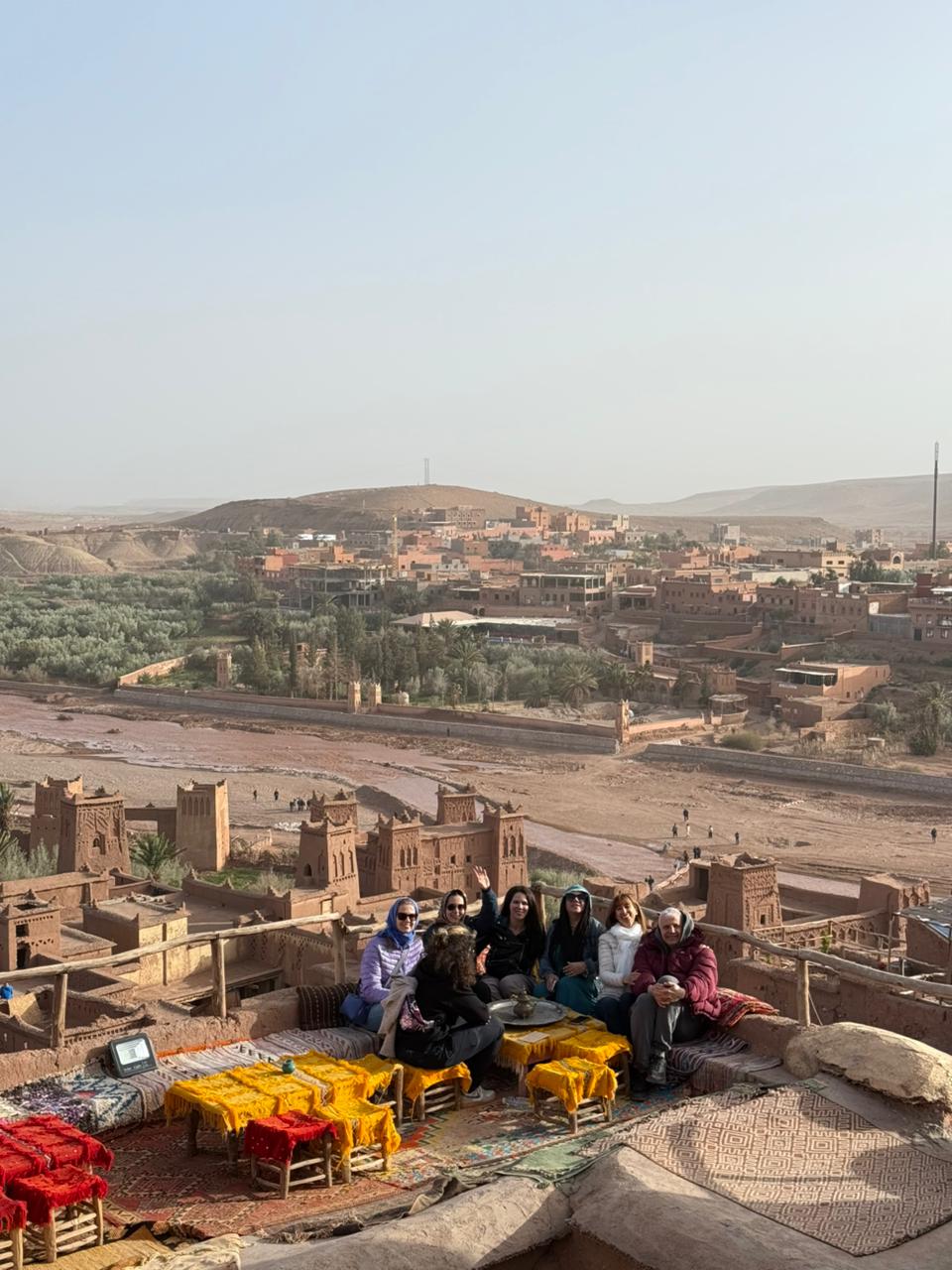
On the road from Marrakech to the Sahara, Ait Ben Haddou rises on a hill above the Ounila River. It is a ksar, a fortified village of earthen houses inside high walls. UNESCO listed it in 1987. The site has been fortified since the 11th century. Still, no current building is believed to be older than the 17th century.
For students, it is a lesson in building with local materials in a hot, dry climate. It also shows why villages on caravan routes needed walls. They can climb to the top for a view over the valley. Read our guide to Ait Ben Haddou and learn what a kasbah is before you go.
8. Sijilmasa: the lost caravan city among the historical sites in Morocco
Few tours stop here, which makes it the most surprising of the historical sites in Morocco for a history class. Sijilmasa was founded in 757 in the Tafilalet oasis. It was the northern end of the western trans Saharan trade route. Gold from south of the Sahara was minted there. Its ruins lie about 1 km north of Rissani, along the Ziz River. Moulay Ismail rebuilt the city in the 18th century, but it was destroyed again in 1818.
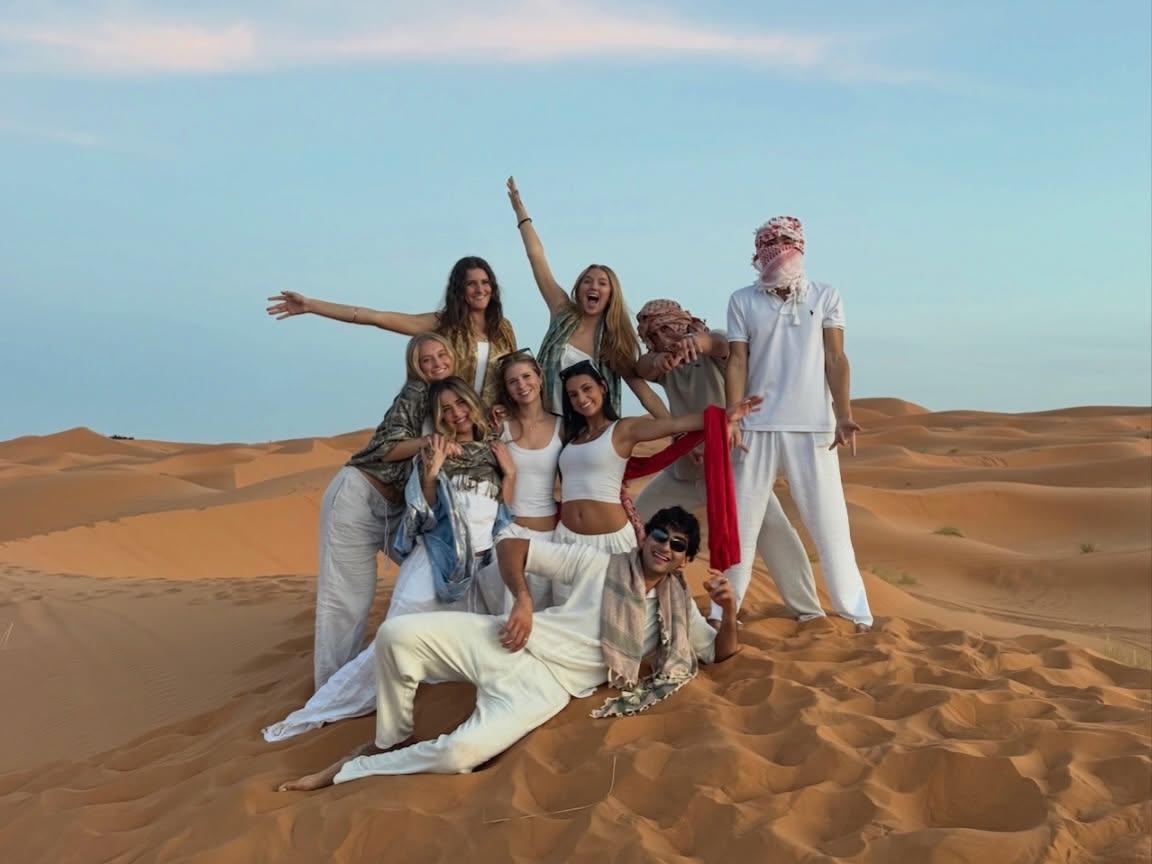
Today only low earthen walls remain, so a guide is essential to bring the story to life. The lesson is a big one: the caravans that crossed the desert linked Morocco with West Africa for centuries. Rissani is about 40 minutes by road from Merzouga. Students can see the ruins and reach the dunes the same afternoon. Our team is from Merzouga, so this part of the trip is run by our own people. Read about the Gnawa village of Khamlia nearby, whose music traces back to West Africa.
How to visit these historical sites in Morocco on one student tour
The eight sites sit on a natural loop. Many groups fly into Casablanca, see the Hassan II Mosque and drive to Rabat. From there, the road goes inland to Meknes, Volubilis and Fes. From Fes, you cross the Middle Atlas to Rissani and the Sahara. Then the old caravan road leads west through Ait Ben Haddou to Marrakech.
- Day 1: Casablanca and the Hassan II Mosque, then Rabat.
- Day 2: Rabat to Fes via Meknes and Volubilis.
- Day 3: A full guided day in the Fes medina.
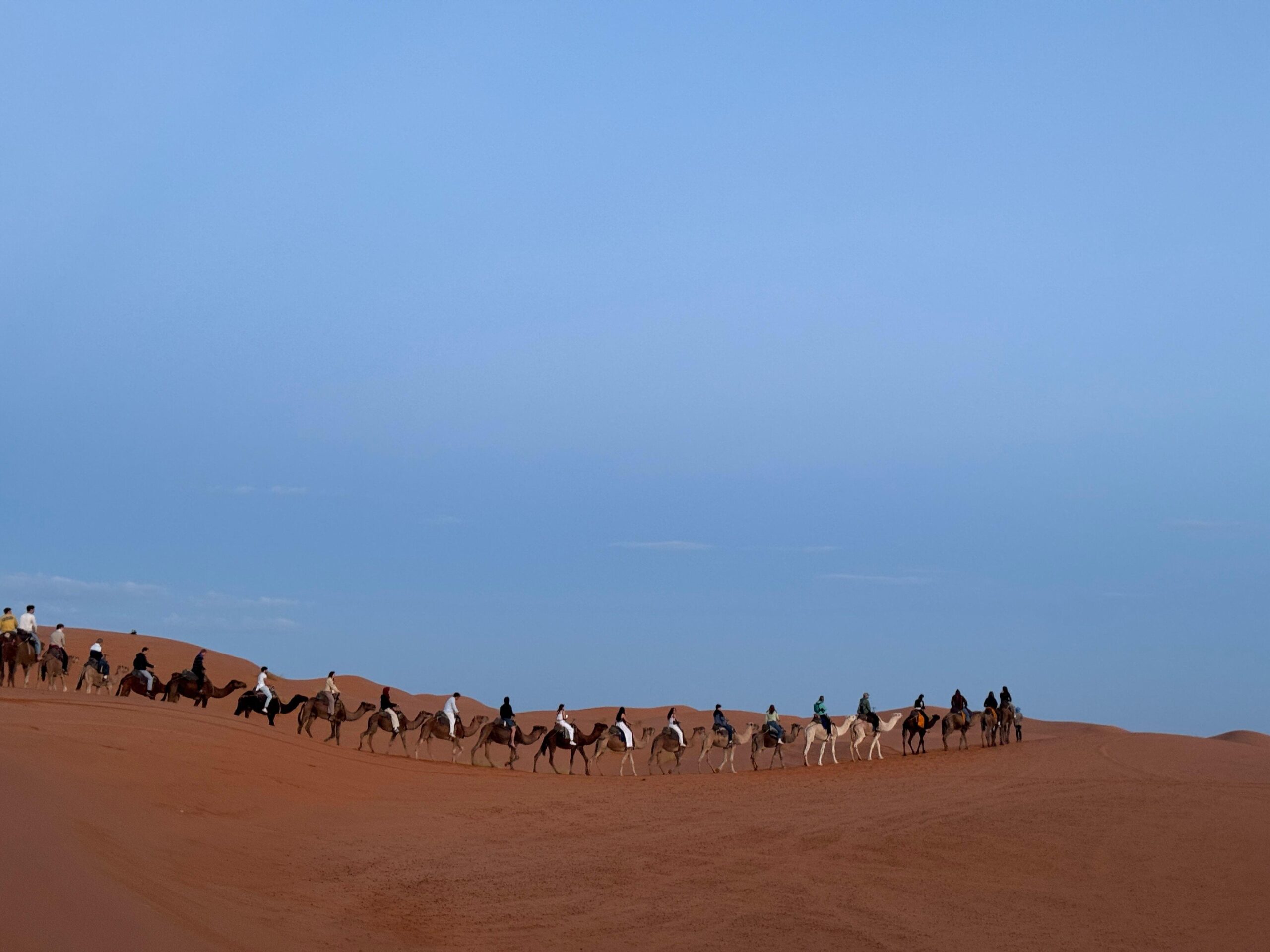
- Day 4: Fes to Rissani and Sijilmasa, then a night in the desert.
- Days 5 to 6: The Todra Gorge, the Dades Valley and Ait Ben Haddou.
- Day 7: A guided day in the Marrakech medina.
This plan follows our 7 day imperial cities and Sahara tour. Starting in Marrakech instead? Our 7 day student tour of Morocco and the shorter 5 day student Sahara and Fes tour cover many of the same sites. Every route is private, so we can change the stops to fit your syllabus.
Before you travel, share our guides on whether Morocco is safe for students and Moroccan etiquette with your group. More planning help is in our guides to high school trips to Morocco, study abroad groups in Morocco and Morocco for students.
FAQ: historical sites in Morocco for students
What are the best historical sites in Morocco for a student tour?
Fes el Bali, Volubilis, Meknes, Rabat, the Hassan II Mosque, the Marrakech medina, Ait Ben Haddou and the ruins of Sijilmasa near Rissani. Together they cover Roman, medieval, royal and modern history.
How many UNESCO sites does Morocco have?
Nine. Six of them are on this list: the medinas of Fes and Marrakech, Meknes, Rabat, Volubilis and Ait Ben Haddou.
Can students go inside a mosque in Morocco?
Most mosques are closed to non Muslim visitors. The Hassan II Mosque in Casablanca is open on guided tours. It is the best place to see the inside of a mosque.
How many days do we need for the historical sites in Morocco?
Seven days covers all eight historical sites in Morocco on one loop, with a night in the Sahara. Five days covers Fes, the desert, Ait Ben Haddou and Marrakech.
Planning a history trip for your students? Tell us your group size, dates and subjects. We will build a route around the historical sites in Morocco that fit your class.
Message us on WhatsApp